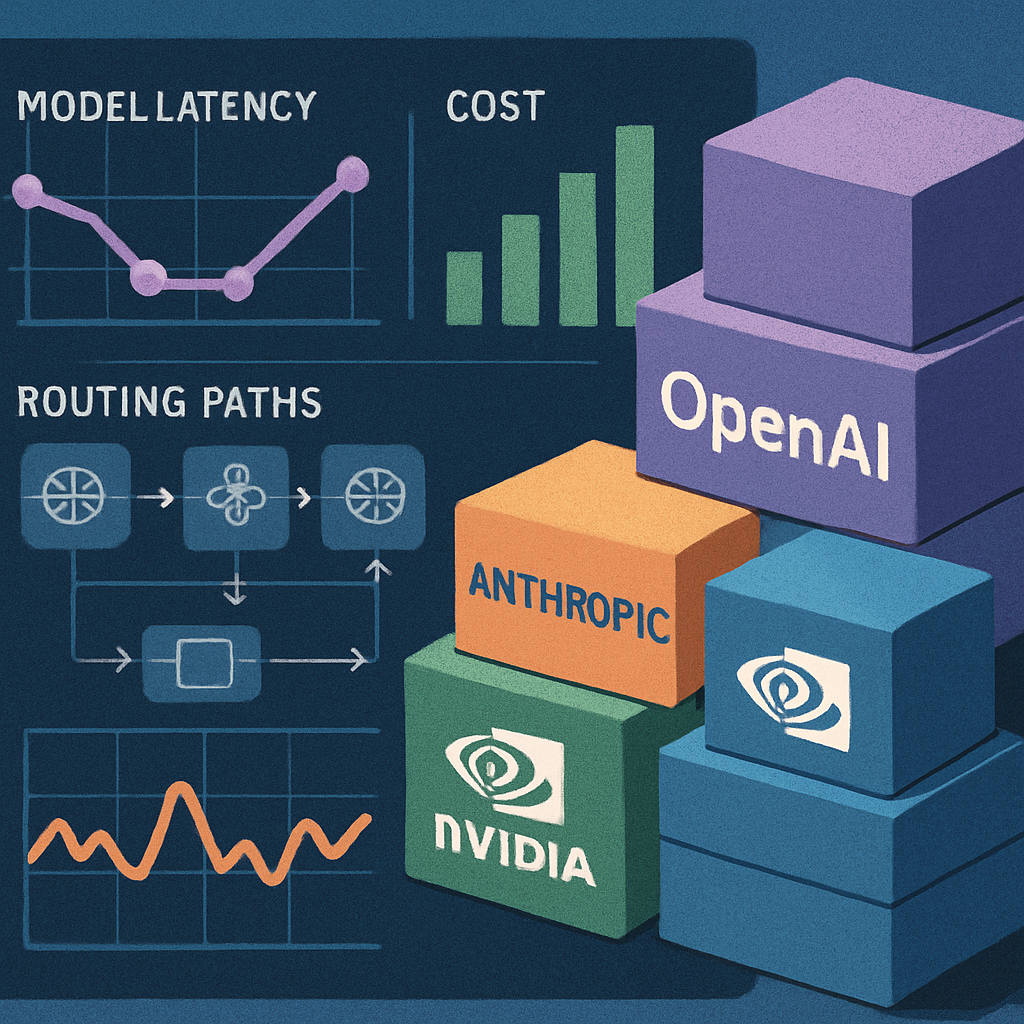
Corporate expense platform Ramp has rolled out its own AI model router, dubbed Router, enabling businesses to access and switch among different large language models (LLMs) via API. The tool enters public availability today for users in the United States, offering free use through the end of 2026 — though inference costs still apply. As part of the launch, users receive a $26 credit. Pricing from 2027 onward is still unannounced. ([techcrunch.com](https://techcrunch.com/2026/08/20/ramp-launches-its-own-ai-model-router-called-router/))
What Router Offers
Router supports models from a range of providers, including OpenAI, Anthropic, DeepSeek, Moonshot, Minimax, Nvidia, xAI, and Z.ai. It also includes built-in routing strategies, allowing users to direct API calls according to preferences such as model provider tiers, custom benchmarks, or cost/latency trade-offs. Users can, for instance, send more complex queries to higher-capacity models and route routine ones to lighter or lower-cost engines. A dashboard shows costs, latency, token usage, fallback attempts, and other performance metrics. ([techcrunch.com](https://techcrunch.com/2026/08/20/ramp-launches-its-own-ai-model-router-called-router/))
Privacy, Strategy & Business Context
Router defaults to retaining model inputs, outputs, and tool-uses for one year, but includes an opt-out policy. Ramp says it will scrub personally identifiable information before any data is used to improve the product. ([techcrunch.com](https://techcrunch.com/2026/08/20/ramp-launches-its-own-ai-model-router-called-router/))
Beyond the product offering, Router aligns with Ramp’s broader strategic push into the AI inference market. The company has leveraged its internal model router for several years before public release. By launching Router, Ramp taps into growing demand from enterprise users to manage model spend, monitor token usage, and experiment with different LLMs — capabilities that integrate well with its expense management platform. With Ramp last raising $750 million in funding at a valuation of $44 billion, the new service provides both an additional revenue stream and greater stickiness for its existing customer base. ([techcrunch.com](https://techcrunch.com/2026/08/20/ramp-launches-its-own-ai-model-router-called-router/))
Users comparing Router to competitors like OpenRouter will notice similarities, but Router currently offers fewer model options than some rivals. Still, its built-in tools for routing, benchmarking, and cost control set it apart in terms of enterprise readiness. ([techcrunch.com](https://techcrunch.com/2026/08/20/ramp-launches-its-own-ai-model-router-called-router/))
Router is available only in the U.S. for now. Users elsewhere will have to wait for expansion. As of launch, pricing through end of 2026 remains free (minus inference charges), with new pricing to be revealed in 2027. ([techcrunch.com](https://techcrunch.com/2026/08/20/ramp-launches-its-own-ai-model-router-called-router/))
For Ramp, Router isn’t just a new product line — it’s an opportunity to deepen relationships with AI labs and inference providers, while offering its clients visibility into AI model performance and spend. It could also help Ramp differentiate in fintech, where expense control and AI usage are becoming increasingly intertwined. ([techcrunch.com](https://techcrunch.com/2026/08/20/ramp-launches-its-own-ai-model-router-called-router/))
What to Watch: whether Router can compete with more mature model routers in diversity of models, global availability, and pricing transparency. Its success may depend on how well it integrates with Ramp’s core offerings, and how quickly it evolves features like data privacy, routing strategies, and cost controls for customers.