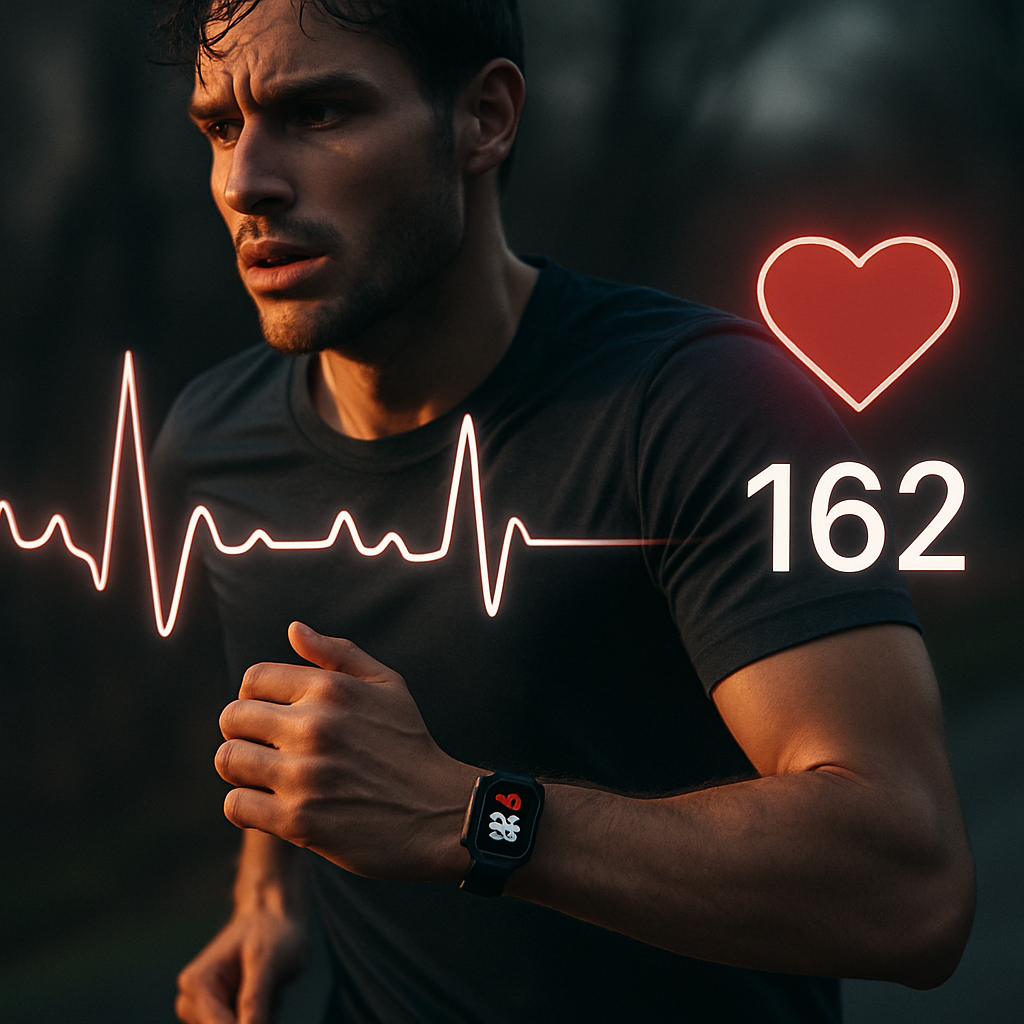
An Apple Watch may have helped save a life. In a newly released Apple ad, the company tells the story of runner Connor, who discovered a cardiac issue thanks to his Apple Watch during training. What seemed like high heart rate prompted him to use the device’s ECG function, leading to a diagnosis of atrial fibrillation and revealing a congenital heart defect that required open-heart surgery. ([macrumors.com](https://www.macrumors.com/2026/08/20/apple-watch-alerted-runner-to-heart-problem/))
How the Watch Found Trouble
Connor, training for a triathlon, noticed his heart rate was unusually fast. That triggered him to open the ECG app on his Apple Watch, which then detected signs of atrial fibrillation — a condition that causes an irregular and often rapid heartbeat. ([macrumors.com](https://www.macrumors.com/2026/08/20/apple-watch-alerted-runner-to-heart-problem/))
Following this, medical professionals determined that beyond the atrial fibrillation, Connor had a congenital heart problem significant enough to warrant open-heart surgery. The Apple Watch’s alerting system is credited with bringing both conditions to light early enough to allow medical intervention. ([macrumors.com](https://www.macrumors.com/2026/08/20/apple-watch-alerted-runner-to-heart-problem/))
ECG Availability and Limitations
The ECG feature is built into all Apple Watch models since Series 4, including all Ultra versions. Notably, Apple Watch SE models do not include ECG support. ([macrumors.com](https://www.macrumors.com/2026/08/20/apple-watch-alerted-runner-to-heart-problem/))
Why This Matters
This story joins a growing number of cases where wearable health tech has played a key role in early detection of serious medical conditions. Atrial fibrillation is not always symptomatic, which makes tools like ECG on a smartwatch particularly valuable for spotting issues users may not yet be aware of.
For athletes and regular users alike, the ability to monitor heart rhythms during exercise — when rates are elevated — can be a matter of life and death. The Apple Watch’s ability to prompt further medical evaluation could reduce risks, especially for those with silent congenital conditions.
While smartwatch ECGs are powerful, they are not substitutes for clinical tests and professional diagnoses. False positives and over-reliance are real concerns. Users should treat alerts as red flags that merit follow-up with healthcare providers. Still, for Connor, this red flag may have proven critical.
This case underlines the growing impact of wearables in preventive medicine. As Apple and competitors refine sensors, algorithms, and notification thresholds, we may see more lives saved through early detection. For users, the lesson is clear: make sure your wearable supports the health features you might need — and act when it signals something’s off.