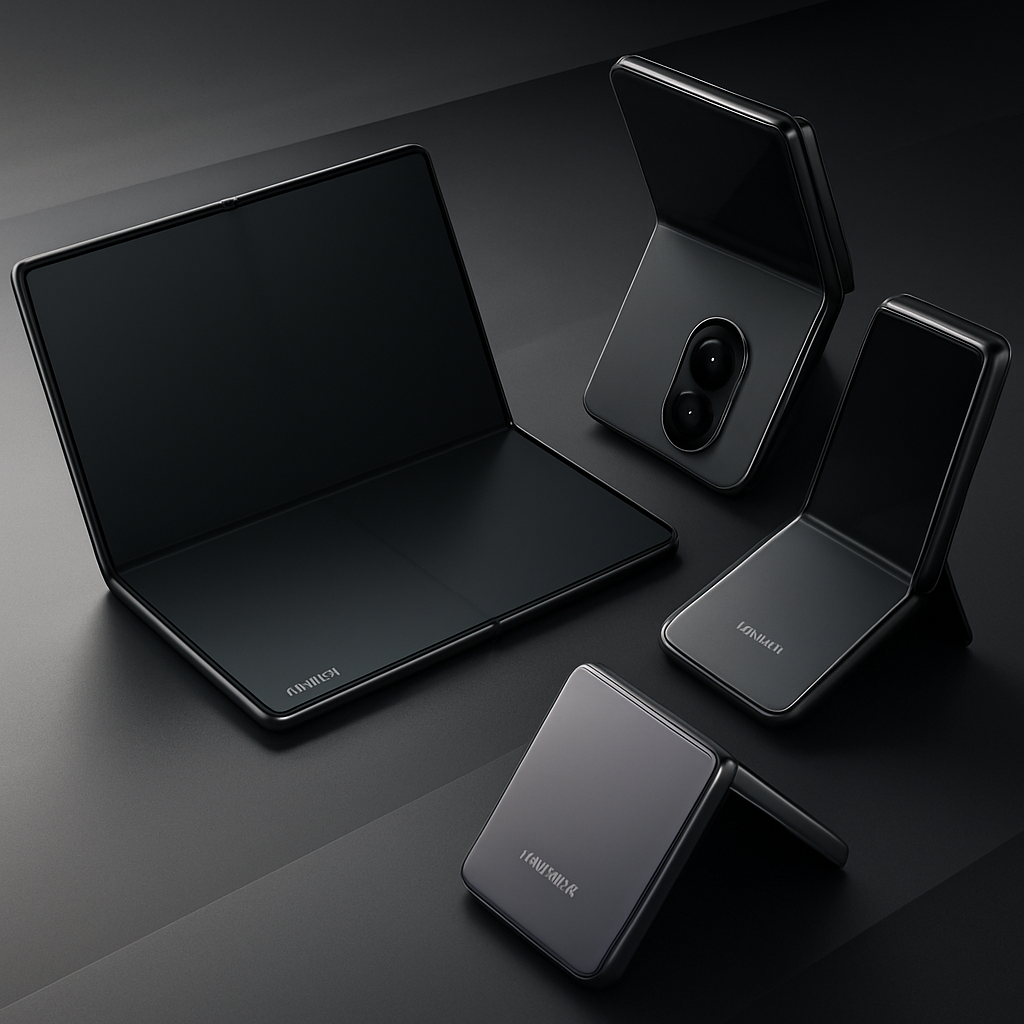
The global foldable smartphone market is on track for over 20% annual growth through 2028, reaching roughly 36 million units shipped, with 5.1 million foldables already delivered in the first half of 2026. However, overall shipments dropped by more than 20% year-over-year, driven largely by a sharp 47% plunge in clamshell (flip-style) foldable devices. Book-style foldables now dominate, making up 69% of shipments during the first six months of the year. ([9to5google.com](https://9to5google.com/2026/08/20/book-style-foldables-growth-report-1h26/))
Huawei Surges, Samsung Slides
Once the unquestioned leader in foldable phones, Samsung has ceded ground. In the first half of 2026, Huawei claimed a dominant 57% share of global foldable shipments, while Samsung’s portion dropped to just 18%. That ranking reflects data collected before the Galaxy Z Fold 8’s launch. Huawei’s performance is particularly notable given that its strong sales are largely restricted to the Chinese market. Honor, Oppo, Vivo and others fill out the rest of the market landscape in descending order. ([9to5google.com](https://9to5google.com/2026/08/20/book-style-foldables-growth-report-1h26/))
Looking Ahead: Foldables’ Place in the Market
Although book-style foldables are growing in popularity thanks to wider screens and sturdier form factors like Samsung’s Fold line, the category remains niche. Forecasts predict foldables will account for under 3% of all global smartphone shipments by 2030, hitting about 45 million units annually. ([9to5google.com](https://9to5google.com/2026/08/20/book-style-foldables-growth-report-1h26/))
The shift from flip to book form factors suggests changing consumer preferences: many buyers are showing more interest in devices with larger, tablet-like displays rather than compact phones that fold vertically. The decline in clamshells may also reflect challenges in hinge durability or screen finetuning under fold, though specific causes weren’t detailed in the data. What’s clear is the direction—foldable technology moving toward productivity and screen real estate over novelty.
The competition has also tightened. Huawei’s dominance in shipments—despite being mostly a domestic player—underscores how regional strength can decisively swing global rankings. Samsung, once synonymous with foldable innovation, may need to accelerate its releases or reevaluate marketing strategy to reclaim market share. Other brands like Oppo, Vivo, and Honor are likely to continue leveraging their agility and lower costs to grow in markets overlooked by Huawei and Samsung.
As foldables inch closer to mainstream viability, their role in the broader smartphone ecosystem becomes more strategic. They offer unique selling points in multitasking, content consumption, and hybrid work. Yet price, durability, and software optimization remain barriers. How brands address these issues may decide whether foldables stay a curiosity or become a core smartphone category by 2030.