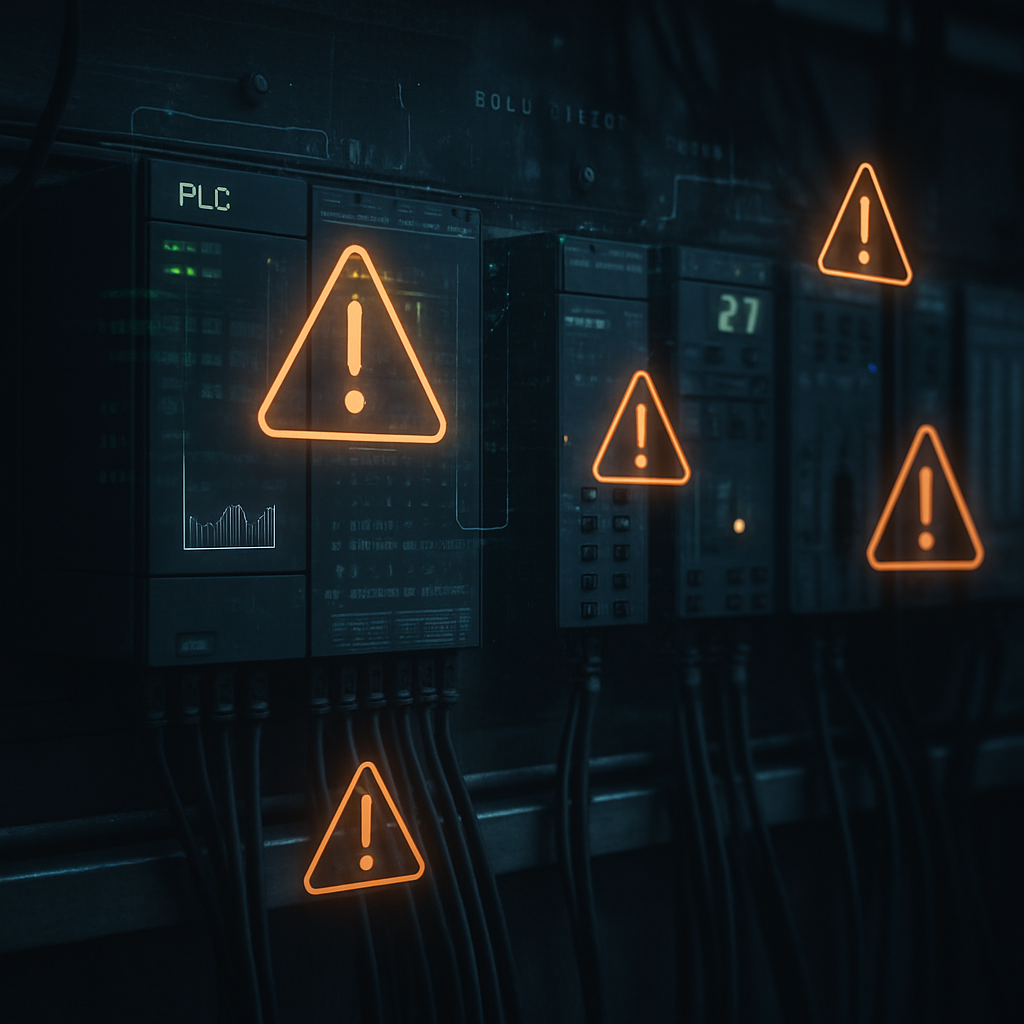
Federal cybersecurity agencies are raising alarm about new attacks on water supply and wastewater facilities in the United States. Hackers are actively exploiting outdated or poorly secured Siemens S7 programmable logic controllers (PLCs), which are integral to controlling physical operations in energy, water treatment, agriculture, and manufacturing. These attacks, involving malicious scripts generated with AI, are putting critical infrastructure at significant risk. ([techcrunch.com](https://techcrunch.com/2026/08/20/us-says-hackers-are-targeting-vulnerable-water-systems-with-the-help-of-ai/))
How the Exploits Work
The attackers are leaning on publicly available information to target Siemens PLCs across the board. The vulnerabilities they exploit arise when devices run outdated firmware, lack sufficient security, or are directly connected to the internet. Once compromised, these PLCs can disrupt system operations, damage equipment, or cause safety failures. Agencies warn that performance issues or safety incidents are major possibilities if these devices are breached. ([techcrunch.com](https://techcrunch.com/2026/08/20/us-says-hackers-are-targeting-vulnerable-water-systems-with-the-help-of-ai/))
What distinguishes these attacks is the use of AI. Hackers are leveraging machine learning tools to automate the creation of exploit scripts and to reverse engineer how these controllers function—making it easier to go after a broad set of PLCs efficiently. A cybersecurity incident response expert highlighted that while Siemens PLCs have always been susceptible, the addition of AI amplifies the threat. ([techcrunch.com](https://techcrunch.com/2026/08/20/us-says-hackers-are-targeting-vulnerable-water-systems-with-the-help-of-ai/))
Wider Context: A Growing Pattern
This series of incidents is not isolated. Authorities trace a wave of recent intrusions to suspected Iranian hacking groups targeting water utilities across multiple states, including Minnesota, Michigan, Arkansas, Georgia, and New Jersey. Many of the affected systems are rural, where infrastructure is more spread out and often under-resourced. These communities tend to use PLCs that are older, less secure, and more likely to be exposed online. ([techcrunch.com](https://techcrunch.com/2026/08/20/us-says-hackers-are-targeting-vulnerable-water-systems-with-the-help-of-ai/))
To mitigate risk, U.S. cybersecurity agencies—such as CISA, the FBI, and NSA—are advocating for removing Siemens S7 PLCs from direct internet access. Owners of critical infrastructure are also encouraged to patch software, strengthen network defenses, and monitor for unusual activity. ([techcrunch.com](https://techcrunch.com/2026/08/20/us-says-hackers-are-targeting-vulnerable-water-systems-with-the-help-of-ai/))
This is the latest warning from the U.S. government in its effort to counter escalating cyber threats. These developments mark an evolution in how attackers behave: AI tools are becoming central to reconnaissance and exploitation in infrastructure-level attacks—especially in systems that control water, wastewater, and other essential public services. ([techcrunch.com](https://techcrunch.com/2026/08/20/us-says-hackers-are-targeting-vulnerable-water-systems-with-the-help-of-ai/))
Analysis: This wake-up call underscores how fragile much of America’s infrastructure remains—especially in rural systems that haven’t kept pace with security standards. Siemens S7 PLCs are now clearly on the radar of attackers using AI to sharpen their targeting. What to look for next: whether utilities will adopt zero-trust models, segment networks more aggressively, and accelerate firmware updates. Also worth watching is how regulation or enforcement might shift around securing industrial control systems—and whether AI’s misuse in cyber threats prompts broader policy responses.