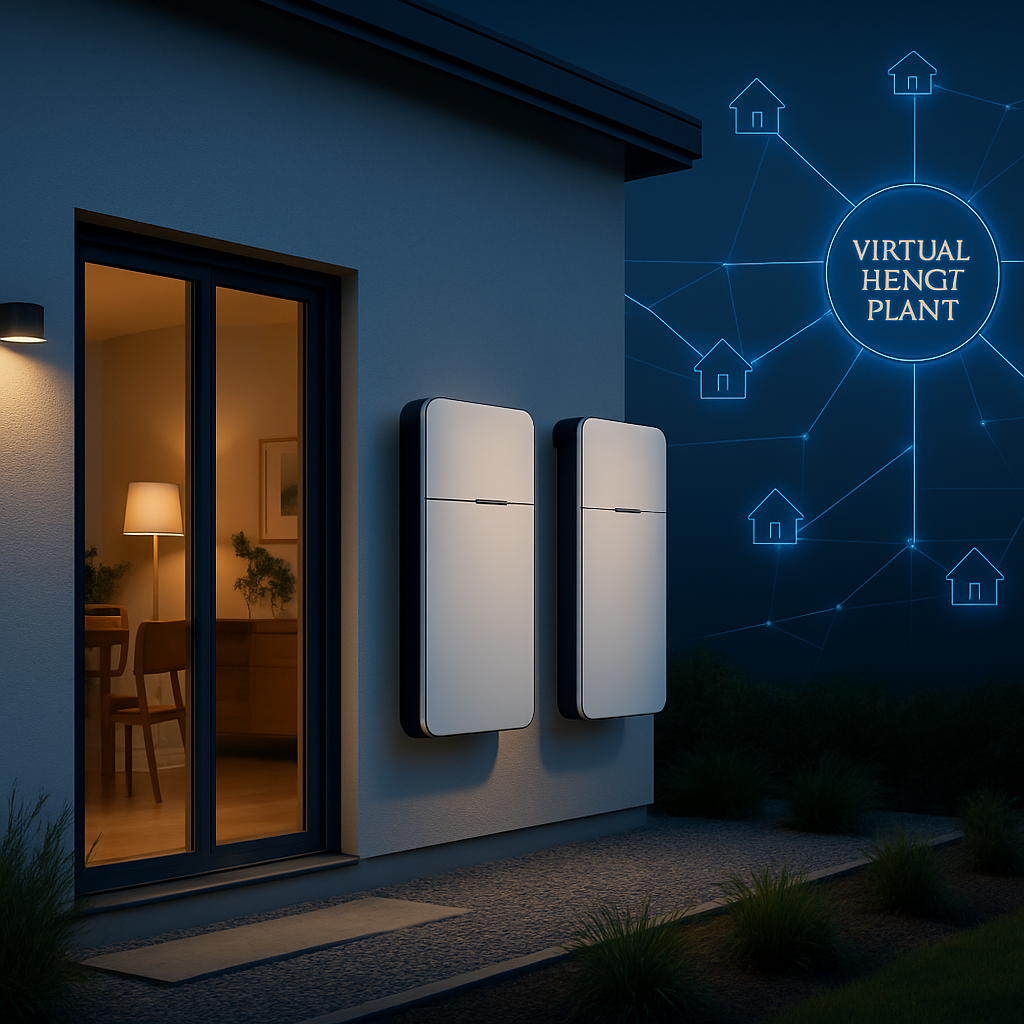
Home battery systems, once considered a luxury, are now becoming more accessible and widespread. This shift is driven by decreasing battery costs and the emergence of virtual power plants (VPPs), which aggregate distributed energy resources to function collectively as a single power source for utilities.
Traditionally, installing a home battery system could cost over $10,000, limiting adoption to affluent homeowners with existing solar panels. However, recent developments have introduced more affordable options. For instance, in Texas, homeowners can now lease 27 kilowatt-hours of Tesla Powerwalls for $35 per month or 39.2 kilowatt-hours of Base Power batteries for $19 monthly. These competitive pricing models are made possible by declining battery costs and the operational efficiencies of VPPs.
VPPs coordinate numerous individual devices, such as home batteries, to operate in unison, providing utilities with a flexible and responsive power source during peak demand periods. This approach offers a cost-effective alternative to building specialized peaker plants or compensating large energy consumers to reduce usage. By charging batteries when electricity rates are low and discharging them during high-demand periods, VPP operators can profitably sell stored energy back to the grid, sharing these profits with consumers through reduced electricity rates and affordable backup power solutions.
The market for VPPs, currently valued at $7.4 billion, is projected to exceed $30 billion by 2033. This growth reflects the increasing demand for flexible energy solutions as electricity consumption rises due to factors like the expansion of AI data centers and the broader electrification of the economy. VPPs offer a rapid deployment advantage over traditional power plants, which can take years to construct. For example, Base Power has partnered with CoServ, a North Texas electricity cooperative, to establish a 100-megawatt VPP within 12 months—a timeline significantly shorter than that of conventional power plant projects.
Moreover, the decentralized nature of VPPs reduces the need for extensive new power lines and infrastructure, as the energy resources are located closer to end-users. This proximity enhances grid resilience and efficiency, addressing the growing need for reliable power solutions in an increasingly electrified world.
The rapid adoption of home battery systems and the expansion of VPPs signify a transformative period in the energy sector. As these technologies continue to evolve, they promise to make sustainable and resilient energy solutions more accessible to a broader range of consumers, potentially reshaping the future of energy consumption and distribution.