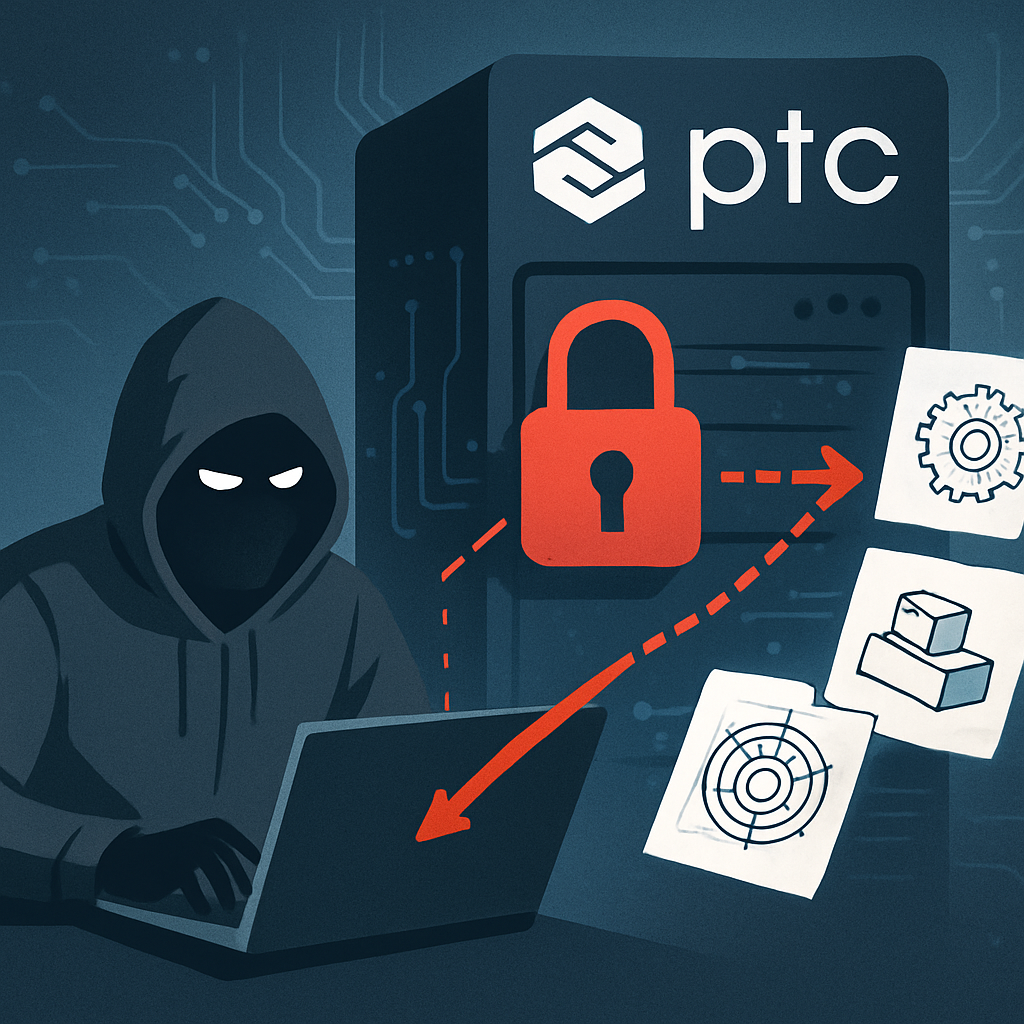
The Cl0p ransomware group has launched a targeted campaign against PTC Windchill servers, exploiting a critical vulnerability to access and exfiltrate sensitive engineering files, passwords, and company records.
PTC Windchill is a product lifecycle management (PLM) system widely used by manufacturers to manage product designs and related data. A successful breach of this system can provide attackers with access to valuable intellectual property and sensitive company information.
Exploitation of CVE-2026-12569
The attack leverages CVE-2026-12569, a critical remote code execution vulnerability with a CVSS severity score of 9.3. By exploiting this flaw, Cl0p deploys a custom web shell tailored specifically for Windchill servers. This implant is designed to perform credential theft, file discovery, data exfiltration, and execute additional code, all without the need for separate tools on the compromised server.
One of the web shell’s notable features is its ability to retrieve directory-management and administrative credentials in plaintext. These credentials can grant attackers broader access across the organization’s network, potentially compromising email systems, VPN services, databases, and other critical infrastructure.
Stealthy Operations and Data Exfiltration
The web shell is engineered to blend seamlessly with normal Windchill operations. It communicates using a custom HTTP header named ‘X-windchill-req’ and utilizes the application’s own database connections, making detection challenging. Additionally, responses are compressed with GZIP to further obfuscate malicious activity.
By mapping Windchill’s file vaults and querying internal databases, the implant compiles lists of engineering drawings, product plans, and other intellectual property. This streamlined approach enables rapid identification and exfiltration of high-value files, minimizing the time between initial access and data theft.
Mitigation and Response
Organizations utilizing PTC Windchill should immediately apply the vendor’s patch for CVE-2026-12569 to mitigate this vulnerability. It’s also crucial to restrict public exposure of Windchill management interfaces by placing them behind web application firewalls and conducting thorough log reviews for any signs of exploitation attempts.
Security teams should be vigilant for unexpected JSP files within Windchill directories and monitor for the presence of the custom ‘X-windchill-req’ HTTP header in network traffic. If a compromise is suspected, it’s imperative to rotate all credentials, especially the LDAP manager password, to prevent further unauthorized access.
This incident underscores the importance of promptly addressing vulnerabilities in business-critical applications. The Cl0p group’s continued focus on exploiting such systems highlights the need for organizations to maintain robust patch management practices and implement comprehensive security measures to protect sensitive data.