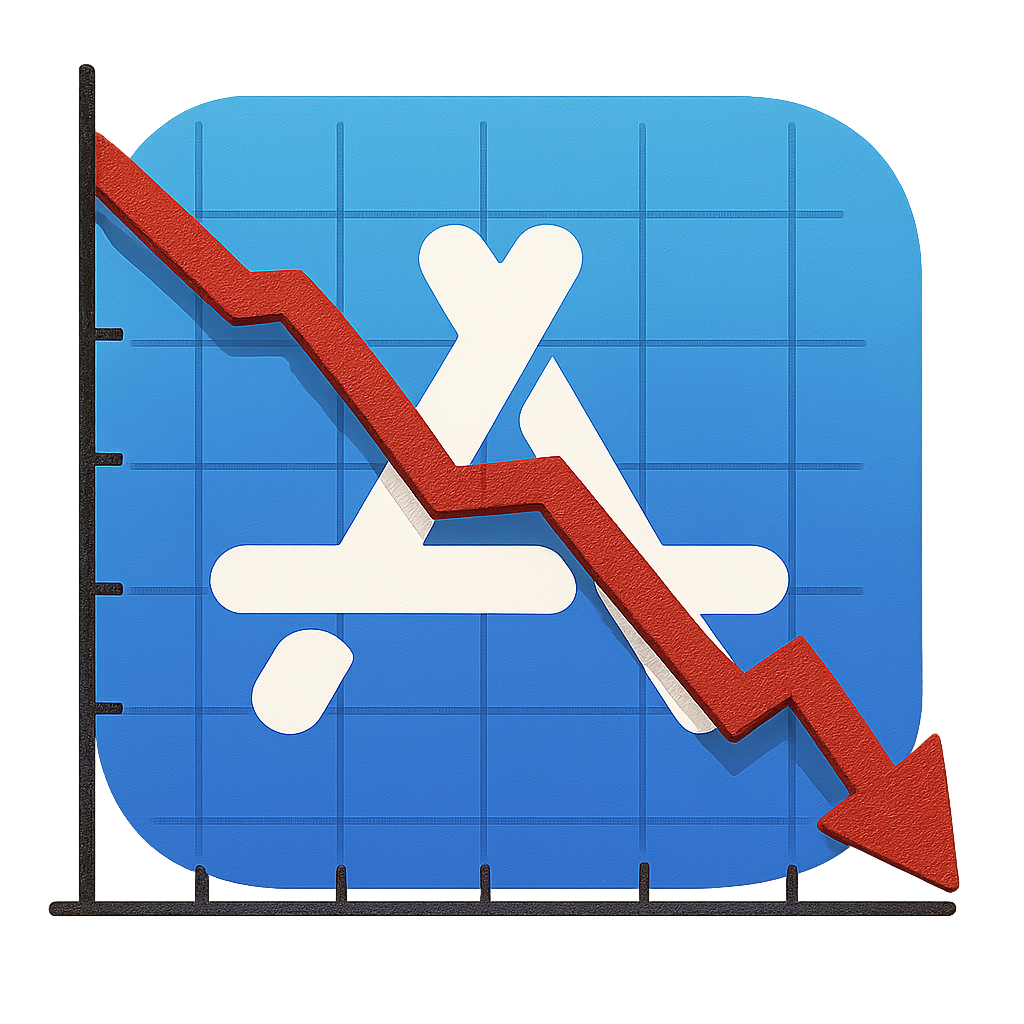
Apple’s App Store has experienced a notable decline in commission revenue, particularly in regions where regulatory changes have compelled the company to adjust its in-app purchase policies. Recent analytics indicate an 18% drop in U.S. commission revenue since the beginning of 2026. Similar downward trends have been observed in Brazil and Japan, coinciding with the introduction of new regulations in these countries.
In the United States, consumer spending through the App Store decreased by 6% in the second quarter of 2026, a stark contrast to the 9% growth recorded during the same period in the previous year. This downturn aligns with Apple’s recent earnings report, which revealed services revenue of $30.7 billion for the June quarter—an all-time high for that period but still below analysts’ expectations of $31.4 billion.
Historically, Apple has taken a commission of 15% to 30% on digital purchases made within apps on its platform. However, a U.S. court injunction resulting from the legal battle with Epic Games now mandates that Apple allow developers to direct users to external payment options without collecting a commission. This ruling has significantly impacted Apple’s revenue, as the company ceased collecting fees from such external links in the U.S. starting in April 2025.
These developments underscore the growing influence of regulatory bodies on Apple’s business model. As governments worldwide scrutinize the practices of major tech companies, Apple may need to further adapt its strategies to maintain its position in the digital marketplace.