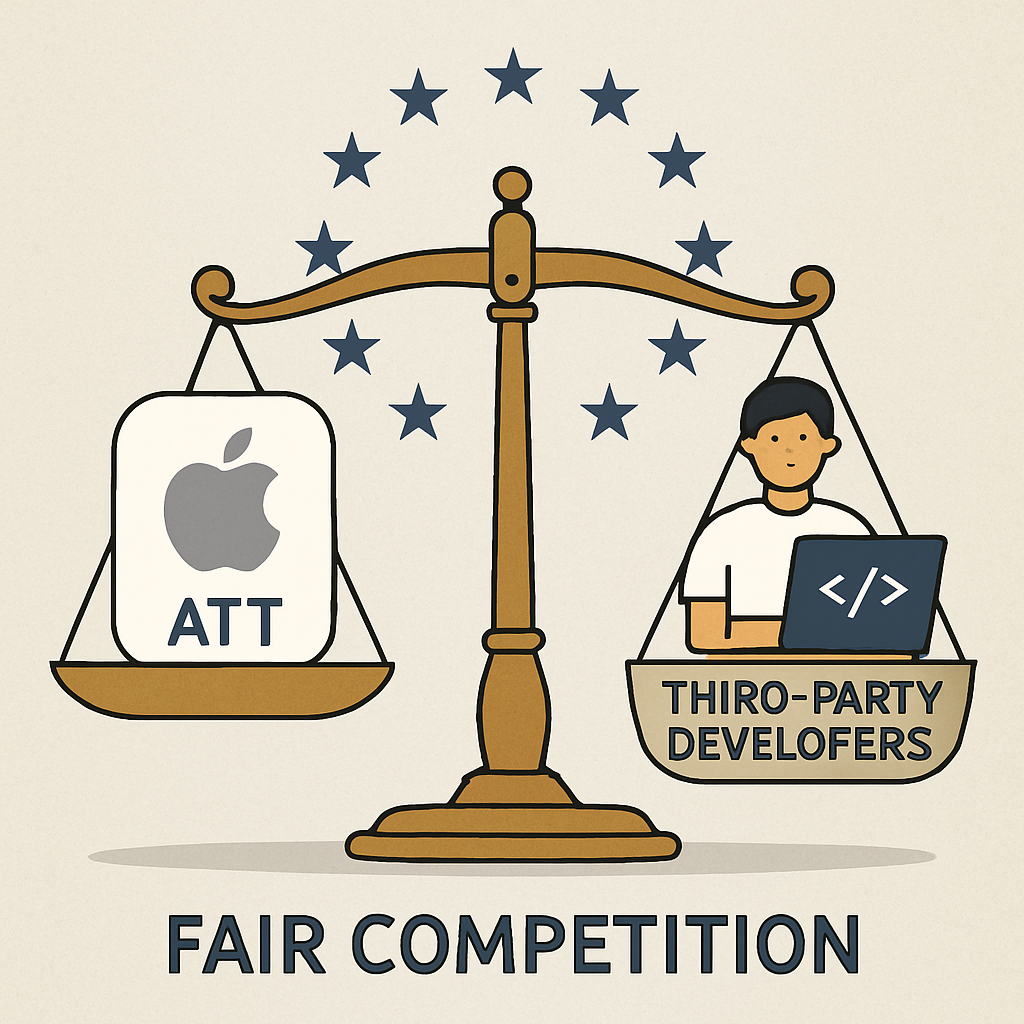
Apple’s App Tracking Transparency (ATT) feature, introduced to enhance user privacy by allowing iPhone users to control how their data is collected and used by developers, has faced criticism for allegedly favoring Apple’s own applications over those of third-party developers. The company has now agreed to implement changes to ATT within the European Union, following an investigation by the German antitrust regulator.
ATT was designed to provide users with the option to permit or deny tracking by apps, aiming to curb the extensive collection of personal data without informed consent. However, Apple did not display the same permission prompts within its own apps, arguing that it does not engage in the type of tracking ATT seeks to regulate. This discrepancy raised concerns, especially as Apple expanded its advertising business, leading to accusations of unfair treatment toward third-party developers.
Earlier this year, German publishers urged the antitrust regulator to hold Apple to the same standards as other developers. The regulator concurred, determining that Apple’s approach was inequitable. Consequently, Apple has agreed to implement the following changes within the EU:
- Consent pop-ups presented to users by third-party developers must be “visually and linguistically neutral,” eliminating any discouraging language or symbols that might influence users to refuse tracking.
- Developers are permitted to combine Apple’s mandatory tracking request with their own data-protection prompts, streamlining the consent process and avoiding multiple prompts that could deter user engagement.
Apple has a four-month timeframe to implement these changes, with compliance to be monitored over a seven-year period.
This development underscores the ongoing tension between tech companies’ privacy initiatives and regulatory bodies’ efforts to ensure fair competition. While ATT was a significant step toward enhancing user privacy, its implementation highlighted potential biases favoring Apple’s ecosystem. The agreed-upon changes aim to create a more level playing field for all developers, ensuring that privacy measures do not inadvertently stifle competition. Observers will be keen to see how these adjustments impact both user experience and the broader app development landscape within the EU.