Apple has recently filed a patent application detailing a system designed to intelligently manage device notifications, aiming to reduce unnecessary interruptions and provide users with concise summaries of their activities. This development underscores Apple’s ongoing commitment to enhancing user experience through advanced technology.
The patent, submitted to the U.S. Patent and Trademark Office on February 5, 2026, and published on August 6, 2026, outlines a method by which a device monitors user activity in real-time. By evaluating this behavior against predefined criteria, the system determines whether an interruption is justified. For instance, if a user is deeply engaged in a particular task, the device may choose to withhold non-essential notifications, thereby preserving the user’s focus.
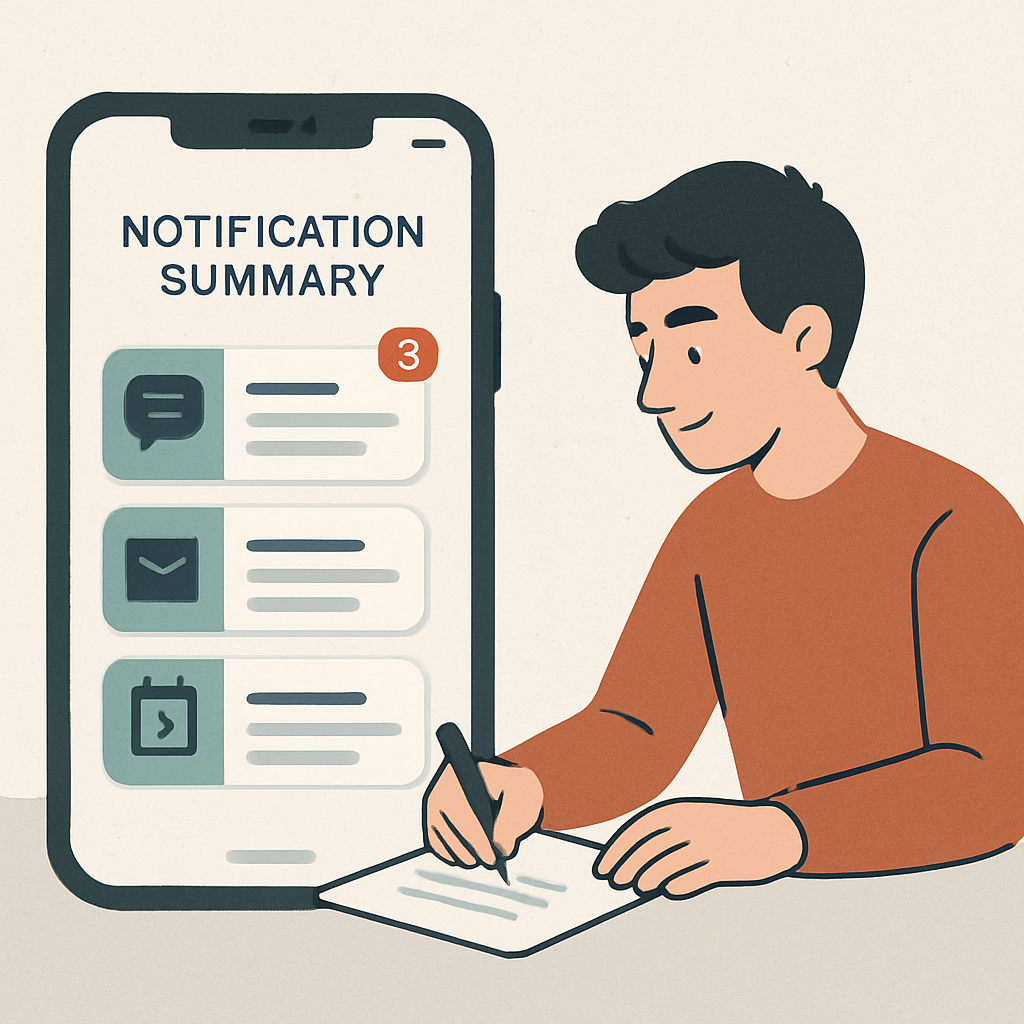
Additionally, the patent describes a feature that compiles recent activities into concise summaries. This allows users to review missed notifications at a convenient time, ensuring they stay informed without constant disruptions.
Apple has previously introduced features with similar objectives. In iOS 18.1, the company implemented AI-driven notification summaries that condense multiple alerts into a single line, and a ‘Reduce Interruptions’ Focus mode that filters out less critical notifications. The newly patented system appears to build upon these existing tools by incorporating real-time user activity monitoring, potentially enhancing the effectiveness of notification management.
It’s important to note that while Apple frequently patents various technologies, not all make their way into consumer products. However, this patent reflects Apple’s ongoing efforts to refine user interactions with their devices, aiming to create a more seamless and less intrusive experience.
As digital devices become increasingly integral to daily life, managing the influx of notifications is crucial. Apple’s exploration into intelligent notification management could set a new standard for how devices handle user attention, balancing the need for information with the importance of maintaining focus.