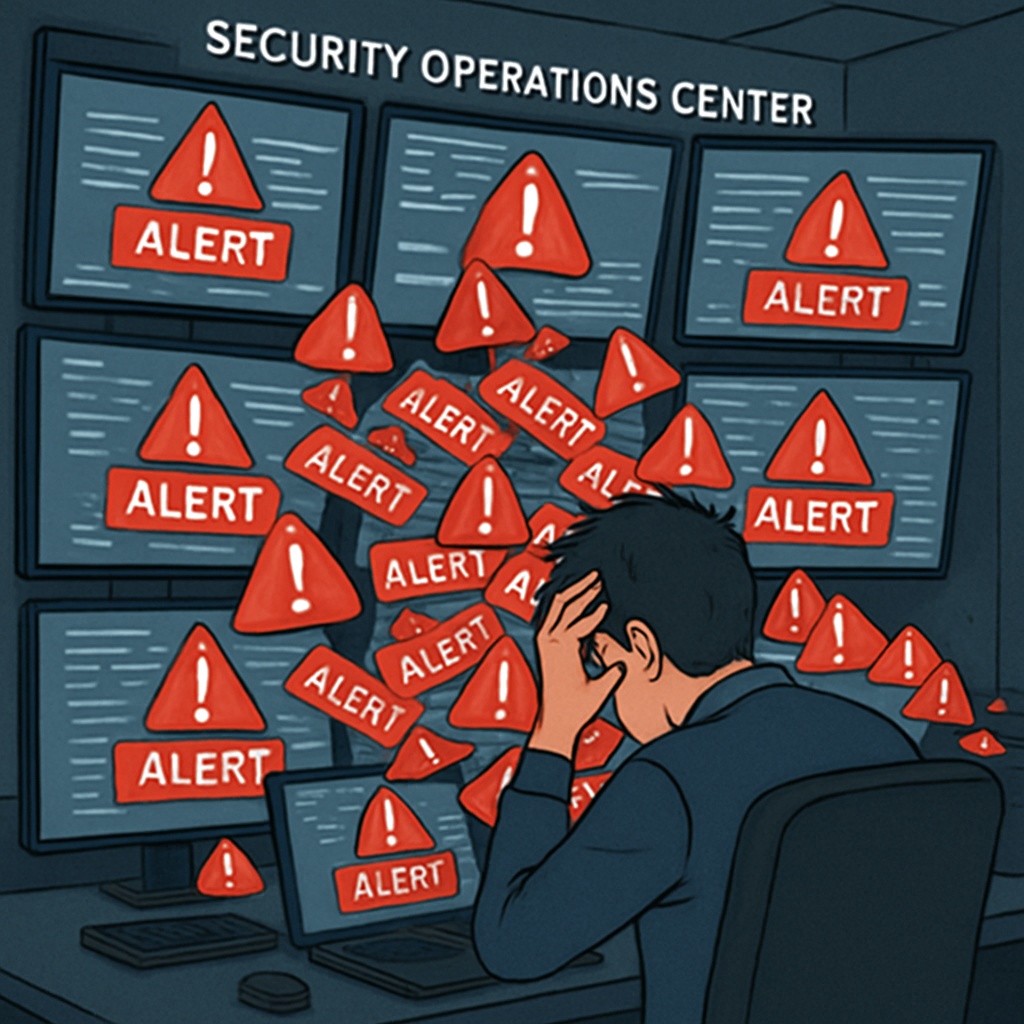
Security Operations Centers (SOCs) across the United States are grappling with an overwhelming influx of security alerts. This deluge, coupled with limited analyst resources and constrained budgets, has led to a phenomenon known as alert fatigue. Analysts find themselves dedicating significant time to investigating low-risk or false-positive alerts, which hampers their ability to promptly address genuine threats.
Several factors contribute to this challenge:
- Duplicate Alerts Across Tools: Multiple security tools often generate redundant alerts for the same event, leading to repeated investigations and increased operational costs.
- Low-Confidence Detections: Alerts with insufficient confidence levels necessitate additional validation, consuming valuable analyst time and reducing overall capacity.
- Indicators Without Context: Alerts lacking contextual information require manual enrichment, slowing down the triage process.
- Stale or Broad Indicator of Compromise (IOC) Data: Outdated or overly generic IOCs result in irrelevant matches, adding to the noise without providing actionable insights.
- Similar-Priority Alerts: An abundance of alerts with the same priority level makes it challenging to identify and address critical threats promptly.
- Manual Correlation: The need for manual correlation of related alerts increases the workload for Tier 1 analysts and leads to more escalations to Tier 2 teams.
To combat alert fatigue, high-performing SOCs are adopting several strategies:
1. Prioritize Higher-Quality Signals
Focusing on recent, relevant, and high-confidence alerts helps SOCs reduce noise. By filtering out stale IOCs and low-confidence matches, analysts can concentrate on signals that are more likely to indicate genuine threats. For instance, leveraging threat intelligence feeds built from real-world malware and phishing investigations provides access to fresh indicators observed in actual attacks, enabling better prioritization.
2. Provide Analysts with More Context
Equipping analysts with comprehensive context around each alert streamlines the investigation process. Tools that connect individual indicators to related sandbox sessions, infrastructure, files, network activity, and behaviors allow analysts to quickly assess the significance of an alert. For example, if an alert contains an indicator associated with a known phishing campaign, analysts can access related sessions to understand the attack’s behavior and infrastructure, facilitating faster decision-making.
3. Transform Threat Trends into Detection Priorities
By analyzing emerging threat trends, SOCs can proactively adjust their detection priorities. Monitoring the latest attack vectors and tactics enables the development of detection rules that focus on the most relevant threats. This proactive approach ensures that analysts are prepared to address new challenges as they arise, rather than being solely reactive.
Addressing alert fatigue is crucial for maintaining an effective security posture. By implementing these strategies, SOCs can enhance their efficiency, reduce the risk of missing critical threats, and optimize the use of their resources. As cyber threats continue to evolve, staying ahead requires a combination of advanced tools, strategic prioritization, and continuous adaptation to the changing threat landscape.