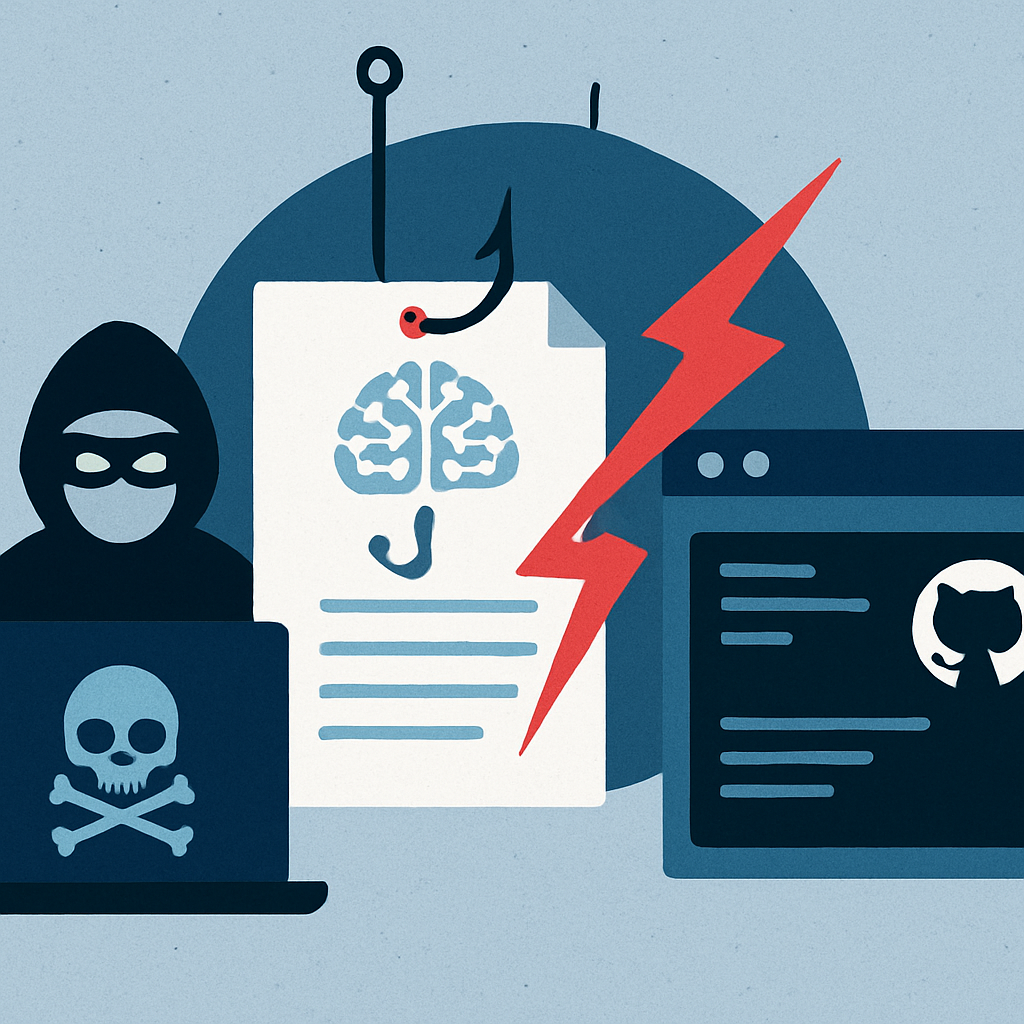
North Korean state-sponsored threat group Kimsuky has been observed integrating artificial intelligence (AI) tools into its cyber operations, enhancing the sophistication of its phishing campaigns. This development underscores the evolving tactics of cyber adversaries who are increasingly leveraging AI to craft more convincing and effective attacks.
AI-Enhanced Phishing Tactics
In a recent campaign dubbed Operation GitPower, Kimsuky utilized AI-generated documents to lend credibility to its phishing attempts. The group distributed ZIP archives containing Windows shortcut files (.lnk) that masqueraded as legitimate documents. When opened, these shortcuts executed concealed PowerShell scripts while simultaneously displaying benign PDF files to the user, thereby minimizing suspicion.
The AI-generated decoy documents covered topics such as investment opportunities, virtual assets, and game development. Their polished language and consistent formatting made traditional indicators of phishing, like poor grammar or formatting errors, less reliable for detection.
Utilization of Local Large Language Models
Investigations revealed that Kimsuky set up local environments for large language models (LLMs) using platforms like Ollama, GPT4All, and Msty. Evidence of a GPT4All LocalDocs database suggests that the group may have been indexing and searching through stolen documents to enhance their operations. While there is no indication that Kimsuky trained its own models, the integration of locally run AI tools indicates a strategic move towards automating and refining their cyber activities.
GitHub as a Command-and-Control Platform
Beyond using GitHub to host decoy PDFs, Kimsuky employed the platform as a command-and-control (C2) infrastructure. The PowerShell scripts executed by the malicious shortcuts retrieved additional payloads and collected extensive system information, including operating system details, hardware specifications, boot history, running processes, and network configurations. This data collection facilitated informed decision-making for subsequent stages of the attack.
Notably, the group stored encrypted .NET AsyncRAT payloads within public GitHub repositories, disguised as image files with names like apple.png and rabbit.png. This method of embedding malicious code within seemingly innocuous files exemplifies the group’s efforts to evade detection.
Implications and Defensive Measures
The integration of AI-generated content and the use of trusted platforms like GitHub for C2 operations highlight a significant evolution in Kimsuky’s tactics. These advancements make their campaigns more convincing and harder to detect, posing increased challenges for cybersecurity defenses.
Organizations are advised to exercise heightened vigilance when encountering ZIP files containing .lnk files that launch command-line interfaces like cmd.exe or PowerShell, especially when accompanied by unusually long command arguments. Implementing behavioral detection mechanisms that can identify such anomalies is crucial. Additionally, monitoring for unauthorized scheduled tasks and the creation of scripts in temporary or AppData directories can aid in early detection and mitigation of such threats.
As cyber adversaries continue to adopt and integrate AI technologies into their operations, it is imperative for cybersecurity professionals to stay informed and adapt their defensive strategies accordingly. The use of AI by threat actors not only enhances the effectiveness of their attacks but also necessitates a corresponding evolution in defensive measures to counter these sophisticated threats.