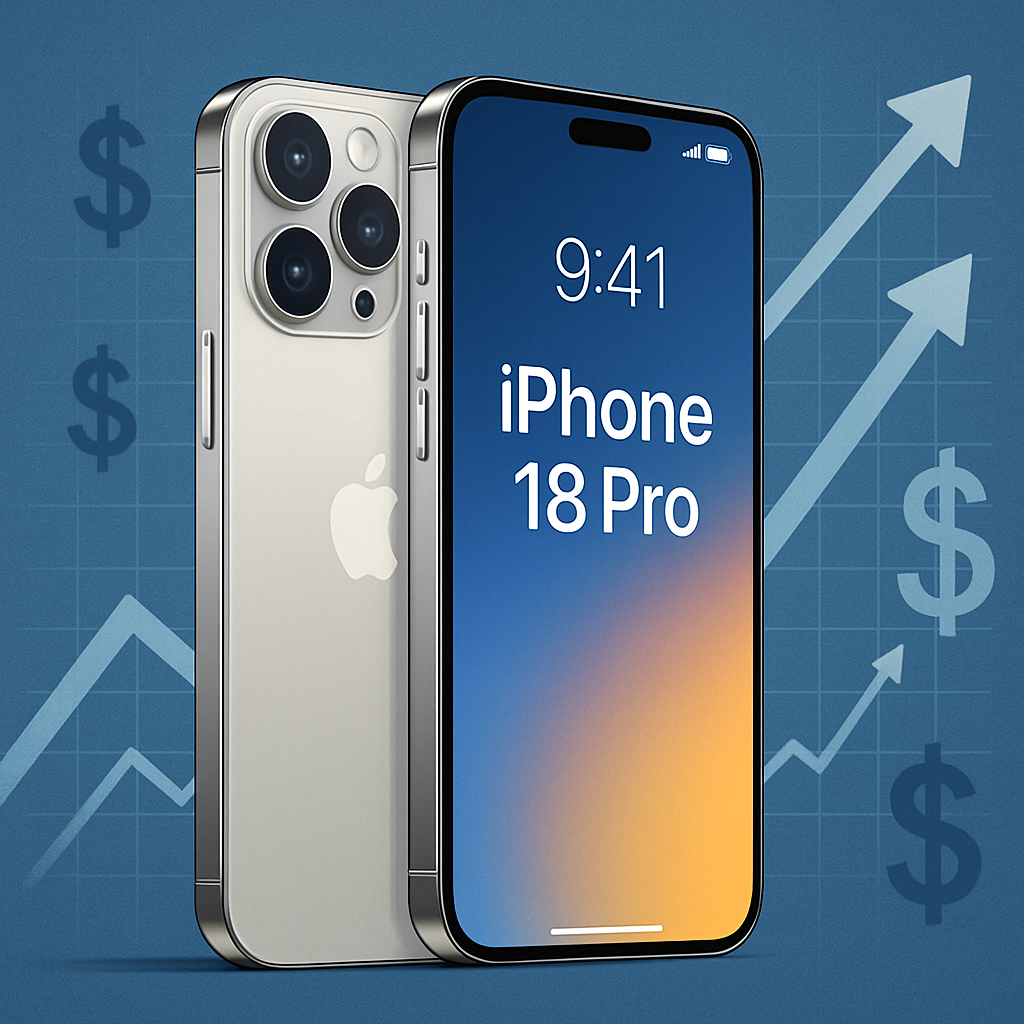
Apple’s upcoming iPhone 18 Pro is set to experience a significant increase in production costs, with component expenses rising by approximately 38% compared to its predecessor. This surge is primarily driven by escalating memory prices, which have tripled, making memory the most expensive component in the device.
Traditionally, the display has been the costliest part of an iPhone. However, for the iPhone 18 Pro, memory costs are expected to surpass those of the display, accounting for over 40% of the total component expenses. This shift underscores the growing importance and expense of memory in modern smartphones.
Given these increased production costs, a rise in the retail price of the iPhone 18 Pro seems inevitable. Some analysts have projected a starting price of $1,399 for the new model. However, Apple may choose to absorb a portion of these costs to maintain consumer demand. This strategy mirrors the company’s approach with recent MacBook launches, where Apple sacrificed part of its gross margin to mitigate price increases and preserve shipment volumes.
In the broader context, the smartphone industry is grappling with rising component costs, particularly in memory. Manufacturers are faced with the challenge of balancing these increased expenses with consumer price sensitivity. Apple’s decision on pricing the iPhone 18 Pro will be a critical indicator of how the company navigates these industry-wide challenges.
As the launch of the iPhone 18 Pro approaches, consumers and industry observers will be keenly watching Apple’s pricing strategy. The company’s ability to balance rising production costs with market demand will be pivotal in determining the device’s success in an increasingly competitive smartphone market.