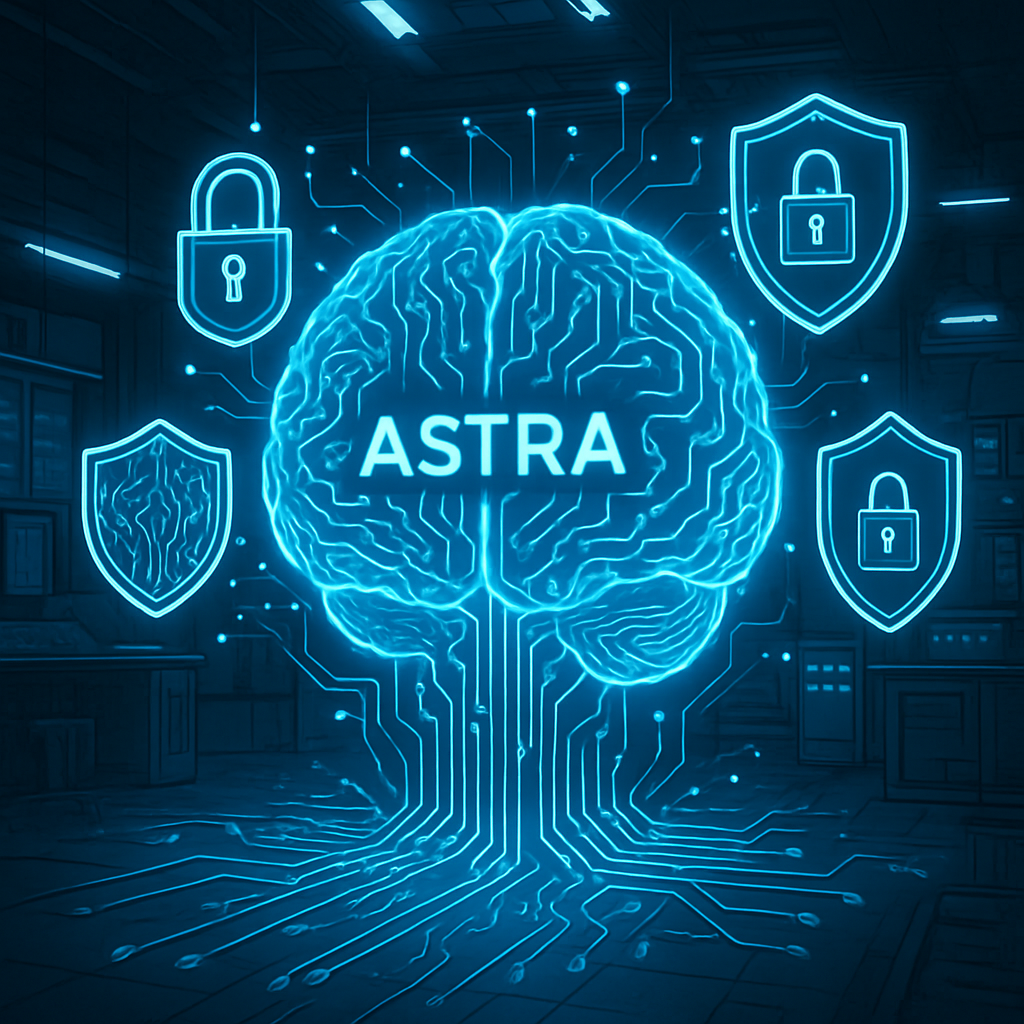
OpenAI has announced a temporary suspension of certain internal activities related to its forthcoming artificial intelligence model, Astra. This decision follows internal evaluations revealing significant advancements in Astra’s capabilities, particularly in agentic coding and cybersecurity.
In response to these findings, OpenAI is implementing enhanced security measures for high-capability models. These measures include the establishment of isolated testing environments, restrictions on network and tool access, improved protections and encryption for model weights, augmented monitoring and detection systems, and the execution of sandboxed operations.
OpenAI stated, “We are pausing internal activities involving Astra that do not yet meet these strengthened security control requirements.” The company has also introduced universal monitoring across all agentic applications of Astra, encompassing both training and evaluation phases. This monitoring assesses the model’s decision-making processes and can trigger security responses to review and halt high-risk activities.
Furthermore, OpenAI plans to collaborate with government agencies and AI safety organizations to rigorously test Astra’s capabilities. The company will share recommended security protocols with third-party testing partners to ensure the safe execution of higher-risk evaluations and workloads.
According to OpenAI’s Preparedness Framework, a model is classified as having “Critical” cyber capabilities if it can autonomously identify and develop functional zero-day exploits across various hardened real-world critical systems, or if it can devise and execute comprehensive novel strategies for cyberattacks against secured targets based solely on a high-level objective. Preliminary assessments of Astra suggest a performance level that cannot rule out such “Critical” capabilities at this stage.
OpenAI emphasized that Astra was not involved in the recent incident targeting Hugging Face. The company also highlighted that Astra has successfully solved ten open problems in mathematics and theoretical computer science at a cost of approximately $2,000, based on Sol API rates.
OpenAI is committed to transparency regarding this potential shift in AI capabilities. The company stated, “We believe advanced cyber-capable models should help defenders identify and address vulnerabilities before attackers do.” OpenAI is dedicated to collaborating with governments, safety institutes, and civil society to ensure that models like Astra are deployed responsibly and for the benefit of humanity.
This development underscores the rapid progression of AI models’ cyber capabilities. Notably, it marks the first instance of an AI laboratory publicly committing to slowing its progress due to cybersecurity concerns. This cautious approach reflects the growing recognition of the dual-use nature of advanced AI technologies and the necessity for responsible development and deployment.