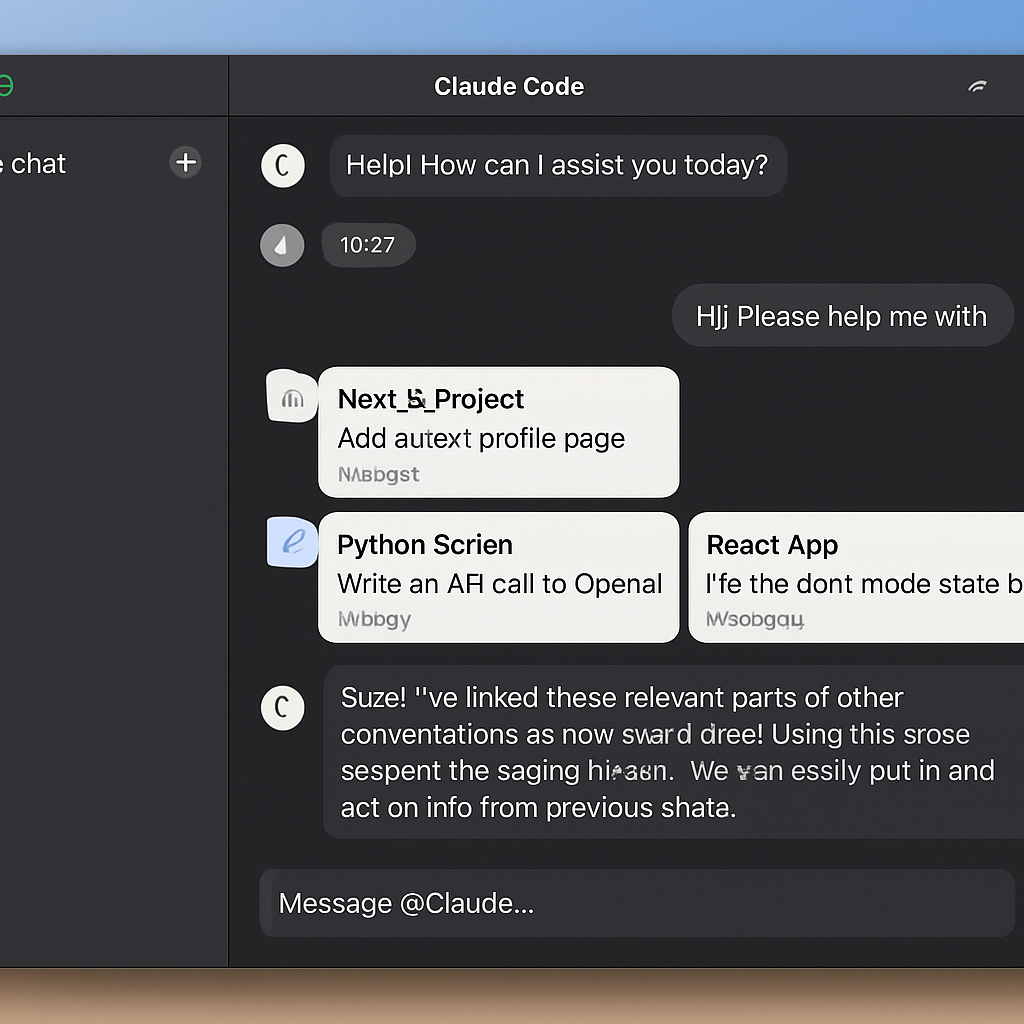
Anthropic has enhanced its Claude Code platform by introducing cross-session messaging, enabling separate coding sessions to communicate directly without the need to manually transfer context between Terminal windows.
This new functionality is part of Claude Code version 2.1.224, released for macOS and Linux. It utilizes two tools: ListAgents, which identifies other active sessions on the Mac, and SendMessage, which facilitates the message delivery. When a session receives a message, it appears as a labeled card with a link back to the sender.
According to Anthropic’s documentation, only text is transmitted between sessions; conversation history, files, or permissions are not shared. This allows one session to notify another about changes that may affect dependencies or to pass along information another session requires. Importantly, incoming messages cannot approve permission requests or alter a session’s settings independently.
This feature complements Claude Code’s existing subagents and Agent Teams tools by connecting sessions that users are already running separately on their Mac, rather than those managed by Claude itself. Messages exchanged between sessions on the same Mac remain local and do not reach Anthropic’s servers. For communication between different machines, messaging functions only as a reply through Remote Control, which links a Mac terminal to the Claude apps for iOS and Android.
Cross-session messaging is available on macOS and Linux with Claude Code version 2.1.224 or later and is not supported on Windows. This update was released alongside 31 other changes, including a new ‘claude self-hosted-runner’ command for Team and Enterprise plans.
This development signifies a substantial improvement in the efficiency and collaboration capabilities of Claude Code. By enabling direct communication between sessions, developers can streamline their workflows, reduce redundancy, and enhance productivity. As AI-driven coding tools continue to evolve, such features are crucial in fostering more integrated and responsive development environments.