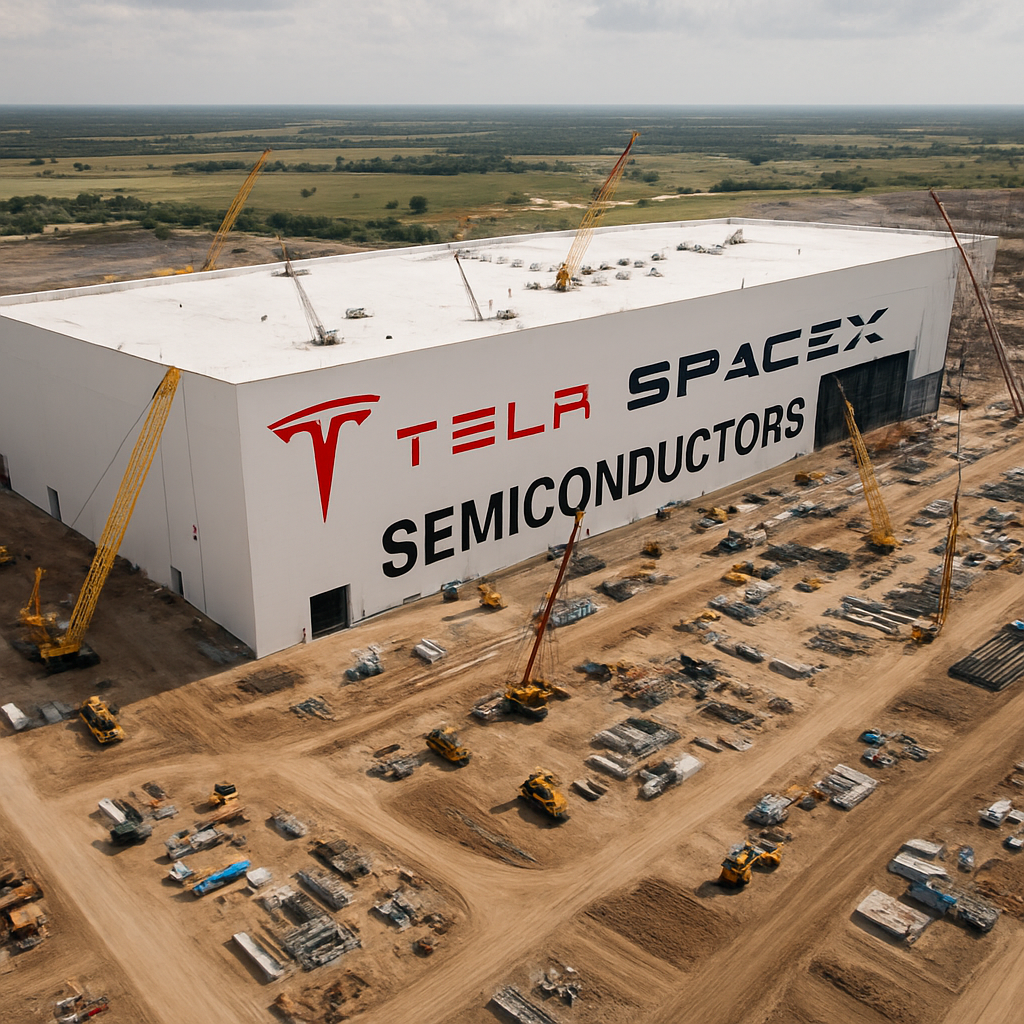
Tesla and SpaceX have announced plans to construct ‘Terafab,’ an advanced semiconductor manufacturing facility in Grimes County, Texas, with an initial investment of $16.8 billion. This ambitious project aims to address the growing demand for high-performance computing power essential for artificial intelligence, robotics, and space-based data centers.
Elon Musk, CEO of both companies, described the facility as the largest and most valuable building on Earth, encompassing over 100 million square feet of manufacturing space. The factory is expected to create at least 3,000 jobs for residents of Grimes and neighboring Brazos County.
The primary objective of Terafab is to bridge the gap between current global chip supply and the future’s compute demand. The facility will focus on producing chips optimized for edge computing and inference, catering to applications such as Tesla’s Optimus robots, self-driving Cybercabs, and SpaceX’s space-based data centers.
SpaceX has indicated that the total investment in Terafab could reach up to $119 billion through a multi-phase construction plan. Intel has also committed to contributing to the project, though specific details of its involvement remain undisclosed.
To mitigate environmental concerns, the companies plan to utilize water from the local Gibbons Creek Reservoir instead of tapping into local groundwater resources. This decision comes in response to community apprehensions regarding the project’s environmental impact and the substantial tax incentives awarded to the initiative.
Dr. Sarah Borowicz, Superintendent of the Anderson-Shiro Consolidated Independent School District, expressed optimism about the project’s potential benefits for the community, emphasizing the importance of managing the opportunities created through this agreement wisely and transparently, with a focus on student welfare.
The establishment of Terafab signifies a strategic move by Tesla and SpaceX to secure a reliable supply of advanced semiconductors, crucial for their ambitious AI and space exploration endeavors. This development also highlights the increasing trend of major technology companies investing in domestic chip manufacturing to reduce dependency on foreign suppliers and enhance control over their supply chains.