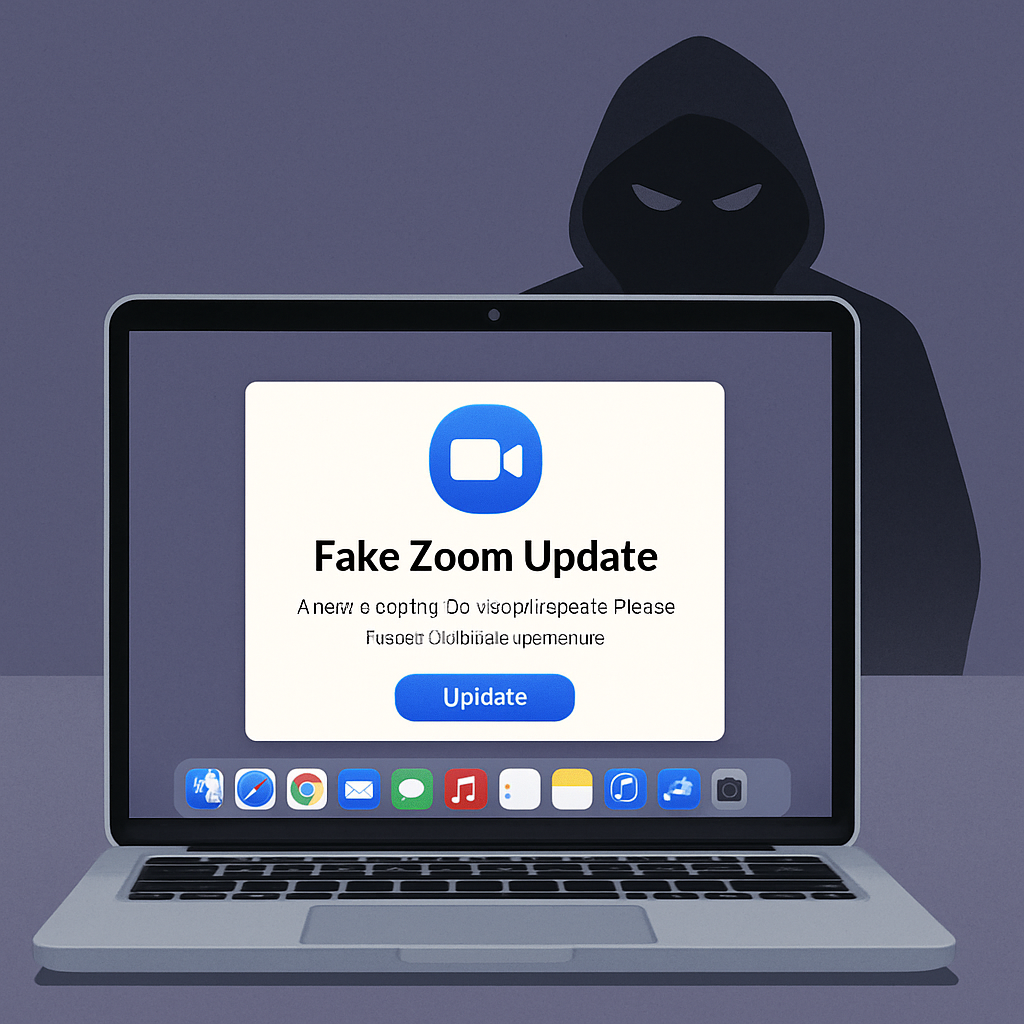
A sophisticated malware campaign, dubbed Smoke#Screen, has expanded its reach to macOS users by disguising malicious software as legitimate Zoom updates and business files. This campaign employs ScreenConnect, a remote monitoring and management tool, to gain unauthorized access to victims’ systems.
Initially identified targeting Windows systems, Smoke#Screen has now been observed affecting macOS devices. The attackers distribute a package named “ZoomUpdateInstaller.pkg,” which, when executed, installs a legitimate ScreenConnect client configured to connect to attacker-controlled servers instead of authorized company systems. This setup allows cybercriminals to remotely control the infected devices under the guise of legitimate IT activity.
ScreenConnect, developed by ConnectWise, is widely used by IT departments for remote support and system management. In this campaign, the attackers exploit the tool’s capabilities to establish a persistent presence on compromised systems, enabling them to execute commands, transfer files, and monitor user activities without detection.
The use of legitimate software like ScreenConnect in malicious campaigns is not unprecedented. Similar tactics have been employed in the past, where attackers repurpose trusted applications to bypass security measures and maintain prolonged access to targeted systems. This approach complicates detection efforts, as the malicious activity blends seamlessly with normal network traffic.
To protect against such threats, users are advised to exercise caution when downloading and installing software updates. It’s crucial to obtain updates directly from official sources and verify their authenticity before installation. Additionally, implementing robust endpoint protection solutions and maintaining up-to-date security patches can help mitigate the risk of unauthorized access.
The expansion of Smoke#Screen to macOS highlights the evolving nature of cyber threats and the importance of vigilance across all platforms. As attackers continue to adapt their methods, users and organizations must remain proactive in their cybersecurity practices to safeguard against emerging threats.