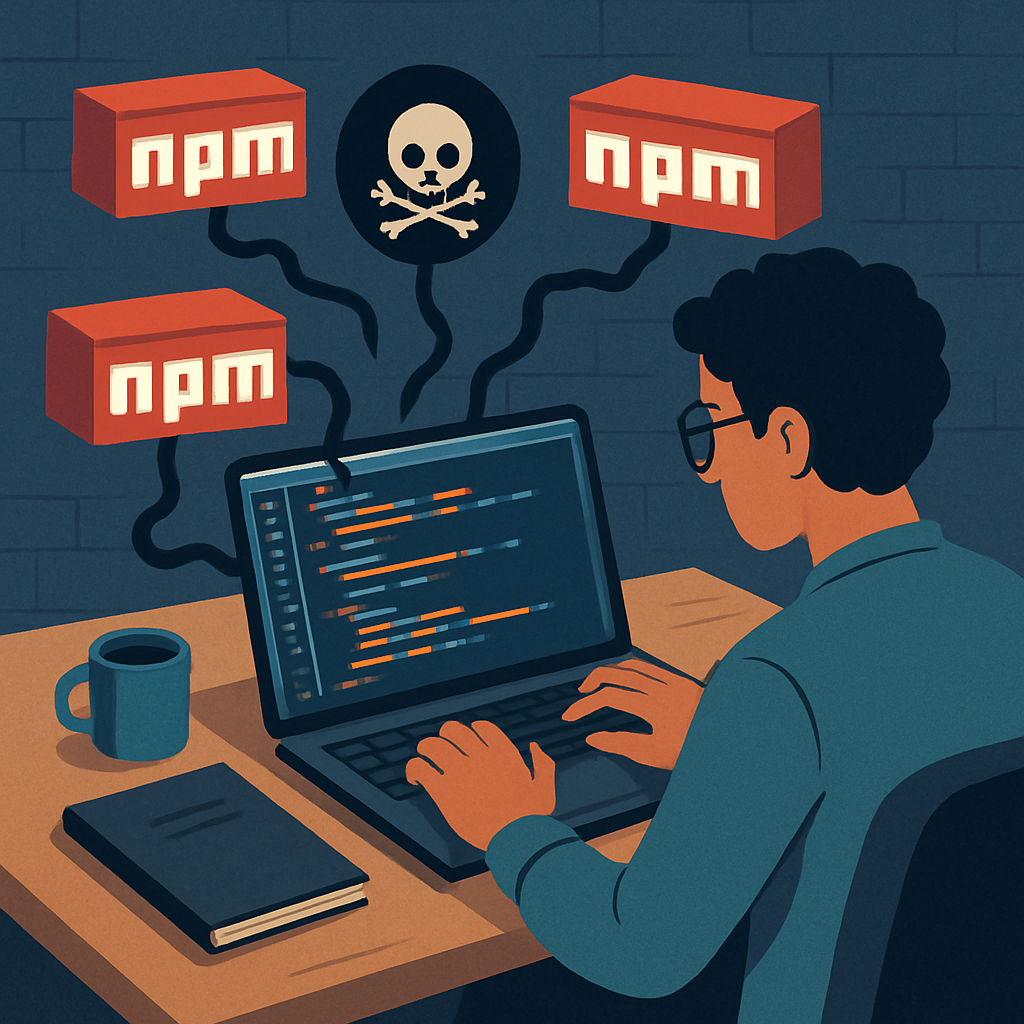
North Korean state-sponsored hackers have escalated their cyber operations by compromising trusted npm packages, turning them into vectors for widespread software supply chain attacks. By infiltrating the accounts of legitimate package maintainers, these attackers have been able to inject malicious code into widely used tools, thereby exploiting the trust developers and organizations place in these resources.
Between March 2025 and March 2026, several popular npm packages, including ‘typo-crypto,’ ‘debug,’ ‘chalk,’ and ‘axios,’ were targeted. Organizations that automatically updated to the latest versions of these packages inadvertently incorporated the malicious code into their development and build processes. Notably, ‘axios,’ with over 100 million weekly downloads, was compromised in March 2026, highlighting the extensive reach of this attack.
Analysts at AWS have attributed these campaigns to a North Korean-linked threat actor known by various aliases, including SAPPHIRE SLEET, STARDUST CHOLLIMA, BlueNoroff, CageyChameleon, and Alluring Pisces. The group employed shared techniques, malicious npm packages, and reused code across these incidents, indicating a coordinated and sophisticated approach.
The impact of these attacks is profound, as open-source dependencies are integral to countless applications, cloud workloads, and automated build systems. A single compromised update can provide attackers with access to numerous downstream environments simultaneously, echoing the risks observed in previous npm package supply chain compromises that propagated through trusted development tools.
Methods of Compromise
The attackers primarily utilized social engineering tactics to gain control over trusted maintainer accounts. Once access was secured, they published updates containing concealed malicious code, leveraging the credibility of established packages to bypass the scrutiny typically applied to unfamiliar dependencies.
In the ‘typo-crypto’ campaign, the attackers added a file named ‘core.js’ that masqueraded as the legitimate ‘core-js’ package. This file executed only when it received a specific hash input, subsequently downloading and executing a second-stage payload tailored for Windows, macOS, or Linux systems. AWS assessed that this smaller operation in March 2025 likely served as a testing ground for more extensive attacks on higher-profile packages.
Evolution of Attack Techniques
AWS has observed that attackers are increasingly distributing malicious activities across multiple seemingly benign packages. For instance, one package may store encrypted data, another may contain the code to decrypt it, and a third may retrieve the final payload. This modular approach complicates detection efforts, as isolated reviews of individual packages may not reveal the malicious intent.
Furthermore, threat actors are building trust over time by maintaining useful projects or contributing to existing ones before exploiting their positions. This patient strategy mirrors patterns seen in incidents like the XZ Utils compromise and other recent North Korean npm package attacks, where legitimate access becomes the attackers’ most valuable asset.
Another concerning tactic involves separating a package’s public appearance from its actual behavior. A package may seem harmless in the public registry but can call external scripts, configuration files, or remote servers at runtime, allowing attackers to activate malicious behavior without publishing a new version.
Additionally, the advent of generative AI introduces new risks. Attackers can use AI to create convincing documentation, maintainers, and code, while ‘slopsquatting’ exploits package names incorrectly suggested by coding assistants and subsequently installed by developers.
To mitigate these threats, security teams should maintain a clear inventory of dependencies, inspect unexpected package changes, and review how packages behave during installation and runtime. Vigilance and proactive measures are essential to safeguard against the evolving landscape of software supply chain attacks.
These incidents underscore the critical need for robust security practices within the open-source community. Developers and organizations must exercise heightened caution when integrating third-party packages, especially those that are frequently updated or have recently changed maintainers. Implementing stringent verification processes and monitoring for anomalous behavior can help mitigate the risks associated with such sophisticated supply chain attacks.