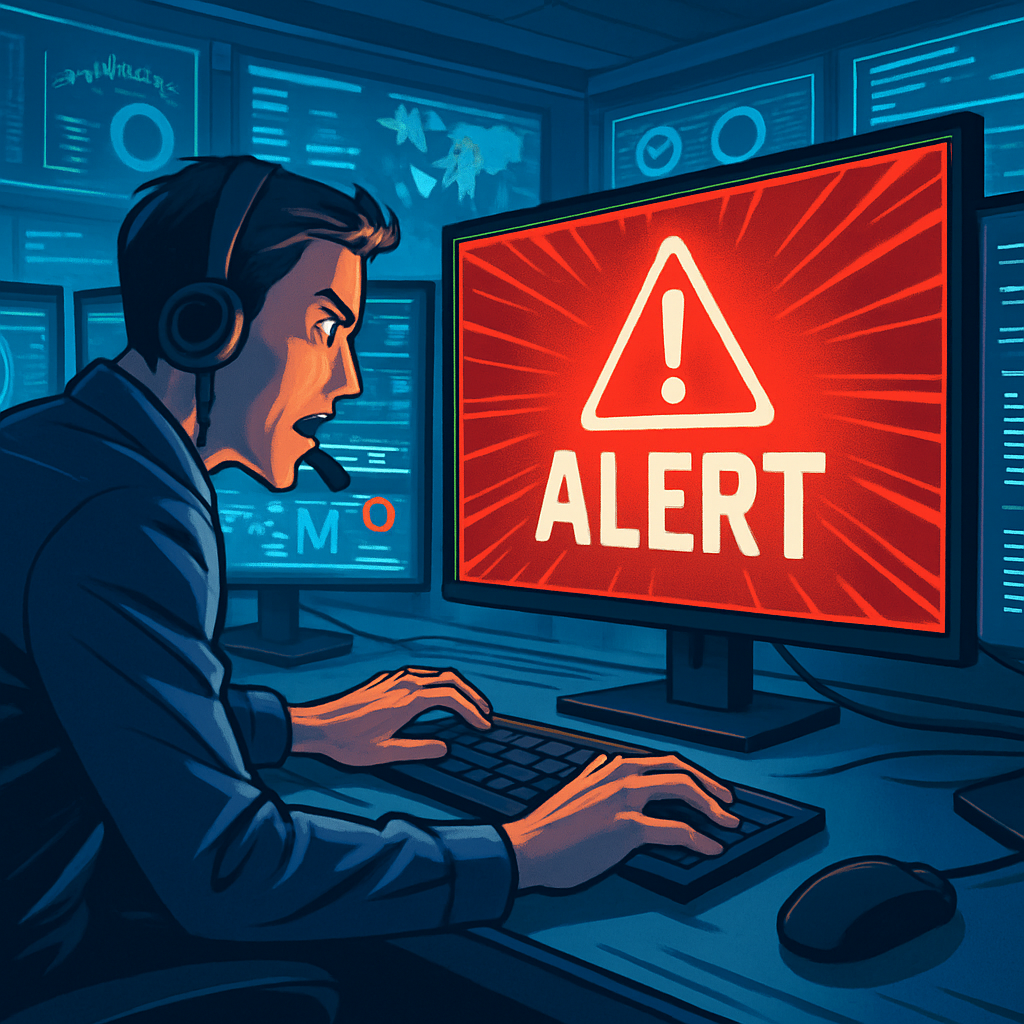
In the realm of cybersecurity, the speed of incident response often outweighs the pursuit of perfect solutions. When a security alert is triggered, attackers continue their operations without pause, exploiting vulnerabilities and expanding their reach. Delaying action in search of complete certainty can inadvertently aid these malicious activities.
Security Operations Center (SOC) analysts are trained to meticulously verify indicators of compromise, scrutinize endpoints, review network traffic, and correlate alerts. While thoroughness is essential, an overemphasis on achieving perfect certainty can lead to delays. Modern cyberattacks are typically multi-staged, progressing from initial access to lateral movement and data exfiltration. Interrupting this sequence early can significantly mitigate potential damage.
The primary goal of Tier 1 triage is to determine the appropriate next steps: closing the alert, monitoring the endpoint, blocking a domain, or escalating the incident. These decisions require sufficient evidence rather than absolute certainty. Effective SOCs build confidence progressively, using each piece of evidence to strengthen or weaken the breach hypothesis until a reasonable decision emerges.
Investigations are often hindered not by complex malware but by fragmented information. Analysts may need to consult various sources, including reputation services, WHOIS records, passive DNS, malware repositories, internal telemetry, previous incident tickets, threat reports, and sandbox results. Constantly switching between these resources can slow down the process, allowing the incident queue to grow and making investigations more resource-intensive.
Relying solely on reputation scores is insufficient. A suspicious IP address, for instance, provides limited insight on its own. More pertinent questions include: Which malware families communicate with it? Has it appeared in recent phishing campaigns? What related domains and URLs are connected to it? How recently was it observed? What behavior did associated malware exhibit? Are there related indicators that should also be investigated? Contextual information transforms isolated indicators of compromise into evidence-based decisions, shifting the focus from questioning the maliciousness of an IP to understanding the attack it is part of.
Incorporating tools that consolidate threat intelligence can streamline this process. For example, platforms that allow analysts to pivot from a suspicious IP, domain, URL, or file hash to the surrounding intelligence can expedite decision-making. By reducing the need to consult multiple disconnected resources, such tools enable faster, more informed responses.
In summary, while thoroughness is vital in cybersecurity, the emphasis should be on achieving a balance between speed and accuracy. Rapid, informed decisions can prevent attackers from advancing their objectives, thereby reducing business risk and potential damage.
As cyber threats continue to evolve in complexity and frequency, organizations must adapt by prioritizing swift, evidence-based responses over the pursuit of perfect solutions. This approach not only enhances the effectiveness of incident response but also fortifies the organization’s overall security posture.