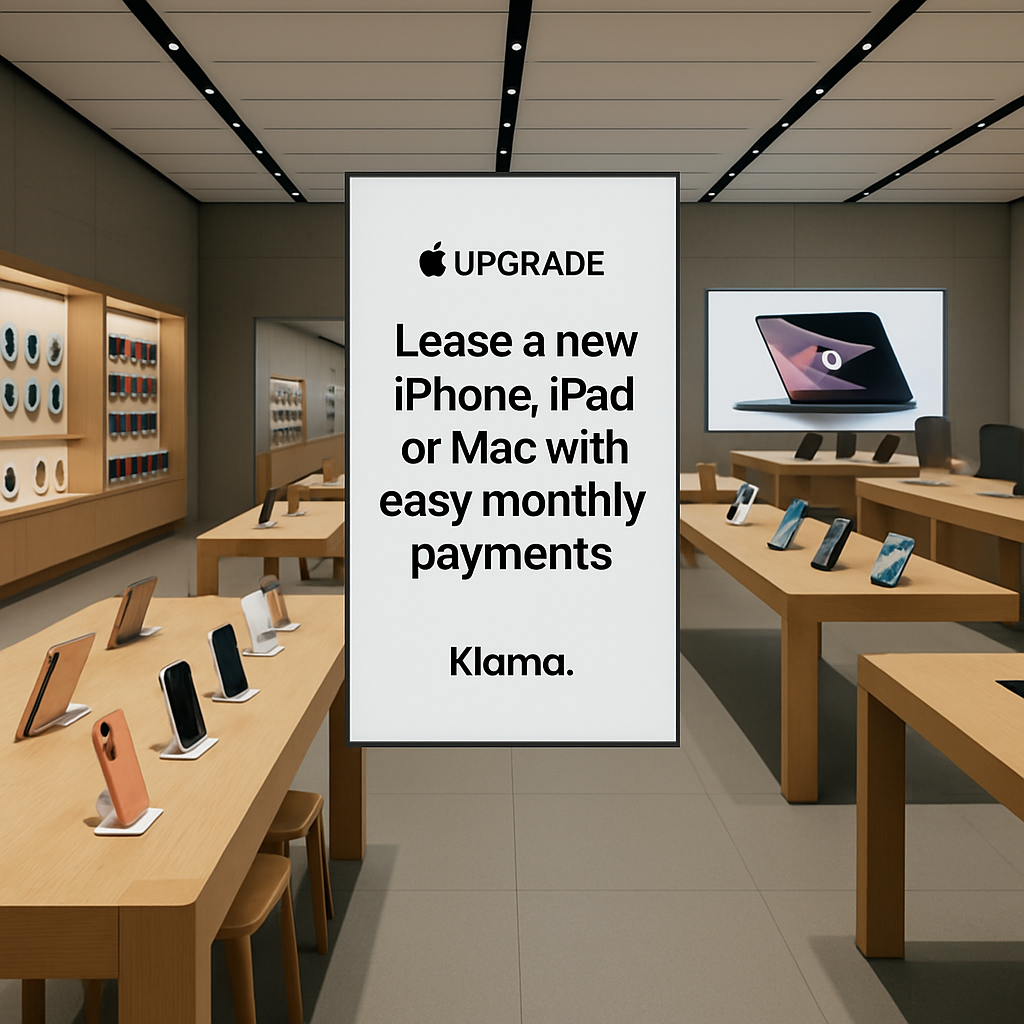
Apple has introduced ‘Apple Upgrade,’ a new leasing program in the United States, developed in collaboration with Klarna. This initiative replaces the previous iPhone Upgrade Program and iPhone Payments, offering customers flexible leasing options for a range of Apple products, including iPhones, iPads, Macs, and Apple Watches.
The program provides 12-month and 24-month lease terms for iPhones and Apple Watches, and 24-month and 36-month terms for iPads and Macs. Monthly payments vary based on the device and lease duration. For instance, a 256GB iPhone 17 Pro, priced at $1,099, can be leased for $31.99 per month over 24 months or $45.99 per month over 12 months. Similarly, a 42mm Apple Watch Series 11, retailing at $399, has monthly payments of $11.99 for a 24-month lease or $21.99 for a 12-month lease.
Notably, AppleCare+ is not included in the lease price but remains available as an optional add-on. Customers can also opt for AppleCare One for extended coverage.
At the conclusion of the lease term, participants have several options: return the device and exit the program, pay the remaining balance to retain ownership, or upgrade to a newer device by initiating a new lease. The payoff amount is calculated as the difference between the total lease payments made and the device’s retail price, minus any applicable trade-in credits. Importantly, Klarna does not impose additional fees for this leasing arrangement, allowing customers to acquire devices at their retail prices without extra costs beyond taxes.
For iPhone leases, customers are required to select a plan from AT&T, Verizon, or T-Mobile, as prepaid plans and MVNOs like Mint Mobile or Visible are not eligible. However, the leased iPhones are unlocked, providing the flexibility to switch carriers if desired.
Apple’s transition to the ‘Apple Upgrade’ program signifies a strategic shift towards more flexible and customer-centric financing options. By partnering with Klarna, Apple aims to offer lower monthly payments and a streamlined upgrade process, potentially enhancing customer loyalty and device accessibility. This move reflects a broader industry trend towards subscription-based models, catering to consumers’ evolving preferences for affordability and flexibility in technology ownership.