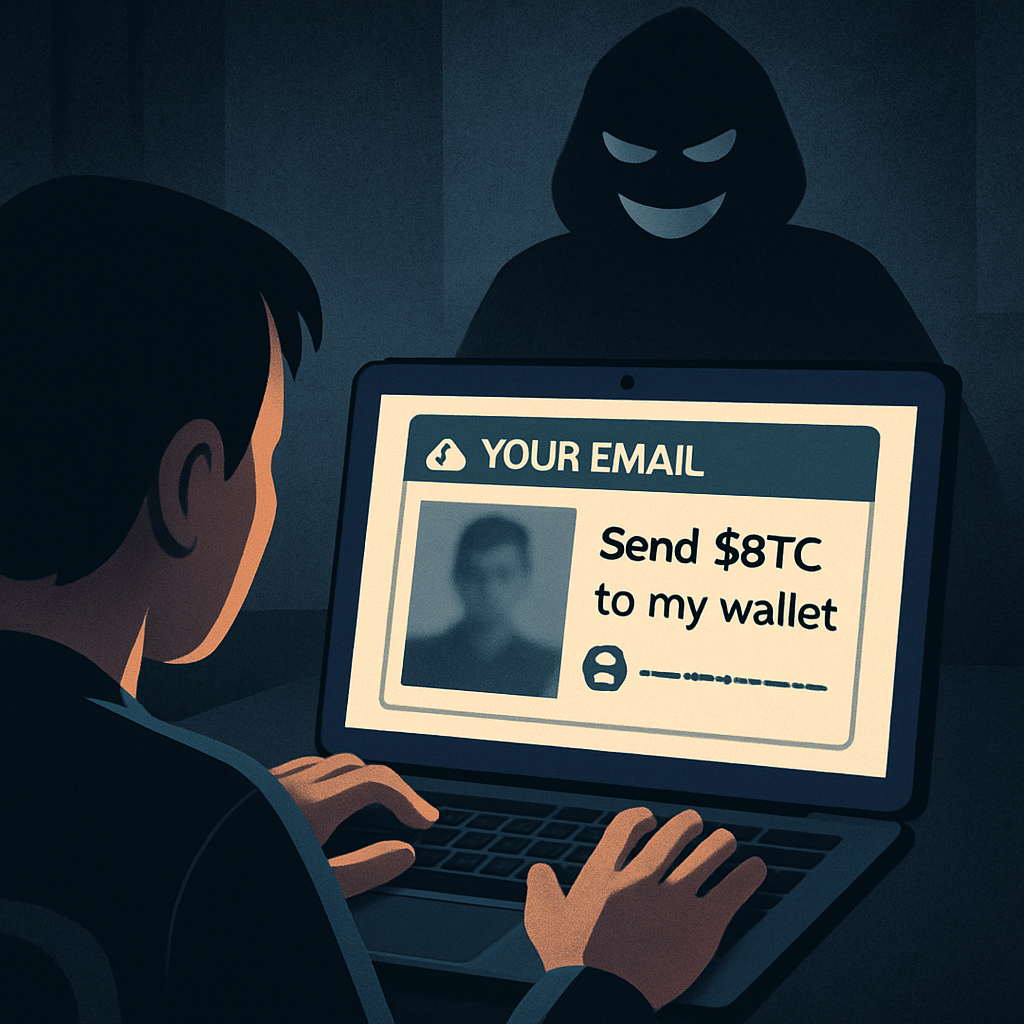
Recent reports indicate that individuals affected by data breaches are being targeted by a new sextortion scam. In this scheme, scammers impersonate the notorious hacking group ShinyHunters, sending emails that claim to have recorded victims through their webcams. These messages often include the recipient’s actual email address, lending an air of credibility to the threats.
The primary objective of these fraudulent emails is to coerce recipients into transferring Bitcoin payments promptly, before they can verify the authenticity of the claims. Unlike traditional malware-based attacks, this campaign leverages information already exposed in previous data breaches. By utilizing leaked email addresses, scammers make their assertions appear more plausible, alleging that they installed spyware on the victim’s device after the user clicked on a malicious link.
The emails falsely assert that the attackers have gained access to webcams, microphones, messages, contact lists, and browsing activities. However, security analysts have determined that these claims are baseless, with no evidence of malware installation, recordings, or any credible proof to support the allegations.
Exploiting Breach Fallout
This scam underscores the enduring impact of data breaches. Even after stolen information is published or traded, it can be exploited for further fraudulent activities. The mere possession of a leaked email address does not indicate that a criminal has control over a victim’s device, but it can create sufficient doubt to make a threatening email seem authentic.
In some instances, the fraudulent emails claim that the sender, posing as ShinyHunters, accessed the victim’s account through a breached organization. For example, one email referenced an Amtrak account and alleged that an exploit was installed across the recipient’s phone and other devices. The message threatened to distribute supposed explicit videos to the victim’s family, friends, and colleagues unless a $2,000 Bitcoin payment was made within 48 hours.
Researchers have identified that email addresses linked to breaches involving companies such as Amtrak, Hallmark, ADT, Substack, Betterment, CarGurus, Panera Bread, and McGraw Hill have been used in this campaign. Additionally, a California community college issued warnings to individuals affected by a Canvas-related incident, where targeted addresses had previously appeared in data attributed to ShinyHunters.
It’s important to note that the actual ShinyHunters group has denied involvement in this sextortion operation. This denial highlights how unrelated criminals can exploit the reputation of established threat actors to lend credibility to their scams. Furthermore, analysis of the Bitcoin payment addresses provided in the scam emails shows no activity, suggesting that the campaign relies more on inducing panic and targeting a large volume of recipients rather than on actual device compromise.
Recommended Actions for Recipients
Individuals who receive such emails are advised not to respond, negotiate, or send money. Engaging with the sender can signal that the email account is actively monitored, potentially leading to further harassment. Instead, recipients should take a moment to assess the situation, consult with trusted individuals if necessary, and remember that professional-looking emails, even those polished with AI tools, do not constitute evidence of the claims made.
Attachments in these emails should be handled with caution. Sextortion emails often lack proof, and any attachments may serve to deliver malware or make empty threats appear more convincing. If an email contains an old or current password, recipients should immediately change it wherever it is in use and enable two-factor authentication to enhance security.
The safest course of action is to delete the email, report it as spam, and avoid clicking on any links or opening attached files. Concerned individuals can independently verify whether their information has appeared in known breaches but should refrain from engaging with the blackmailer to seek confirmation.
This incident serves as a reminder of the persistent nature of digital sextortion and its place within the broader landscape of cyber fraud, which includes phishing and business email compromise. As cybercriminals continue to adapt their tactics, individuals must remain vigilant and informed to protect themselves from such schemes.