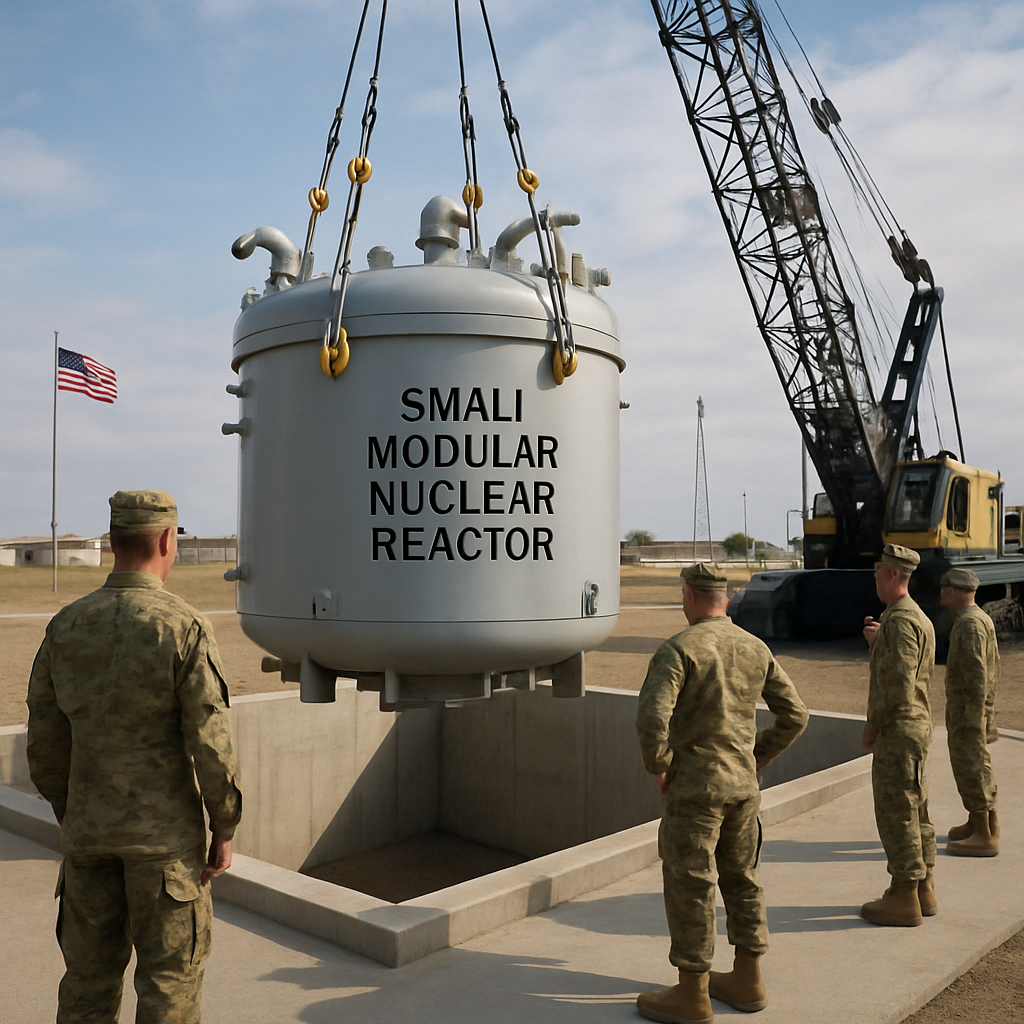
Antares Nuclear has successfully raised $470 million in a Series C funding round to advance the development of small modular reactors (SMRs) tailored for U.S. military installations. This round was led by Paradigm and Caffeinated Capital, with additional participation from Industrious Ventures, Point72 Ventures, and Shine Capital. The funding comprises $370 million in equity and $100 million in debt.
Antares is focusing on SMRs capable of generating between 100 kilowatts and 1 megawatt of electricity, sufficient to power up to 750 homes. These reactors utilize TRISO fuel, which encases uranium in carbon and ceramic shells, offering enhanced safety features. The company’s demonstration reactor, the Mark-0, achieved criticality on June 4 at the Idaho National Laboratory.
As one of three finalists in the Pentagon’s Advanced Nuclear Power for Installations program, Antares plans to deploy its reactors at Air Force bases in Colorado and Montana. The company aims to have its first electricity-producing reactor operational next year, with broader deployments at U.S. military sites anticipated by 2028.
The surge in electricity demand, driven by the expansion of data centers and the broader electrification of the economy, has spurred increased investment in nuclear power. In April, X-energy raised $1 billion through an IPO, while other companies like Radiant Energy, Standard Nuclear, and Last Energy have secured significant funding since December.
Despite the growing interest, advanced nuclear startups face challenges such as an underdeveloped supply chain and the complexities of scaling production. While mass manufacturing of SMRs is expected to reduce costs over time, achieving cost competitiveness with traditional power plants remains a long-term goal. Current estimates suggest that new SMRs may cost around $214 per megawatt-hour, making them more expensive than most new power plants.
Antares’s focus on military contracts reflects a strategic approach to navigate these challenges, leveraging the U.S. military’s capacity to invest in advanced technologies that may not yet be cost-competitive in the civilian market.