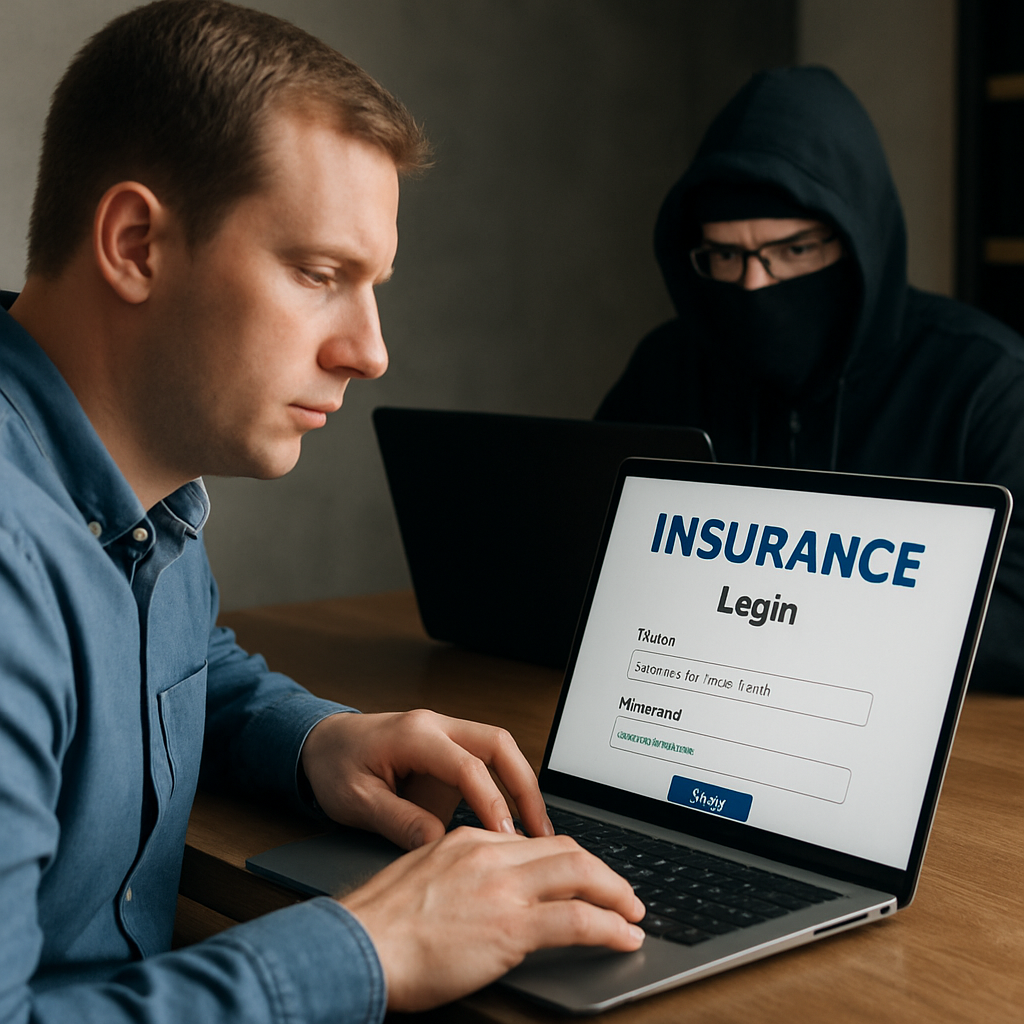
Phishing attacks targeting the insurance sector have undergone a significant transformation. Traditionally, cybercriminals would deceive individuals into providing their login credentials, which were then stored for future exploitation. However, recent investigations reveal a shift towards real-time account hijacking, where attackers synchronize their actions with victims during the login process, gaining immediate access to accounts within a single browsing session.
Insurance Industry: A Prime Target
The digitalization of insurance services has expanded rapidly, enabling customers to manage policies, submit claims, and make payments online. This convenience, however, has made insurance providers attractive targets for cybercriminals. Compromised accounts can expose extensive personal information, policy details, and payment methods, facilitating various forms of fraud beyond the initial breach.
Investigations have uncovered a coordinated phishing campaign targeting multiple insurance companies across regions including Saudi Arabia, Europe, the United States, and India. Attackers utilize a standardized infrastructure, adapting branding and content to local markets, thereby enhancing the credibility of their fraudulent schemes.
Exploiting Google Ads as an Attack Vector
Notably, cybercriminals are leveraging sponsored Google advertisements to initiate these attacks. By purchasing ads that appear during searches for insurance quotes or renewals, they lure users to counterfeit websites. These sites are meticulously designed to mimic legitimate insurance portals, replicating branding and user interfaces to deceive visitors.
The infrastructure supporting these phishing campaigns is both disposable and versatile. Attackers often use legitimate website builders and free hosting platforms, such as GitHub Pages, Netlify, Hostinger, and Wix, to host their fraudulent sites. This approach allows for rapid deployment and rotation of domains, complicating detection and mitigation efforts.
The evolution of phishing tactics in the insurance industry underscores the need for enhanced cybersecurity measures. Organizations must adopt proactive strategies, including continuous monitoring of digital assets, employee training on recognizing phishing attempts, and implementing multi-factor authentication to safeguard customer data. As cyber threats become more sophisticated, a comprehensive and adaptive security posture is essential to protect sensitive information and maintain trust.