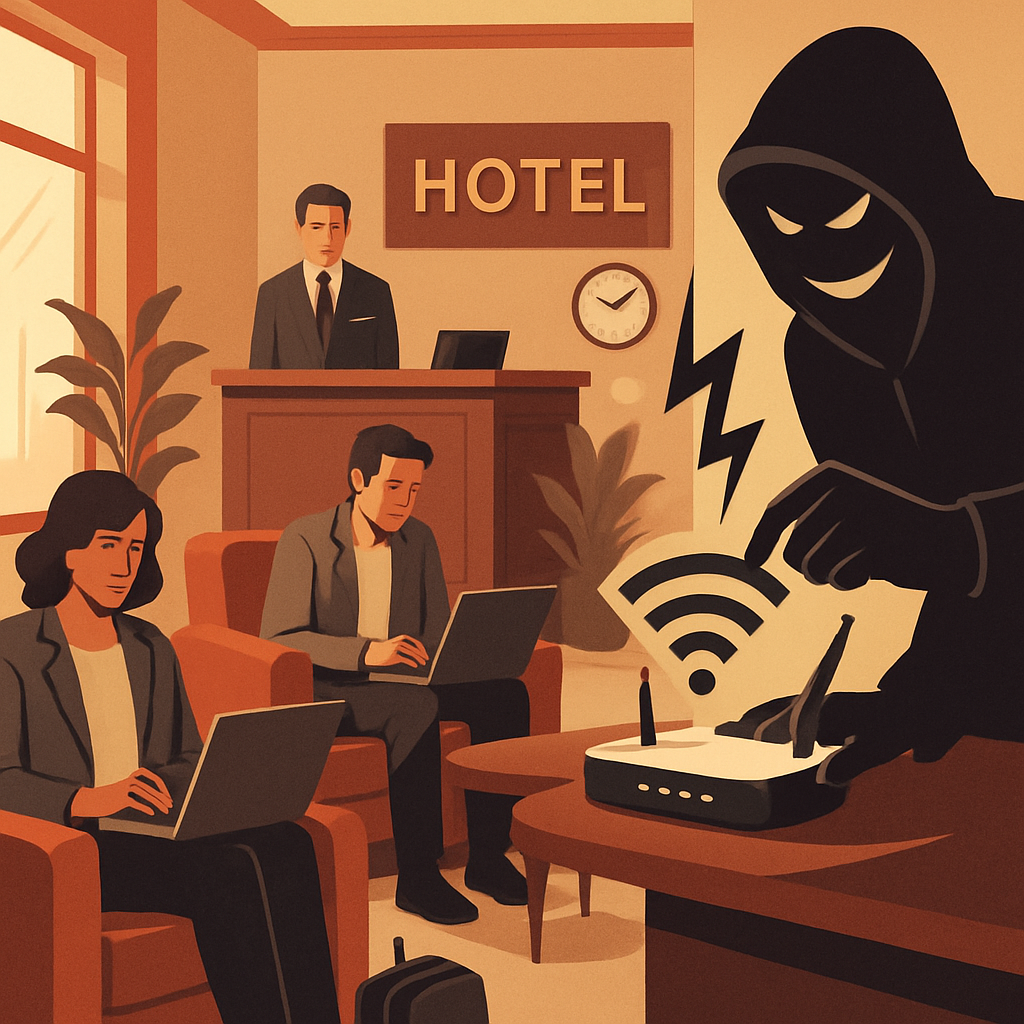
Recent findings have revealed a significant cybersecurity threat targeting hotel Wi-Fi networks, where attackers compromise a single gateway to redirect all guest traffic to malicious servers. This method poses a substantial risk to corporate accounts, as users may unknowingly expose sensitive information while believing they are browsing securely.
The attack exploits the inherent trust users place in hotel and conference Wi-Fi networks. By infiltrating the network’s gateway, cybercriminals can manipulate DNS responses, effectively steering every guest’s web requests through servers under their control. This technique requires no malware installation or phishing attempts, making it particularly insidious.
Security researchers have observed this campaign across multiple cities in the United States, India, and Saudi Arabia. The affected individuals span various sectors, including finance, legal, healthcare, energy, and retail. The attackers employ DNS poisoning at captive portal appliances in hotels and conference centers to harvest credentials, notably targeting Microsoft 365 accounts of traveling employees.
The tactics bear resemblance to those used by the advanced persistent threat group APT28, also known as Fancy Bear or Forest Blizzard. Previously, this group targeted small office and home office (SOHO) routers by altering DNS settings. In the current scenario, attackers modify DNS configurations at the network gateway, allowing them to redirect users to counterfeit Microsoft login pages without raising suspicion.
The implications of such an attack are far-reaching. A single compromised captive portal appliance can affect every device connected to the network, including laptops and smartphones. This means that all guests using the Wi-Fi during the period of compromise are vulnerable to data interception and credential theft.
Mechanism of the Attack
The attackers likely gain administrative access to captive portal appliances by exploiting exposed management interfaces, such as internet-facing SSH, SNMP, or web administration consoles. Weak or reused credentials often facilitate this unauthorized access. Once inside, they alter the DNS settings, ensuring that all clients on the network receive forged responses directing them to attacker-controlled servers instead of legitimate Microsoft domains.
This manipulation effectively positions the gateway as an adversary-in-the-middle, intercepting and redirecting all guest traffic. Users are presented with authentic-looking Microsoft sign-in pages, leading them to unwittingly disclose their credentials.
Preventive Measures
To mitigate the risks associated with such attacks, both organizations and individuals should adopt the following practices:
- Use Virtual Private Networks (VPNs): Always connect to public Wi-Fi networks through a reputable VPN service to encrypt traffic and protect data from interception.
- Verify Network Authenticity: Before connecting, confirm the legitimacy of the Wi-Fi network with hotel staff to avoid connecting to rogue networks.
- Enable Multi-Factor Authentication (MFA): Implement MFA on all critical accounts to add an extra layer of security, making it more challenging for attackers to gain unauthorized access.
- Regularly Update Credentials: Change passwords periodically and avoid reusing them across different platforms to reduce the risk of credential compromise.
As cyber threats continue to evolve, it is imperative for both organizations and individuals to remain vigilant. The exploitation of trusted networks, such as hotel Wi-Fi, underscores the need for robust security practices and continuous awareness to safeguard sensitive information.