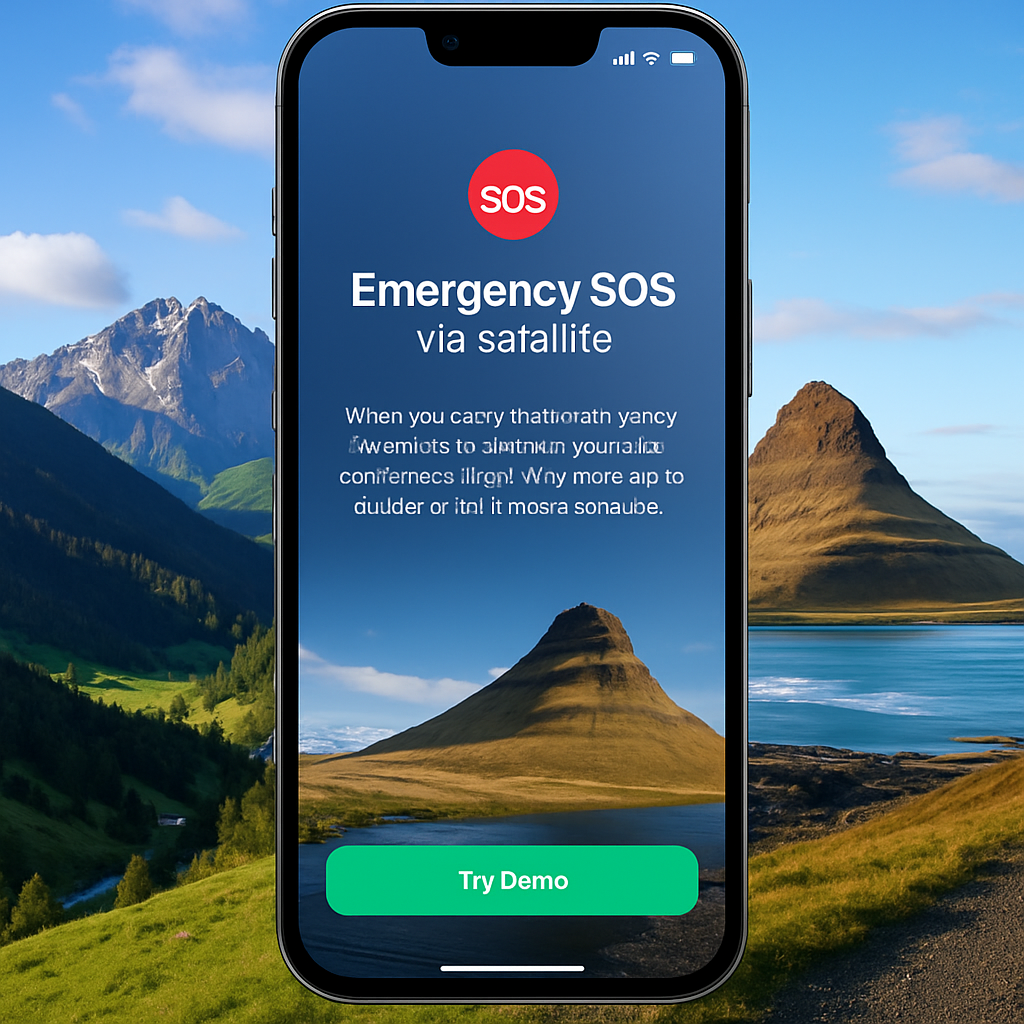
Apple has expanded its Emergency SOS via satellite feature to include Andorra and Iceland, enhancing safety options for users in these regions. This functionality, available on iPhone 14 and newer models as well as the Apple Watch Ultra 3, enables users to contact emergency services via text when outside the range of Wi-Fi or cellular networks.
To utilize this feature in Andorra and Iceland, devices must be updated to iOS 26.4 or watchOS 26.4, respectively. This expansion underscores Apple’s commitment to broadening the reach of its satellite-based emergency services, which have been progressively introduced to various countries since their initial launch.
Emergency SOS via satellite was first introduced in November 2022 in the United States and Canada, providing a critical lifeline for users in remote areas without traditional network coverage. The service has since been extended to multiple countries, including France, Germany, Ireland, the UK, Australia, Austria, Belgium, Italy, Luxembourg, the Netherlands, Portugal, Switzerland, Spain, New Zealand, Japan, and Mexico.
In November 2024, Apple announced an expanded agreement with Globalstar, its satellite partner, to support the growing demand for satellite services. This agreement included plans for a new satellite constellation and enhanced ground infrastructure, aiming to improve the reliability and coverage of services like Emergency SOS via satellite.
Apple has also extended the free access period for its satellite features. Initially offered as a two-year free service upon device activation, the company announced in September 2025 an additional year of free access for existing iPhone 14 and iPhone 15 users, reflecting the importance and positive reception of these safety features.
The expansion of Emergency SOS via satellite to Andorra and Iceland is a significant step in making this life-saving technology accessible to more users worldwide. As Apple continues to invest in satellite communication capabilities, it is likely that we will see further enhancements and broader availability of these services, reinforcing the role of technology in personal safety and emergency response.