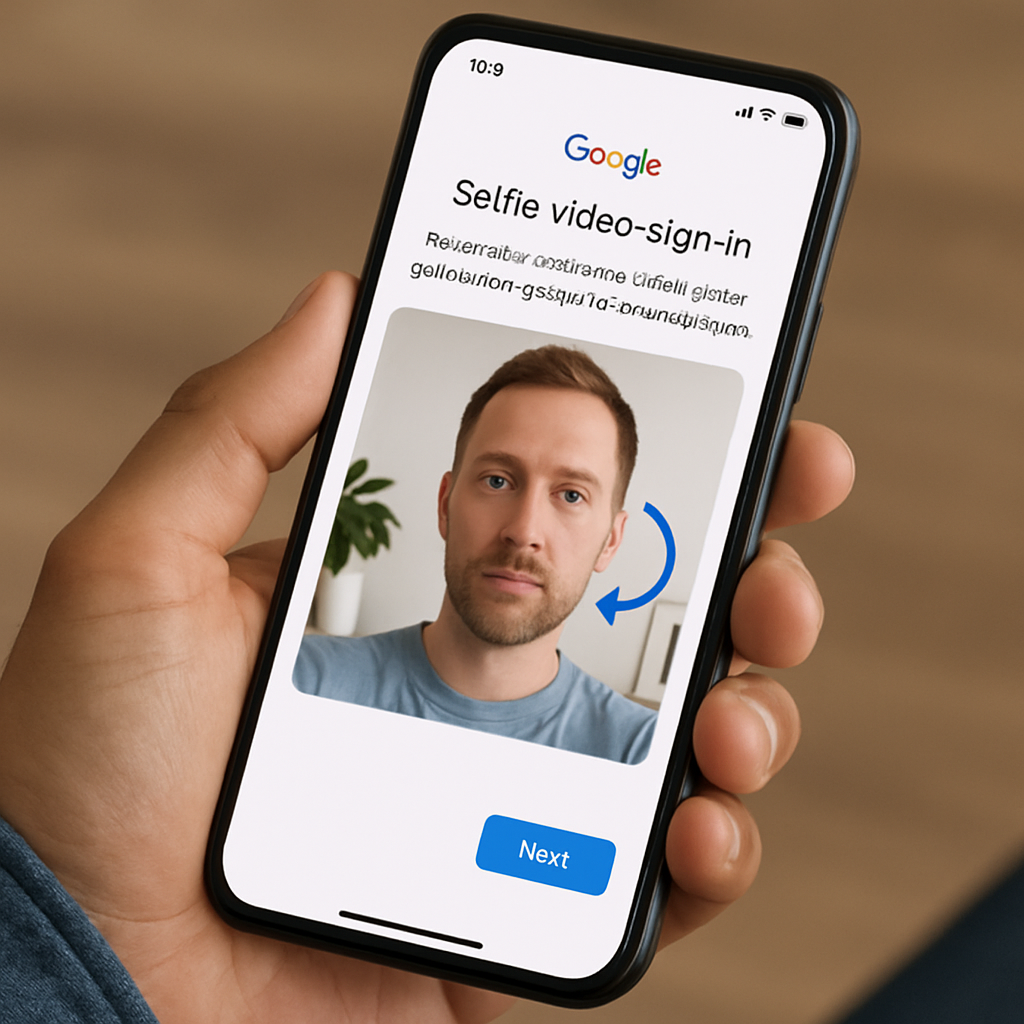
Google has unveiled a new feature allowing users to sign in to their accounts using a selfie video. This addition provides an alternative method for account recovery, particularly useful when traditional options like passwords or trusted devices are unavailable.
To set up this feature, users are guided to look into their device’s camera and perform specific head movements, such as turning left or right and nodding, to capture multiple angles of their face. This process is supported on both mobile and desktop platforms. For desktops lacking a camera, users can utilize their smartphones to complete the setup.
In situations where access to a Google Account is lost, users can record a new selfie video. Google will then compare this new recording to the previously saved one to verify the user’s identity. To ensure security, the system employs multiple layers of protection to detect and prevent impersonation attempts, including the use of fake photos or deepfakes. Additionally, users are required to perform simple movements during the verification process to confirm the video is live.
Privacy is a key consideration in this feature. The recorded selfie videos are encrypted and stored securely. Users have the option to delete their selfie video at any time through their Google Account settings. By default, these videos are used solely for sign-in purposes, though users can opt in to allow their data to be used for improving verification methods.
This selfie video sign-in method is designed for scenarios where users do not have access to their usual phone or computer. It complements existing recovery options like passkeys and recovery contacts. Google recommends setting up multiple recovery methods to ensure account security.
To check eligibility and set up the selfie video sign-in, users can visit g.co/signin-selfie.
As digital security threats evolve, incorporating biometric verification methods like selfie videos offers a more robust and user-friendly approach to account recovery. However, users should remain vigilant about their privacy and ensure they are comfortable with the data they share. This development reflects a broader trend towards integrating biometric authentication in digital security protocols.