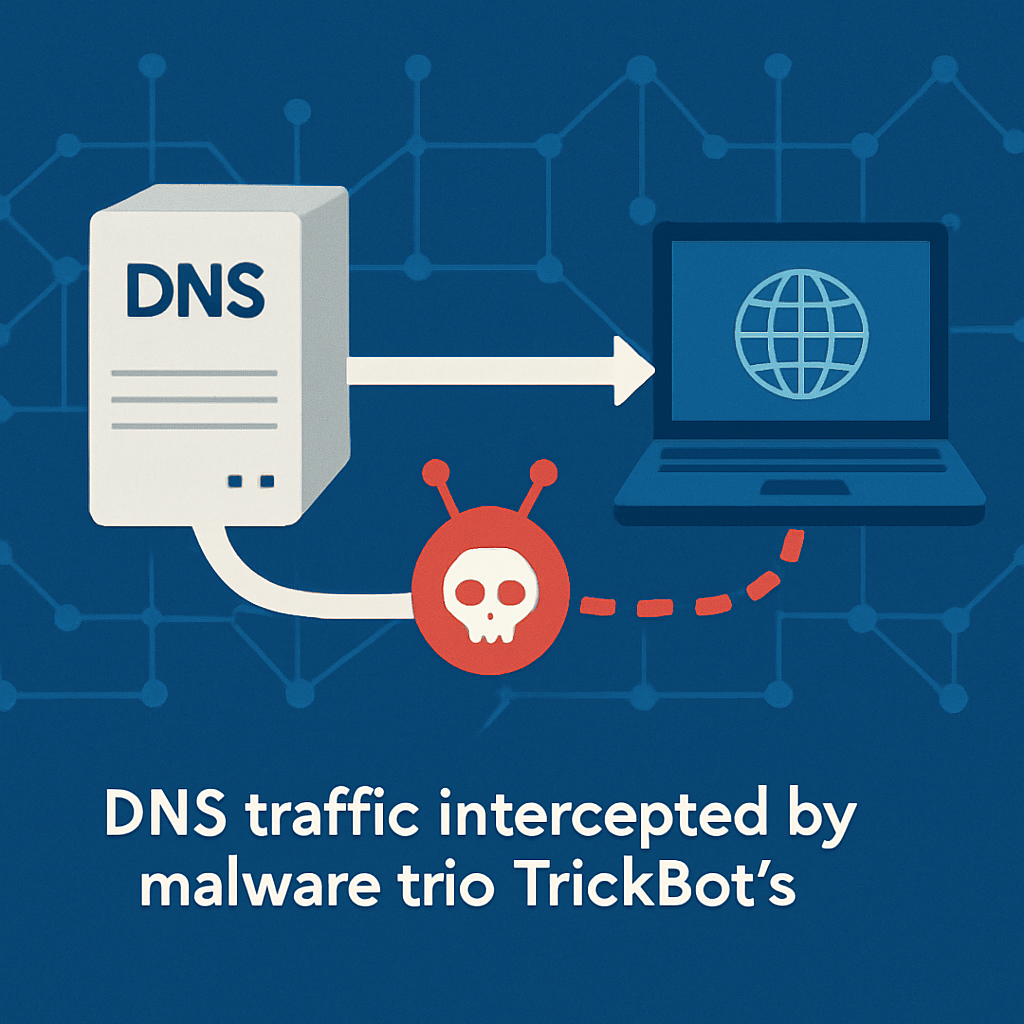
TrickBot, a notorious malware strain, has evolved to utilize DNS traffic as a covert channel for command and control (C2) communications, significantly enhancing its stealth capabilities. This adaptation allows the malware to blend malicious activities with legitimate network traffic, complicating detection efforts.
In recent campaigns, TrickBot has been observed hijacking Windows systems and embedding C2 data within DNS queries and responses. This method enables attackers to maintain remote control over compromised machines while evading traditional security measures that monitor for suspicious HTTP or HTTPS traffic.
TrickBot’s modular architecture allows it to download, execute, or inject various payloads based on the attacker’s objectives. Some modules are designed to execute Windows commands and PowerShell scripts, while others facilitate advanced techniques like process hollowing, process doppelganging, and in-memory execution of shellcode. This flexibility makes TrickBot a versatile tool for cybercriminals.
To establish persistence, TrickBot employs the Windows Task Scheduler, creating scheduled tasks with innocuous names such as “Wireshark autoupdate #72784” that run at startup and repeat periodically. Additionally, it conceals critical configuration details within NTFS Alternate Data Streams, making file-based detection more challenging.
The shift to DNS tunneling for C2 communications presents significant challenges for cybersecurity defenses. By embedding malicious commands within DNS traffic, TrickBot’s activities become indistinguishable from routine domain lookups, which are essential for normal network operations. This tactic mirrors broader trends in cyber threats, where attackers exploit DNS protocols to establish stealthy control channels and exfiltrate data.
Organizations must enhance their security postures to address this evolving threat. Implementing advanced monitoring solutions capable of analyzing DNS traffic for anomalies is crucial. Regular audits of DNS configurations and educating staff about the risks associated with DNS-based attacks can also bolster defenses against such sophisticated malware campaigns.
TrickBot’s adaptation underscores the need for continuous vigilance and the adoption of comprehensive security strategies that encompass all facets of network traffic. As cyber threats become more sophisticated, organizations must stay ahead by understanding and mitigating emerging attack vectors.