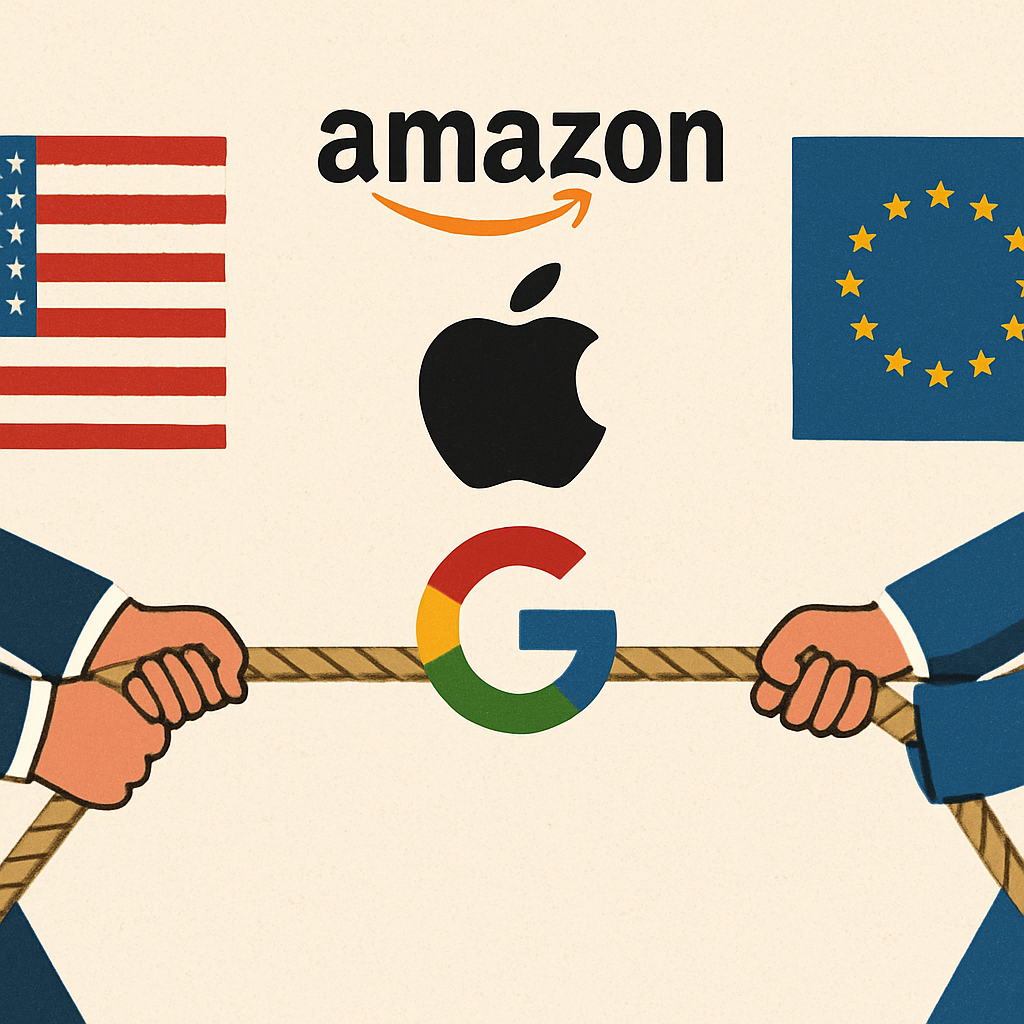
A group of 25 U.S. lawmakers has called on President Donald Trump to investigate the European Union’s Digital Markets Act (DMA), expressing concerns that the legislation unfairly targets American technology companies. In a letter addressed to the President, the lawmakers argue that the EU’s digital policies are anti-competitive and serve as tools for economic extraction and regulatory coercion against U.S. firms.
The Digital Markets Act, enacted by the European Union, aims to regulate large technology companies, referred to as ‘gatekeepers,’ to ensure fair competition within the digital market. Companies such as Amazon, Apple, Booking Holdings, ByteDance (owner of TikTok), Google, Meta Platforms, and Microsoft fall under this designation. The DMA imposes specific obligations and restrictions on these entities to promote market openness and fairness.
The U.S. legislators contend that the DMA disproportionately affects American companies, potentially placing them at a competitive disadvantage compared to their European and Chinese counterparts. They highlight that European businesses enjoy unfettered access to the U.S. market, suggesting a lack of reciprocity in trade relations. The lawmakers urge the Trump administration to take decisive action, including the possibility of launching trade investigations, to address these concerns.
In response, the European Commission has denied any discriminatory intent, asserting that the DMA is designed to ensure a level playing field and does not target companies based on their country of origin. The Commission emphasizes that the regulations aim to foster competition and protect consumers within the EU’s digital market.
This development underscores the ongoing tensions between the United States and the European Union regarding digital market regulations. As both regions seek to assert their regulatory frameworks over global technology companies, the potential for trade disputes increases. The situation calls for careful negotiation to balance the interests of fostering innovation, ensuring fair competition, and maintaining healthy international trade relations.