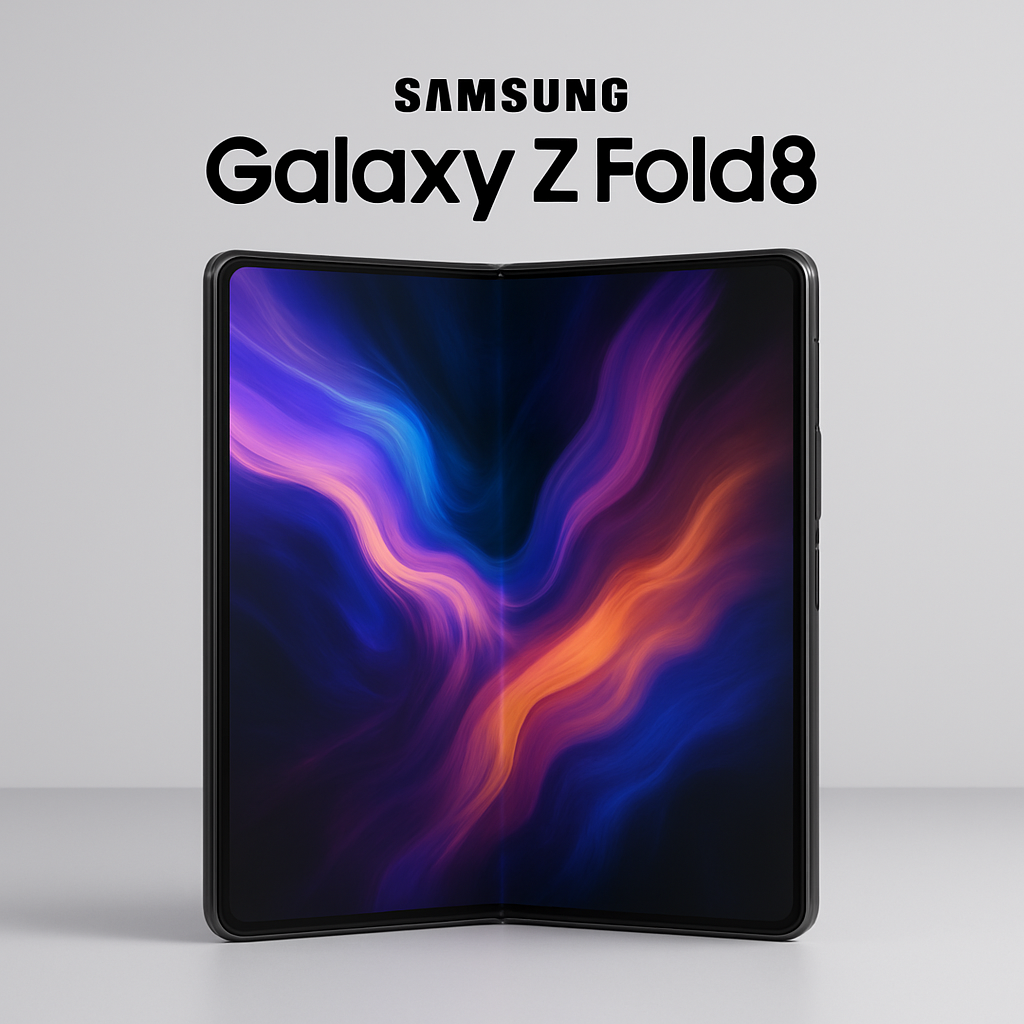
Samsung has officially introduced the Galaxy Z Fold 8, marking a significant evolution in its foldable smartphone lineup. This latest model features a broader inner display and a more compact outer screen, offering a fresh take on the foldable form factor.
The inner display measures 7.6 inches with a near 4:3 aspect ratio, while the outer screen is 5.5 inches, approximating a 10:16 aspect ratio in portrait mode. Both displays support a 120Hz refresh rate, with the inner screen achieving a peak brightness of 3,000 nits. Notably, the Galaxy Z Fold 8 is the lightest book-style foldable to date, weighing just 201 grams.
Under the hood, the device is powered by the Snapdragon 8 Elite Gen 5 processor, tailored specifically for Galaxy devices. It comes with options of 12GB or 16GB of RAM and storage capacities of 256GB, 512GB, or 1TB. The smartphone runs on Android 17 with Samsung’s One UI 9 and promises seven years of operating system and security updates.
However, the new design introduces some trade-offs. The camera system comprises two 50MP sensors—one for wide-angle and another for ultrawide shots. Both the inner and outer displays house 10MP selfie cameras. The battery capacity is slightly reduced to 4,800 mAh, and the device’s thickness is 9.7mm when folded and 4.5mm when unfolded. Despite these changes, the device maintains a sleek profile.
The Galaxy Z Fold 8 is priced at $1,899, which is $100 less than its predecessor, the Galaxy Z Fold 7. It is available in Lavender, Graphite, Cream, and an online-exclusive Pistachio color through Samsung’s official website. Pre-orders are now open.
Samsung’s decision to revamp the Galaxy Z Fold 8’s design reflects its commitment to innovation in the foldable smartphone market. By offering a wider inner display and reducing the device’s weight, Samsung aims to enhance user experience and portability. The slight compromises in camera capabilities and battery size suggest a focus on form factor and usability. As the foldable market matures, it will be interesting to see how consumers respond to these design choices and whether they set new standards for future devices.