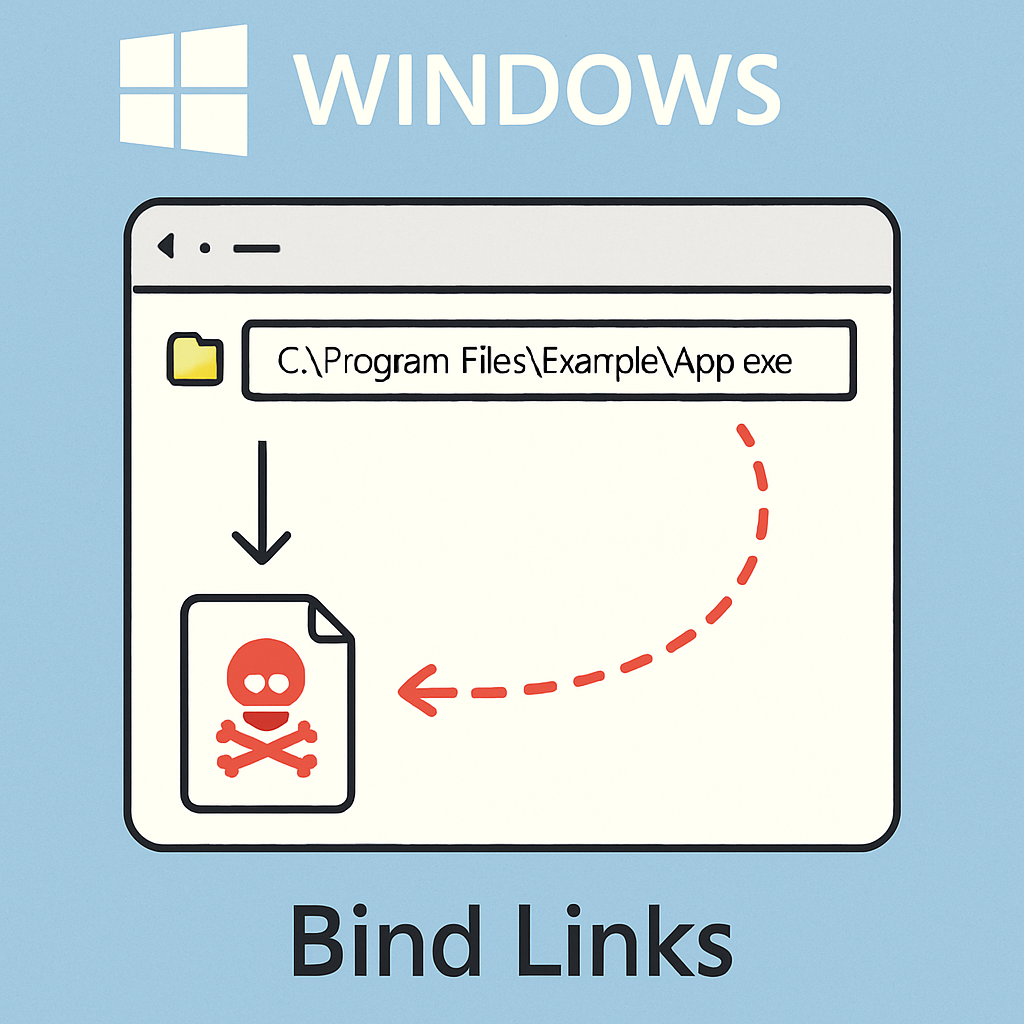
Security researchers have identified a novel method by which attackers can circumvent Endpoint Detection and Response (EDR) systems on Windows platforms. This technique exploits Windows Bind Links, a legitimate feature designed for filesystem virtualization, to redirect file paths and obscure malicious activities from security tools.
Bind Links are utilized within Windows to create virtual paths that map to actual system locations, facilitating functionalities in containers, sandboxes, and Microsoft Store applications. However, attackers with administrative privileges can manipulate these links to redirect trusted file paths to malicious files. This redirection causes security applications to interact with and approve seemingly legitimate files, while the malicious code operates undetected.
Bitdefender’s research highlights three specific techniques leveraging Bind Links:
File-Binding
In this method, attackers redirect a trusted DLL path to a malicious library that mimics the expected functions but bypasses security checks. For instance, PowerShell could be tricked into loading a counterfeit Antimalware Scan Interface (AMSI) component, allowing malicious scripts to execute without detection.
Process-Binding
This technique involves redirecting the path of an executable image. Windows may report the original, trusted source path during process creation, while a different, malicious executable runs in its place. This undermines path-based allowlisting, signature validation, and security dashboards that rely on the reported image name.
These methods are particularly concerning because they can blind EDR sensors and bypass built-in Windows defenses such as AMSI, AppLocker, and Sysmon. The issue affects Windows 10 RS4 and later versions, including Windows 11, meaning that most modern enterprise Windows systems may be vulnerable if attackers gain local administrator privileges.
While Microsoft has classified this issue as low severity due to the requirement of administrative privileges, Bitdefender emphasizes the significant risk, noting that attackers frequently obtain elevated access during actual intrusions. The exploitation of Bind Links represents a sophisticated evasion technique that can render traditional security measures ineffective.
Organizations should be aware of these techniques and consider implementing additional security measures to detect and prevent such evasions. This may include monitoring for unusual Bind Link activities, employing behavioral analysis tools, and ensuring that administrative privileges are tightly controlled and monitored.
As attackers continue to develop advanced methods to bypass security controls, it is imperative for security teams to stay informed and adapt their defenses accordingly. The abuse of Windows Bind Links underscores the need for continuous vigilance and the adoption of comprehensive security strategies that go beyond traditional detection mechanisms.