In the rapidly evolving field of artificial intelligence, terms like ‘Artificial General Intelligence’ (AGI) and ‘superintelligence’ are frequently used to describe advanced AI systems. However, Alexandre LeBrun, CEO of AMI Labs, a startup co-founded by renowned AI scientist Yann LeCun, deliberately avoids these labels. LeBrun emphasizes that his company does not use the term ‘AGI’ and notes that the industry has shifted to ‘superintelligence,’ a term he also finds unhelpful due to its lack of a clear definition.
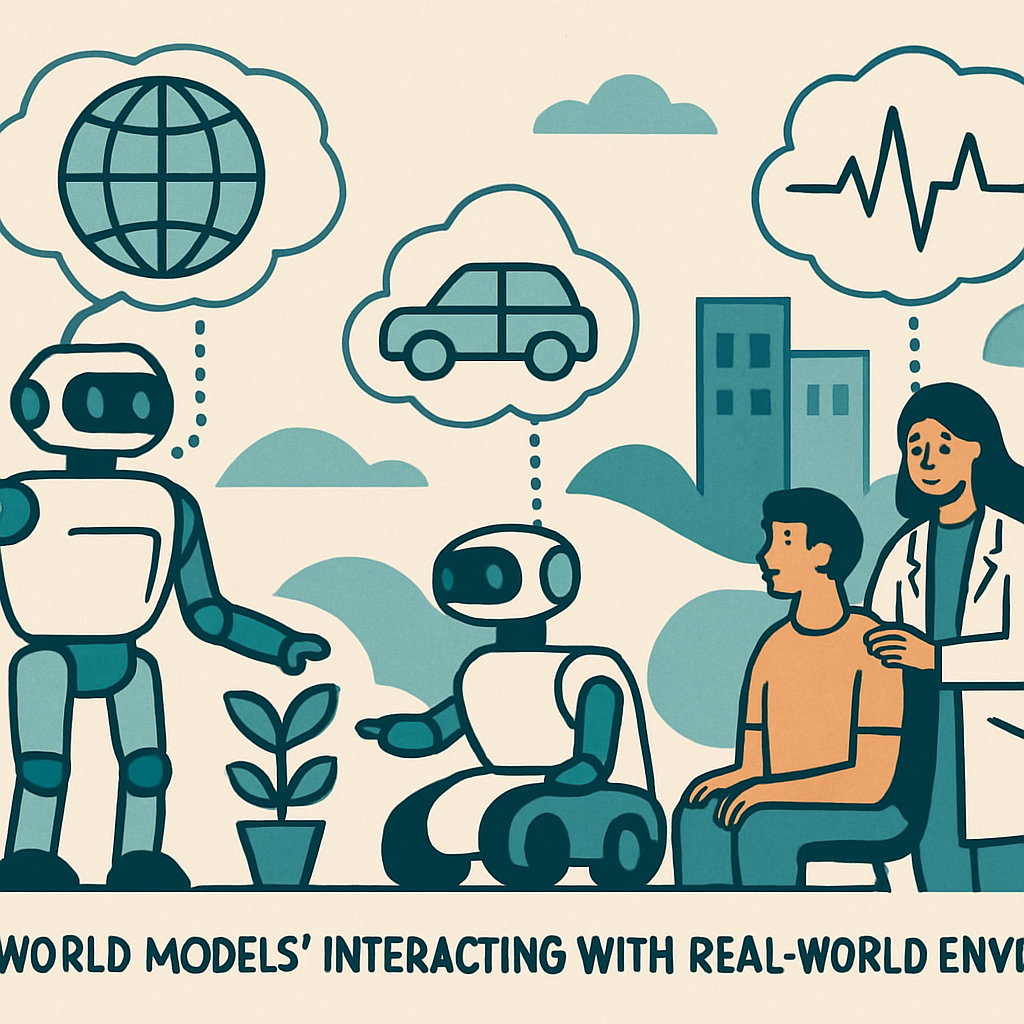
AMI Labs is focused on developing ‘world models,’ AI systems designed to understand and predict real-world scenarios by incorporating physical principles. This approach contrasts with large language models (LLMs), which predict text sequences. LeBrun explains that while LLMs are effective for language processing, world models aim to predict the next state of the physical world, such as anticipating the movement of a glass nudged off a table.
LeBrun highlights the potential of world models in robotics, where current systems often operate on fixed routines without contextual awareness. He points out that AI remains limited in understanding and interacting with the physical world. For instance, a robot performing at a public event might inadvertently harm a bystander due to its lack of environmental awareness. LeBrun believes that integrating context-aware AI into robotics could significantly enhance safety and functionality.
During a recent visit to Seoul for The International Conference on Machine Learning, LeBrun sought partnerships with industrial companies and researchers to apply world models in real-world settings. He emphasizes that while hardware advancements in robotics have been impressive, the ‘brain’—or intelligent control systems—lags behind. AMI Labs aims to bridge this gap by developing AI that can understand and predict physical environments.
LeBrun also draws parallels between human cognitive functions and AI systems, suggesting that just as humans have distinct areas for language and reasoning, AI should utilize LLMs for language tasks and world models for understanding the physical world. He envisions applications across various industries, particularly in scenarios where robots must operate safely in dynamic environments, such as households or public spaces.
In the healthcare sector, LeBrun compares current AI systems to doctors trained solely through textbooks without practical experience. He argues that while LLMs can assist in medical contexts, they represent only a fraction of the potential, and integrating world models could lead to more comprehensive and reliable AI applications in medicine.
By focusing on world models and avoiding ambiguous terms like ‘AGI’ and ‘superintelligence,’ AMI Labs positions itself at the forefront of developing AI systems that can effectively interact with and understand the complexities of the real world.
LeBrun’s stance reflects a growing trend in the AI industry to move beyond buzzwords and focus on tangible advancements. As AI continues to integrate into various sectors, the emphasis on developing systems that can safely and effectively operate in real-world environments becomes increasingly crucial. AMI Labs’ approach underscores the importance of context-aware AI in bridging the gap between theoretical models and practical applications.