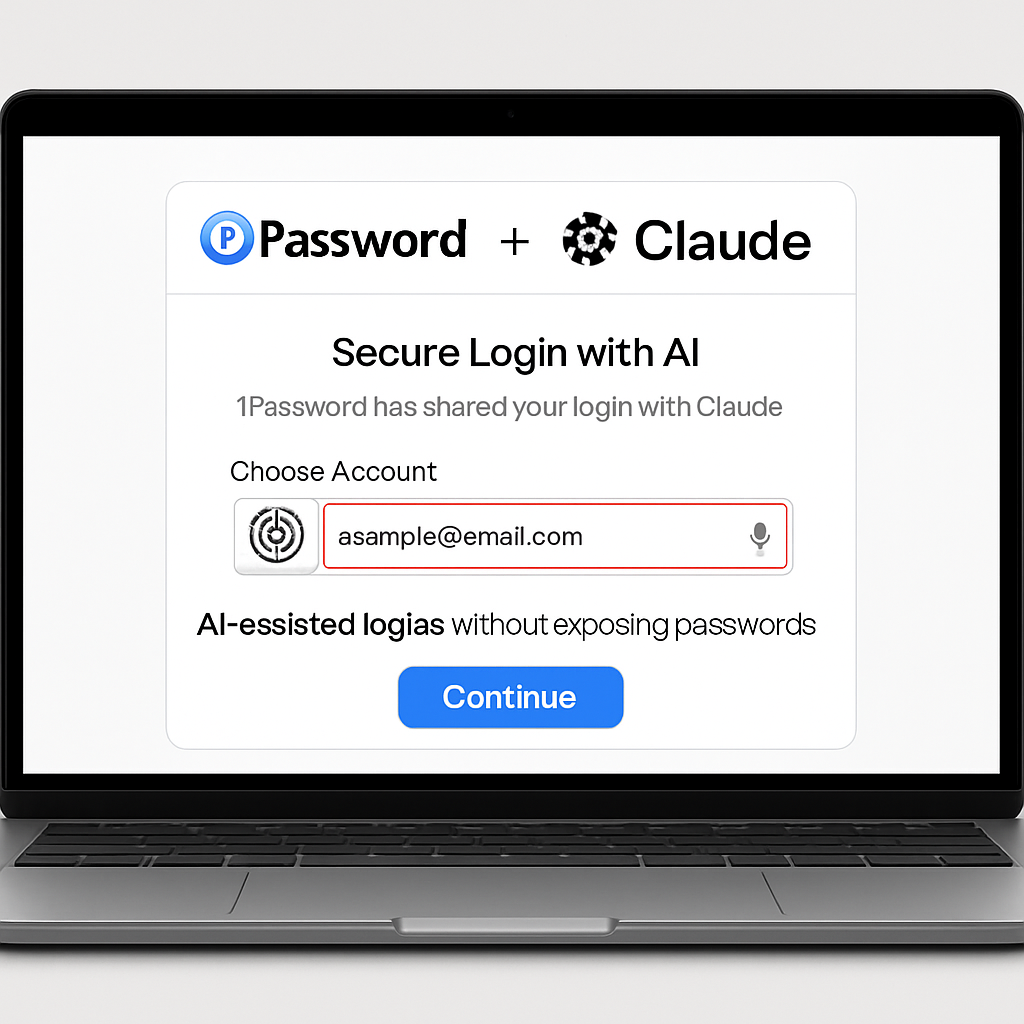
1Password has introduced a new integration for Mac users that allows Anthropic’s AI agent, Claude, to perform browser-based tasks requiring account logins without accessing users’ passwords or two-factor authentication codes. This feature is particularly beneficial for activities such as booking travel or managing online accounts.
When Claude needs to log in to a website, it requests specific login credentials for the task at hand. Users can approve or deny this request through a biometric prompt, ensuring that permission is granted only for the current session. The approved credentials are transmitted via a secure channel and injected directly into the destination page, ensuring that sensitive information never enters Claude’s context, memory, or Anthropic’s systems.
Additionally, 1Password has introduced ‘Agentic Mode’ with this release. When an AI agent like Claude takes control of the browser, the 1Password extension automatically restricts vault access, making only the credentials explicitly approved for the task available. Users are notified when this mode is active and have the option to cancel it at any time. Furthermore, 1Password analyzes the page after each autofill; if a form submission fails, any filled values are cleared before control returns to the agent.
Currently, 1Password for Claude is available to Mac users across business, family, and individual plans. To utilize this feature, users need the 1Password desktop app and browser extension, as well as the Claude desktop app and browser extension. Support for payment cards and identity information is planned for future updates.
This integration marks a significant advancement in secure AI-assisted workflows, allowing users to delegate tasks to AI agents without compromising sensitive information. As AI agents become more integrated into daily activities, ensuring secure and controlled access to personal data is paramount. This development sets a precedent for future collaborations between password managers and AI technologies, emphasizing the importance of user consent and data security.