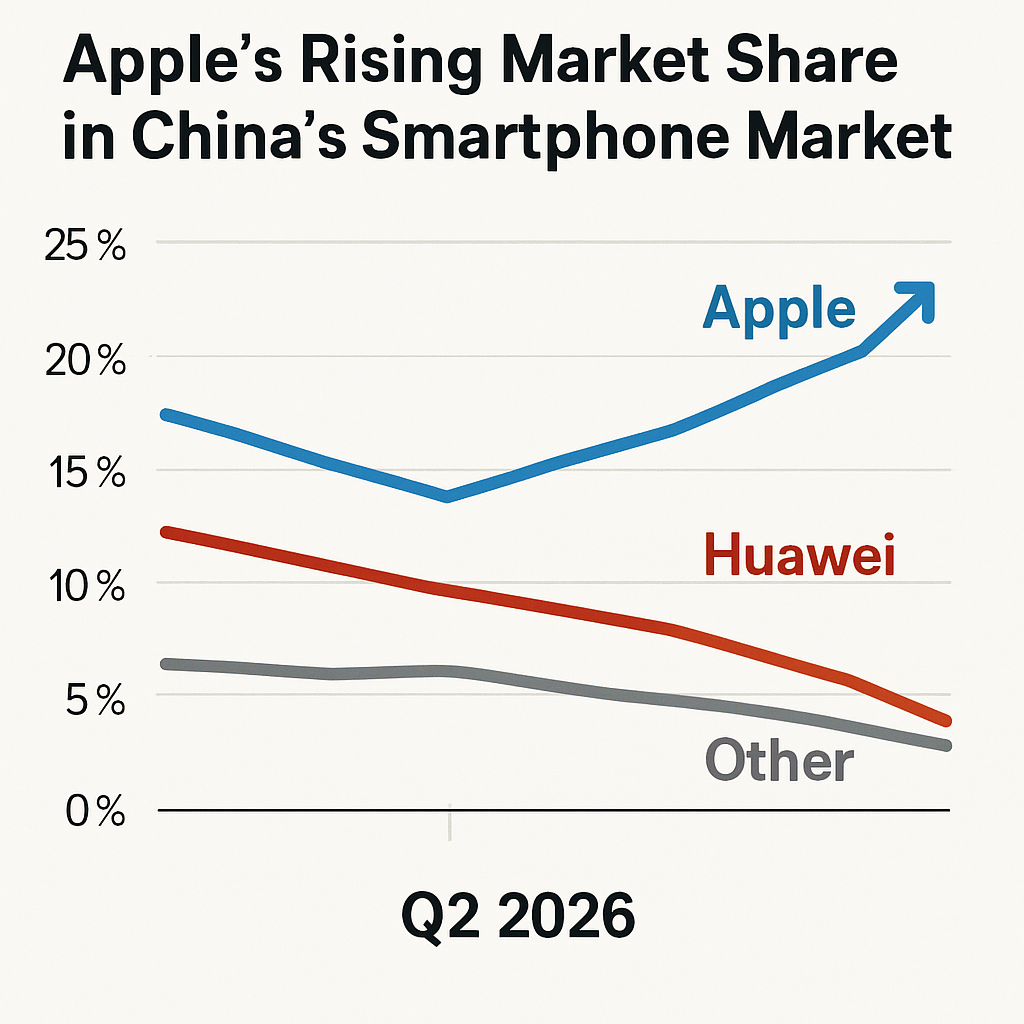
In the second quarter of 2026, Apple achieved a significant milestone in China’s smartphone market, increasing its market share to 18.1%, up from 13.9% in the same period the previous year. This 24.4% year-over-year growth propelled Apple from fifth to second place among smartphone vendors in China. Huawei maintained its leading position with a 22.6% market share during the quarter.
Overall, the Chinese smartphone market experienced a 4.3% decline year-over-year, with approximately 66 million units shipped. This marked the fifth consecutive quarter of declining shipments. Factors contributing to this downturn included rising memory and component costs, reduced government subsidies, and weakened consumer demand, particularly during the 618 shopping festival.
Apple and Huawei were the only major manufacturers to record shipment growth during this period. Both companies maintained stable pricing while other Android manufacturers raised prices. Additionally, they implemented targeted promotions to attract consumers. Huawei expanded its product lineup to cover more market segments, while Apple’s early indication of price increases for its upcoming products encouraged consumers to purchase the iPhone 17 series sooner than they might have otherwise.
Looking ahead, the depletion of earlier low-cost component inventories is expected to exert additional cost pressures on vendors in the latter half of the year. If current trends persist, the year-over-year decline in China’s smartphone market could widen to around 20% in the second half of 2026. However, this downward trend may also signal a future rebound in consumer demand, as buyers postponing upgrades now may return to the market once conditions improve.
Apple’s strategic pricing and promotional efforts have enabled it to gain significant market share in China despite a contracting market. This success underscores the importance of adaptability and consumer-focused strategies in navigating challenging economic conditions. As the market continues to evolve, it will be crucial for manufacturers to balance cost management with value propositions that resonate with consumers.