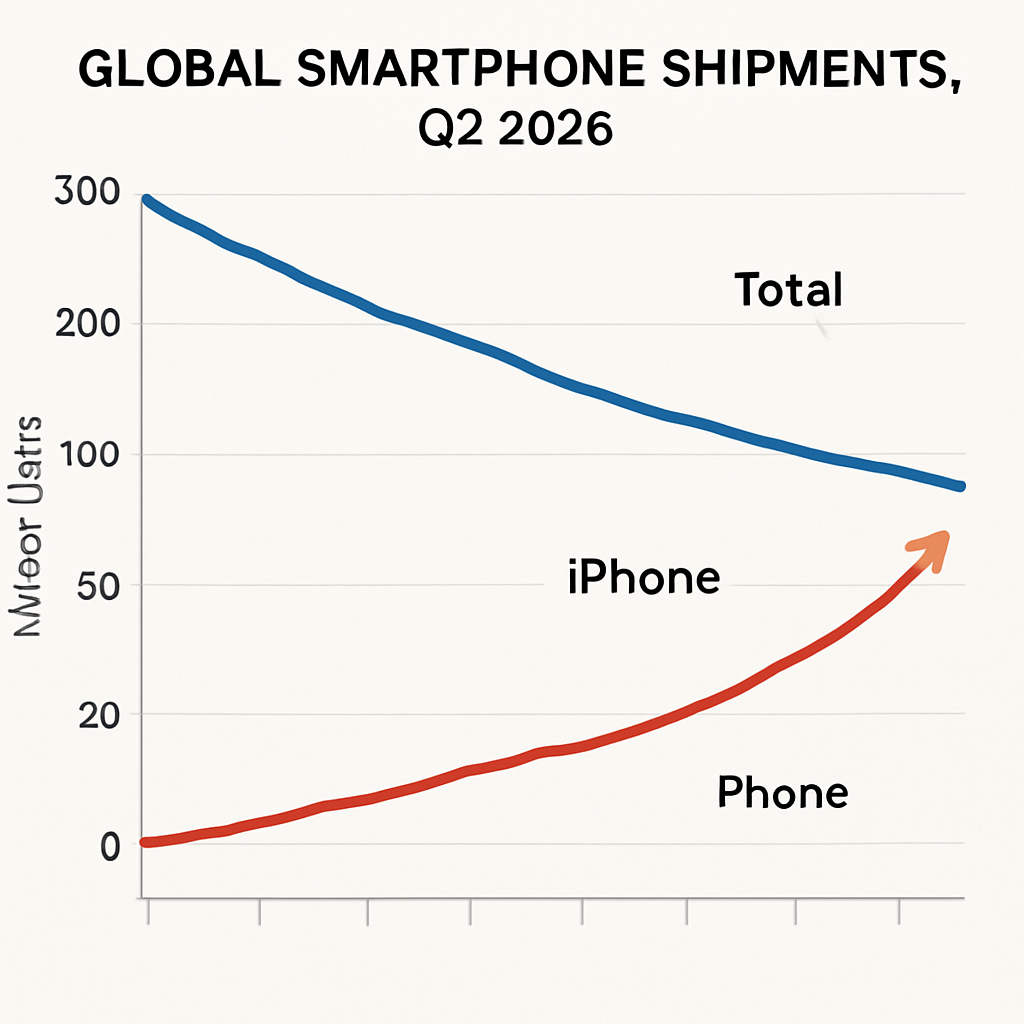
The global smartphone industry faced a significant downturn in the second quarter of 2026, with shipments declining by 11% year-over-year, marking the lowest Q2 performance since 2013. This decline is largely attributed to a persistent shortage of memory chips, which has escalated manufacturing costs and led to higher device prices, particularly affecting the budget and mid-range segments.
Despite these industry-wide challenges, Apple reported a 3% increase in iPhone shipments during the same period. This growth elevated Apple’s global market share to a record 20% for the quarter. The sustained demand for Apple’s premium iPhone lineup, coupled with the company’s decision to maintain stable pricing, contributed to this positive performance. However, analysts anticipate potential price adjustments in the near future.
The memory chip shortage has been exacerbated by suppliers prioritizing AI data center clients over consumer electronics manufacturers. This shift has resulted in increased component costs, compelling many smartphone brands to raise prices, especially for entry-level and mid-range devices. Consequently, consumer demand in these segments has weakened.
In contrast, Samsung reclaimed the top position in the market with a 24% share, driven by robust sales of its flagship Galaxy S26 series and strategic pricing in key regions such as India and the Middle East. Meanwhile, other major manufacturers like Xiaomi, Oppo, and Vivo experienced significant declines in shipments, reflecting their heavier reliance on the more price-sensitive entry and mid-range markets.
Industry analysts project that the global smartphone market will continue to face challenges, with expectations of a 14% decline in shipments for the year. The ongoing memory shortage is anticipated to persist into 2027, suggesting that elevated prices and constrained device availability may remain issues in the foreseeable future.
Apple’s ability to achieve growth in a contracting market underscores the resilience of its brand and the strong consumer demand for its premium products. This performance highlights the company’s strategic positioning and may influence future market dynamics as competitors navigate the ongoing supply chain challenges.