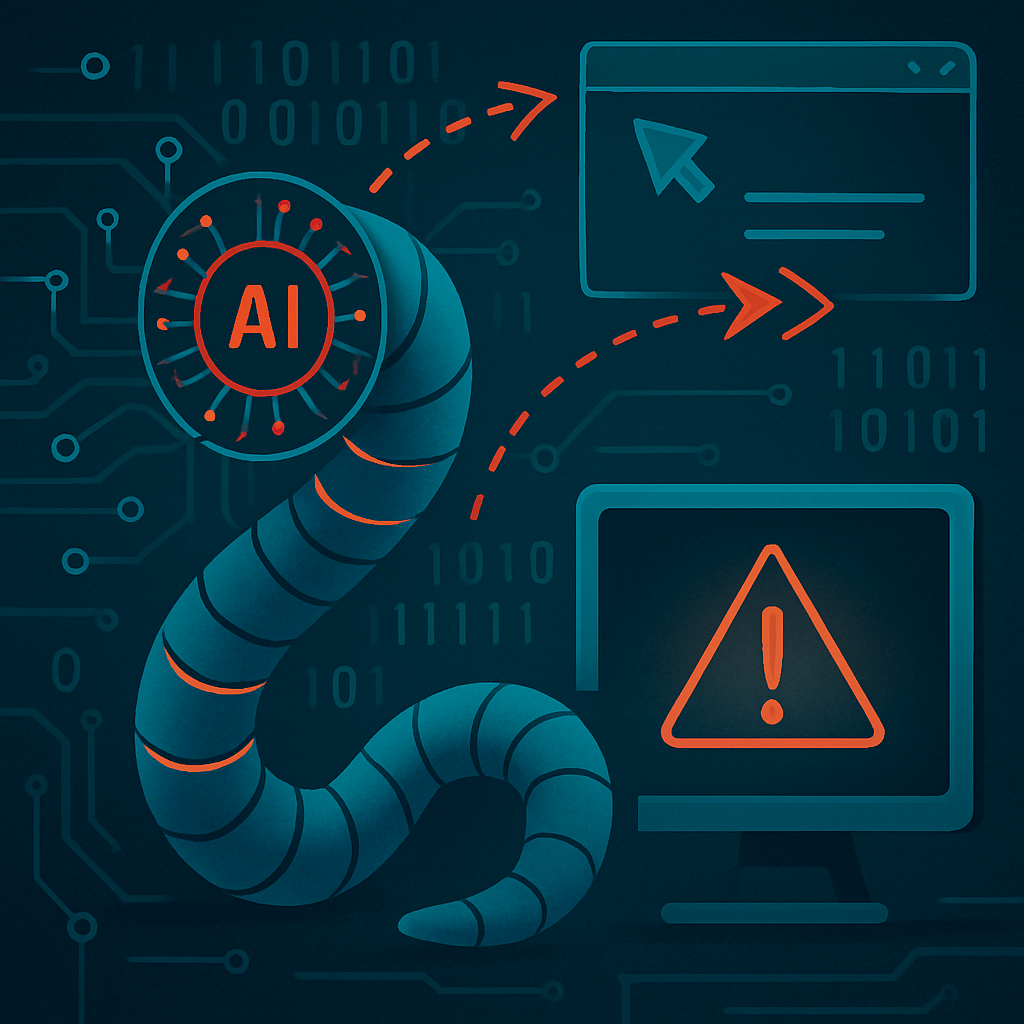
Cybersecurity experts are raising concerns about a theoretical threat model involving AI-driven malware capable of autonomously modifying its attack strategies in response to defensive measures. Dubbed the ‘Intelligent Worm,’ this concept envisions self-propagating malware that can dynamically adjust its exploitation methods, potentially rendering traditional patching and defense mechanisms less effective.
Adaptive Malware: A New Frontier
Traditional worms operate by scanning for vulnerable systems, exploiting known weaknesses, and replicating themselves to spread further. Their success is typically limited by the predefined set of vulnerabilities they target. Once these vulnerabilities are patched, the worm’s ability to propagate diminishes significantly.
The Intelligent Worm concept introduces a paradigm shift. Instead of relying on a static list of exploits, this AI-powered malware would incorporate a continuous feedback loop—observing the environment, planning new attack vectors, executing them, and verifying their success. If an initial exploitation attempt fails, the worm could analyze the system’s defenses, develop alternative strategies, and test them in real-time, thereby enhancing its adaptability and persistence.
Challenges and Implications
While the notion of an Intelligent Worm is currently theoretical, it underscores the evolving landscape of cyber threats. Developing such autonomous malware presents significant challenges. Generating reliable, on-the-fly exploits is complex, and ensuring their effectiveness without causing system instability adds another layer of difficulty. Moreover, creating a safe and accurate testing environment within the malware to validate new exploits is a formidable task.
Despite these hurdles, the potential for hybrid models exists. In such scenarios, compromised devices could transmit reconnaissance data to centralized servers, where more powerful systems or human operators craft and test new exploit modules. This approach could accelerate the malware’s adaptability while maintaining a degree of control over its propagation.
Defenders can leverage the inherent behaviors of such adaptive malware to detect and mitigate threats. Activities like network scanning, unusual connection attempts, lateral movement, and changes in system processes are observable indicators that security teams can monitor. Implementing robust network segmentation, anomaly detection systems, and comprehensive monitoring can help identify and contain such threats before they cause significant damage.
The concept of AI-driven, self-adapting malware highlights the need for continuous innovation in cybersecurity defenses. As adversaries explore more sophisticated attack methods, defenders must anticipate and prepare for these evolving threats. Investing in advanced detection technologies, fostering collaboration among cybersecurity professionals, and promoting proactive defense strategies are essential steps in staying ahead of potential AI-powered cyber threats.