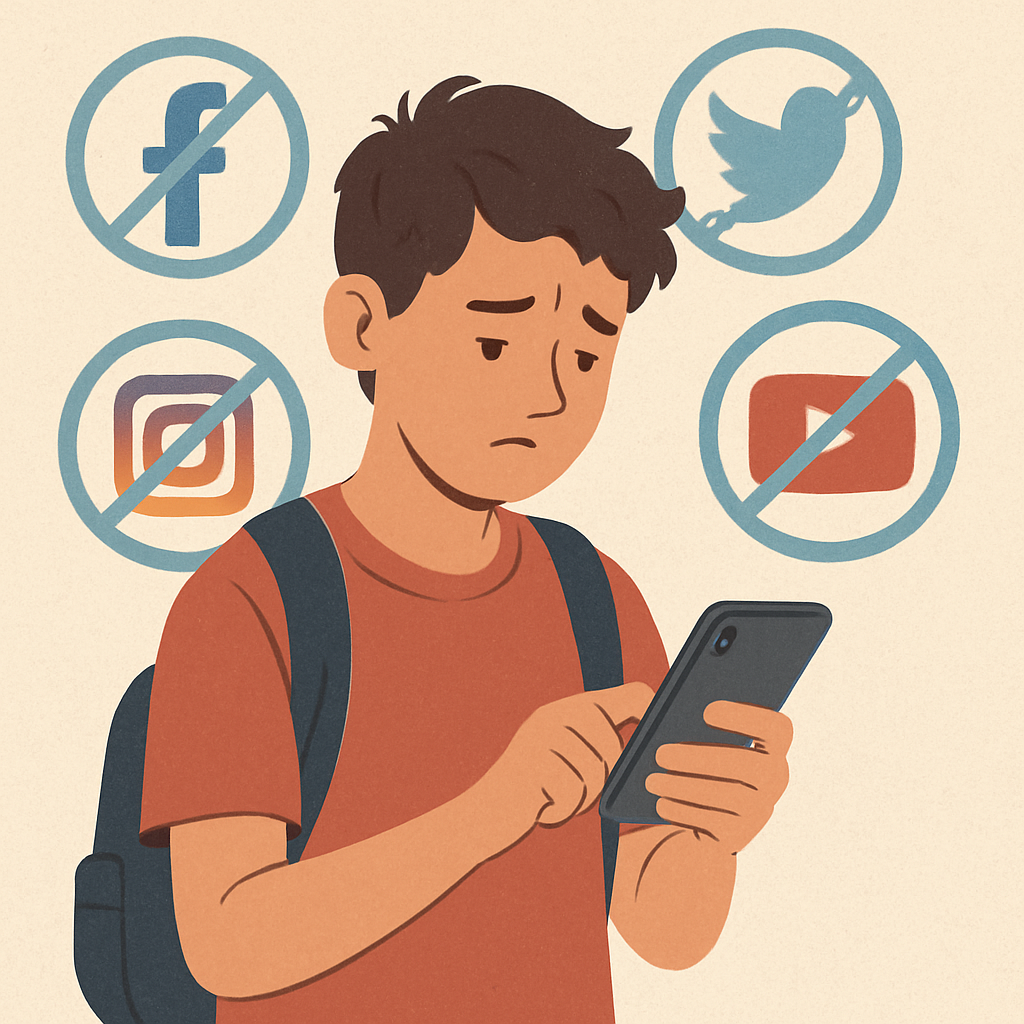
The European Union is considering legislation to prohibit children under 13 from accessing social media platforms, aiming to enforce this age restriction more effectively than current self-imposed guidelines by social media companies. This initiative seeks to address concerns about the impact of social media on young users’ mental health and well-being.
Under the proposed framework, individuals aged 13 to 16 would experience a phased and gradual introduction to social media. Access for this age group would depend on platforms demonstrating that their environments are age-appropriate and safe for teenagers. European Commission President Ursula von der Leyen emphasized that the focus is on regulating when social media can access children, rather than restricting children’s access to social media.
Several countries have already implemented or are considering similar age restrictions. For instance, Australia and the United Kingdom have set minimum age limits of 16 for social media usage. The EU’s approach aims to balance the benefits of social media engagement with the need to protect younger users from potential harms.
Research has indicated a correlation between social media usage and declining mental health among teenagers. Concerns include exposure to inappropriate content, cyberbullying, and the addictive nature of features like infinite scrolling. The EU has previously cautioned companies like Meta that such features may violate European laws.
If enacted, this legislation would align the EU with other nations enforcing age restrictions on social media, including Austria, Denmark, France, Germany, Greece, Malaysia, Norway, Poland, Portugal, Slovenia, South Korea, Spain, the UAE, the UK, and Vietnam. In the United States, there is growing support for similar measures, with surveys indicating that a majority of Americans favor banning social media for users under 16.
Implementing these age restrictions presents challenges, particularly in verifying users’ ages and ensuring compliance across various platforms. However, the EU’s proposal reflects a broader global movement to create safer digital environments for children and adolescents. As this initiative progresses, it will be crucial to monitor its effectiveness and the responses from social media companies in adapting to these regulatory changes.