Cybersecurity researchers have identified a sophisticated malware campaign that leverages Windows shortcut files (.lnk) to execute malicious code, granting attackers remote access to compromised systems. This method combines PowerShell scripts and Node.js runtime environments to establish a persistent backdoor, enabling further exploitation.
Attack Vector and Execution
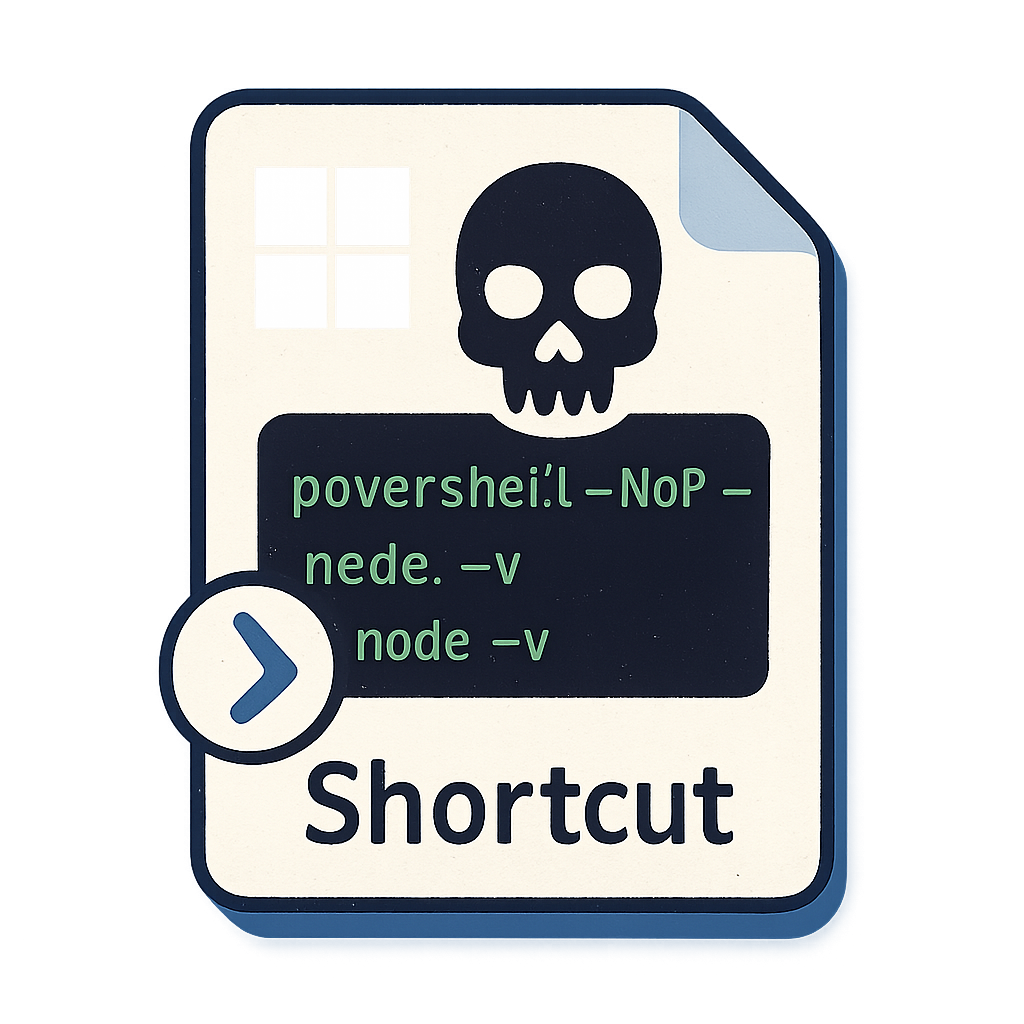
The attack initiates with phishing emails containing ZIP archives that house deceptive shortcut files. These shortcuts, disguised with image icons, execute hidden PowerShell commands upon activation. The scripts perform arithmetic operations to obfuscate the URLs of subsequent payloads, complicating detection efforts.
Once executed, the PowerShell script checks for the presence of Node.js on the system. If absent, it downloads and installs a legitimate Node.js package within the user’s LocalAppData directory. This approach utilizes trusted software to mask malicious activities. Subsequently, an obfuscated JavaScript payload is decrypted and executed, establishing a backdoor that communicates with command-and-control (C2) servers.
Persistence and Evasion Techniques
The malware employs several strategies to maintain persistence and evade detection:
- Registry Modification: It creates entries in the Windows Registry to ensure execution upon user login.
- Process Concealment: The backdoor operates in detached mode, hiding its window and suppressing output to avoid user suspicion.
- Defender Exclusions: Before executing additional payloads, the malware attempts to add exclusions in Microsoft Defender, reducing the likelihood of detection.
Notably, the backdoor retrieves its C2 server addresses from blockchain transactions, a technique that enhances resilience against takedown efforts. By embedding C2 information within blockchain data, attackers can dynamically update and distribute their infrastructure without relying on static domains.
Implications and Mitigation
This campaign underscores the evolving tactics of cybercriminals who exploit legitimate tools and services to conduct malicious activities. The use of PowerShell and Node.js, both widely utilized in development and administrative tasks, allows attackers to blend their operations with normal system behavior, complicating detection.
Organizations, especially those in sectors like hospitality and travel that frequently handle external communications, should exercise heightened vigilance. Implementing the following measures can mitigate the risk:
- Email Filtering: Deploy advanced email filtering solutions to detect and block phishing attempts.
- User Education: Conduct regular training sessions to educate employees about the dangers of opening unsolicited attachments or clicking on unknown links.
- Endpoint Monitoring: Utilize endpoint detection and response (EDR) tools to monitor for unusual activities, such as unexpected PowerShell executions or unauthorized installations.
- Software Restrictions: Implement application whitelisting to prevent the execution of unapproved software, including unauthorized instances of Node.js.
As attackers continue to refine their methods, staying informed about emerging threats and adopting a proactive security posture are essential for safeguarding organizational assets.
The integration of legitimate tools like PowerShell and Node.js into malware campaigns highlights the necessity for comprehensive security strategies that encompass both technological defenses and user awareness. Organizations must remain vigilant, continuously updating their security protocols to address these sophisticated attack vectors.