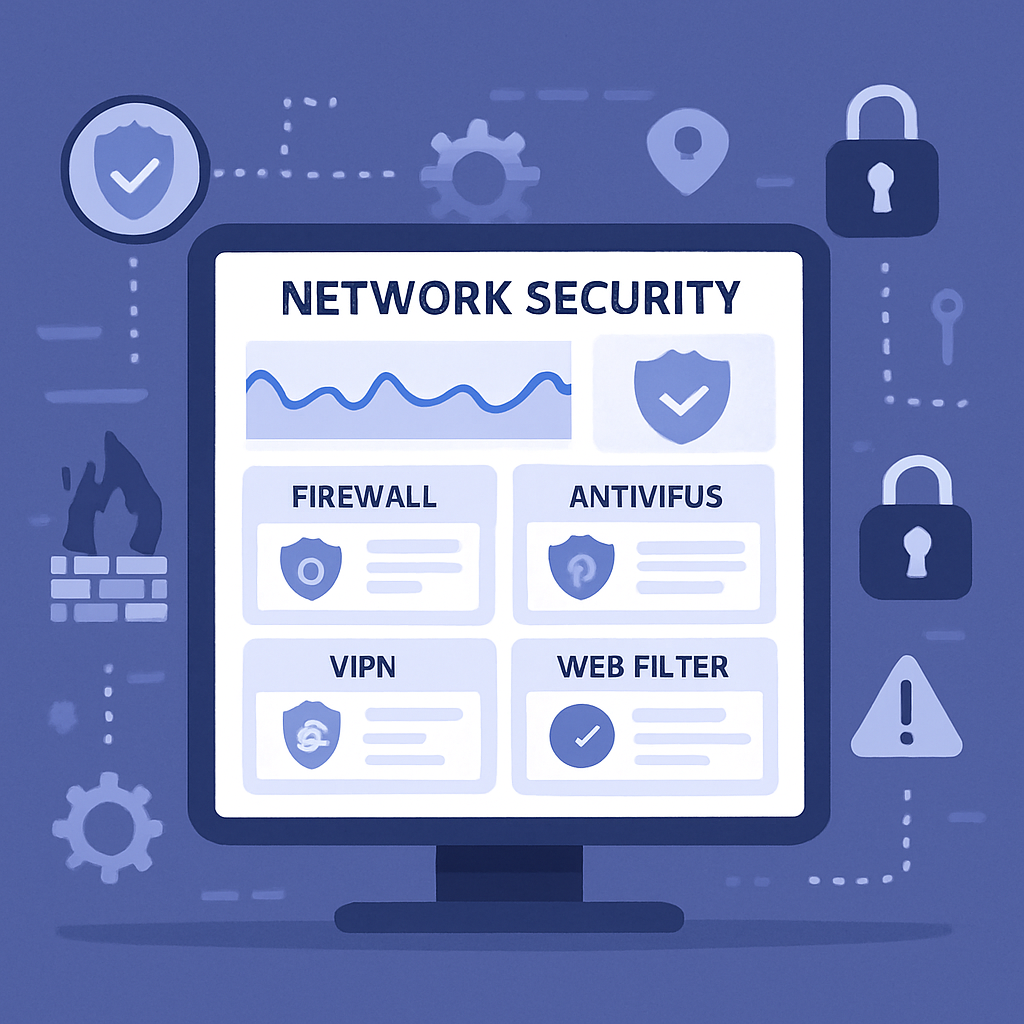
In today’s rapidly evolving digital landscape, organizations face an array of cyber threats that necessitate comprehensive security measures. Unified Threat Management (UTM) solutions have emerged as a pivotal defense strategy, integrating multiple security functions into a single platform to streamline operations and bolster protection. Below is an overview of the top 10 UTM solutions for 2026, highlighting their key features and suitability for various organizational needs.
1. Fortinet FortiGate
Fortinet’s FortiGate series stands out for its custom-built security processors (ASICs) that enhance performance, allowing high throughput even with deep packet inspection enabled. It combines next-generation firewall capabilities with software-defined networking, simplifying branch office connectivity. FortiGate is particularly suitable for enterprises and mid-sized teams seeking a full-featured UTM with centralized governance.
2. Sophos XGS
Sophos XGS is renowned for its user-friendly interface and simplicity, making it appealing for small to medium-sized businesses (SMBs) and organizations with limited IT staff. It integrates tightly with Sophos endpoint protection, creating a synchronized security system where the firewall and endpoints share threat data and automatically respond to incidents. This solution is ideal for organizations securing multiple branch sites with unified policy enforcement.
3. Palo Alto Networks Next-Generation Firewall with Cortex
Palo Alto Networks offers a next-generation firewall integrated with Cortex, providing advanced threat detection and prevention capabilities. This solution is best suited for organizations requiring robust security measures and comprehensive threat intelligence.
4. Check Point Quantum Spark
Check Point’s Quantum Spark series delivers enterprise-grade prevention tailored for SMBs. It offers a modular security architecture, allowing businesses to customize their security features according to specific needs. This solution is particularly beneficial for regulated SMBs seeking high-level protection.
5. WatchGuard Firebox
WatchGuard’s Firebox series is designed for small businesses and managed service providers (MSPs). It offers a layered defense approach with a Total Security Suite that bundles various security services into one SKU. This makes it an excellent choice for organizations looking for comprehensive protection with simplified management.
6. SonicWall TZ/NSa
SonicWall is a pioneer in the UTM space, known for its patented Deep Packet Inspection (DPI) technology that examines the full data payload to detect threats hidden within legitimate traffic. The TZ/NSa series is a budget-friendly option for SMBs and branch offices, offering robust security features at a lower price point.
7. Barracuda CloudGen Firewall
Barracuda’s CloudGen Firewall is tailored for multi-site organizations and those linked to Azure. It features built-in SD-WAN and WAN optimization, enhancing connectivity and performance across distributed networks. This solution is ideal for businesses requiring secure SD-WAN capabilities.
8. Cisco Meraki MX
Cisco’s Meraki MX series offers full cloud dashboard management, simplifying operations for distributed, IT-light sites. It provides comprehensive security features with an emphasis on ease of use, making it suitable for organizations with limited IT resources.
9. Juniper SRX Series
Juniper’s SRX Series is designed for routing-grade platforms, offering robust security features integrated with Junos OS. This solution is best suited for networks standardized on Junos, providing seamless integration and management.
10. Zyxel USG FLEX
Zyxel’s USG FLEX series offers low-cost licensed bundles, making it a viable option for very small offices seeking essential security features without significant investment. It provides a balance between affordability and functionality.
As cyber threats continue to evolve, selecting the right UTM solution is crucial for organizations aiming to protect their networks effectively. The options listed above cater to a range of business sizes and requirements, emphasizing the importance of aligning security solutions with organizational needs and resources.