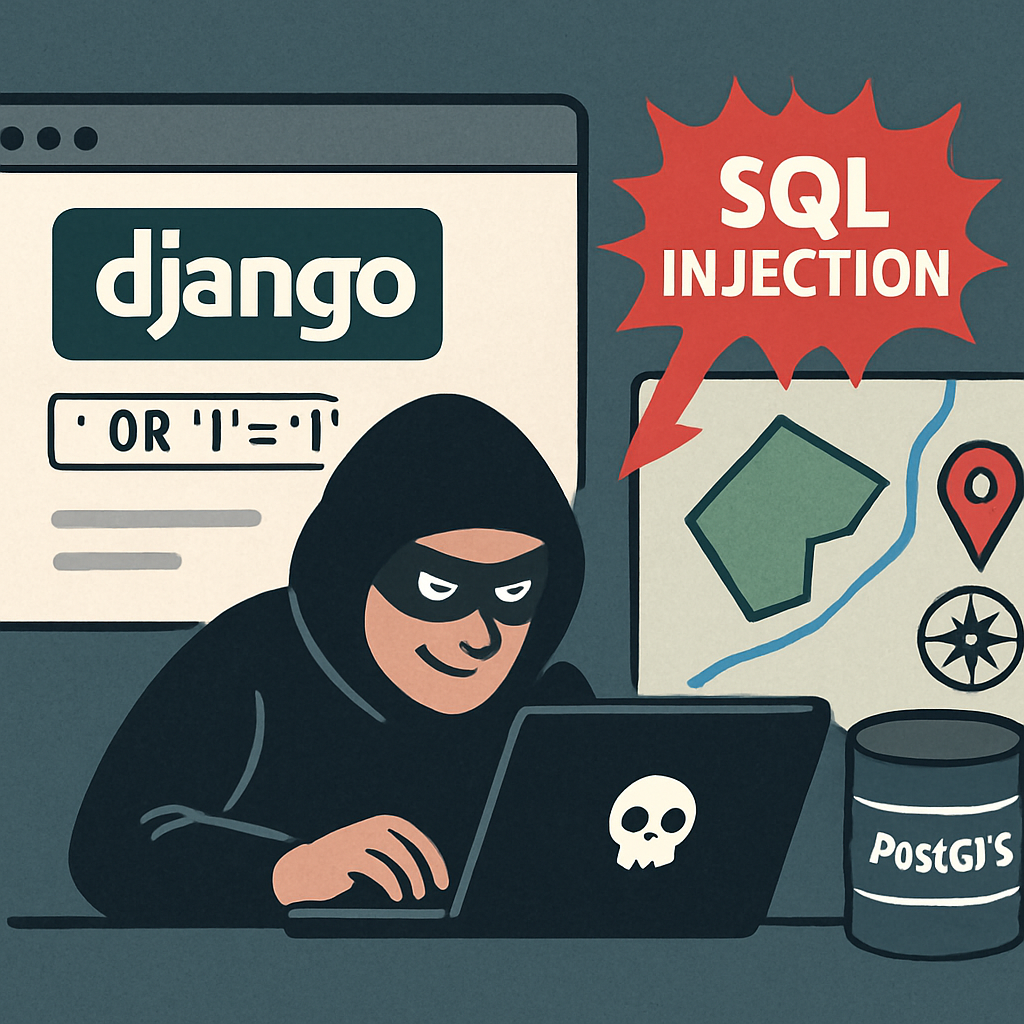
A critical SQL injection vulnerability in the Django web framework is currently being actively exploited, posing significant risks to organizations utilizing geospatial applications with PostGIS-backed deployments. This flaw, identified as CVE-2026-1207, specifically affects Django’s Geographic Information System (GIS) module.
The vulnerability was initially disclosed by the Django security team in February 2026 as part of a comprehensive security release addressing multiple issues across supported versions. While several vulnerabilities were categorized as low to moderate in severity, CVE-2026-1207 stands out due to its potential to allow direct database compromise.
Technical Details
The issue resides in Django’s processing of raster field lookups, particularly concerning the band index parameter. Inadequate validation of user-supplied input enables attackers to inject malicious SQL queries. By crafting requests that manipulate parameters such as “band,” threat actors can execute unintended database queries, potentially exposing sensitive data or altering backend records.
Active Exploitation
Security researchers have observed that exploitation attempts began shortly after the public disclosure. Data from CrowdSec indicates that attacks were first detected in late February 2026 and have persisted steadily. Unlike broad automated scanning campaigns, these attacks appear more targeted, focusing on identifying Django instances configured with PostGIS support. This suggests that attackers are prioritizing high-value systems over indiscriminate exploitation.
A typical attack scenario involves sending specially crafted HTTP requests to endpoints handling raster queries. For instance, an attacker might manipulate a request parameter to inject SQL fragments that force the database to return errors or leak structured information. Over time, this technique can be refined to extract sensitive records or escalate access within the application environment.
Although the vulnerability requires a specific configuration to be exploitable, the impact on affected systems is significant. Successful exploitation could allow attackers to bypass application logic, access confidential datasets, or modify stored information. Given Django’s widespread use in enterprise and government applications, even limited exposure presents substantial risk.
Mitigation Measures
In response, the Django team has released patched versions, including Django 6.0.2, 5.2.11, and 4.2.28. These updates address not only the SQL injection flaw but also additional issues, including denial-of-service conditions and authentication weaknesses. Organizations running older versions are strongly advised to upgrade immediately to mitigate exposure.
Cybersecurity agencies, including the Canadian Centre for Cyber Security, have issued alerts emphasizing the importance of applying these patches promptly. Administrators should also review application logs for signs of exploitation attempts and consider implementing additional security measures, such as web application firewalls, to detect and block malicious requests.
This incident underscores the critical importance of timely vulnerability management and the need for organizations to stay vigilant against emerging threats. As attackers continue to exploit known vulnerabilities, maintaining up-to-date systems and implementing robust security practices remain essential components of an effective cybersecurity strategy.