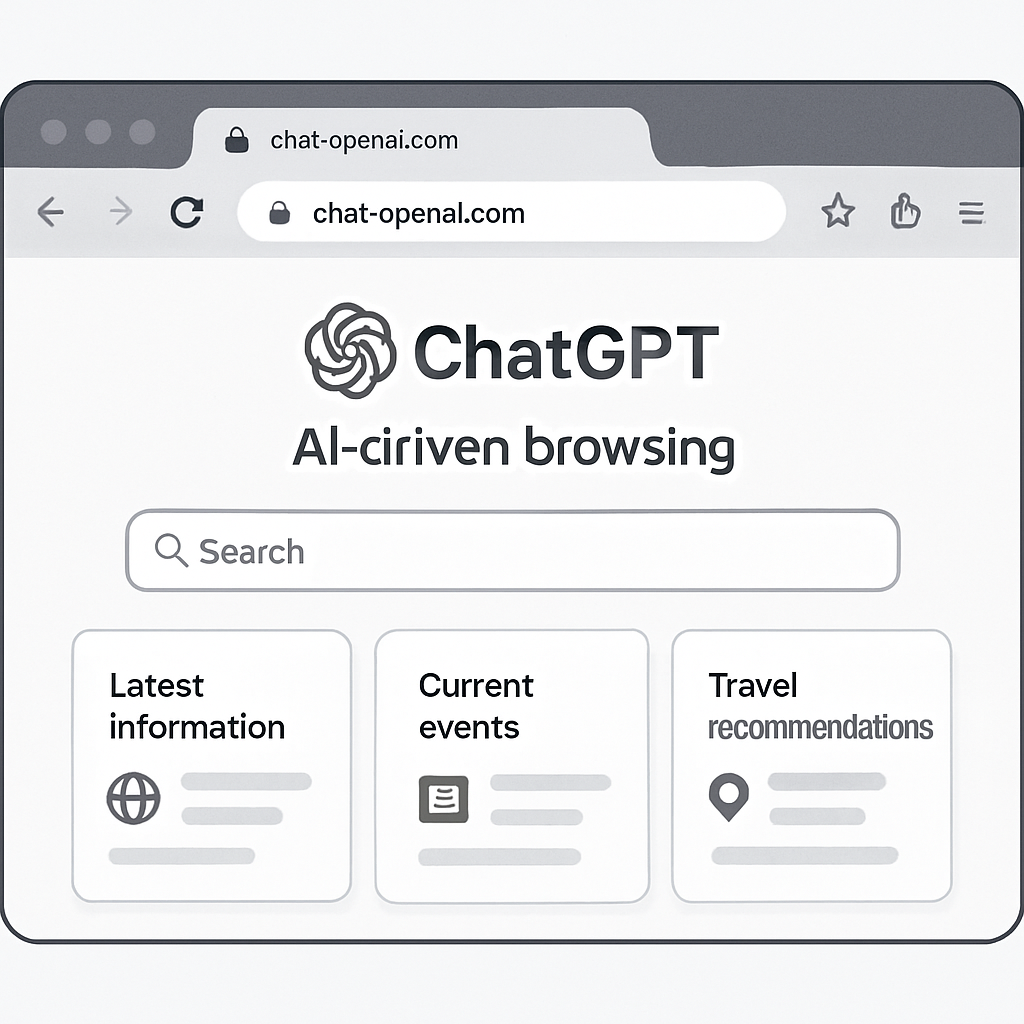
OpenAI has announced the discontinuation of Atlas, its AI-powered browser introduced in October 2025. Despite this, the company remains committed to enhancing web navigation through artificial intelligence by integrating Atlas’s key features into existing platforms.
Atlas was launched with the aim of revolutionizing online browsing by embedding ChatGPT directly into the browser experience. However, after evaluating its strategic direction, OpenAI has decided to cease Atlas’s operations. This decision aligns with the company’s recent efforts to streamline its focus, as evidenced by the earlier shutdown of the AI video-generation tool, Sora.
Rather than maintaining a separate browser, OpenAI is now embedding Atlas’s agentic browsing capabilities into its ChatGPT desktop application and a new Google Chrome extension. This integration allows users to interact with web content more seamlessly. The Chrome extension, for instance, enables ChatGPT to access and interpret the context of the page being viewed, facilitating tasks such as summarizing content, answering questions about the webpage, and initiating more complex operations directly within the browser. This functionality positions OpenAI’s offering as a direct competitor to Google’s Gemini Side Panel, which provides similar AI-driven features.
Additionally, the ChatGPT desktop app is being enhanced to include a more robust browsing experience. Users will be able to navigate websites, log into accounts, download files, and interact with web pages without leaving the ChatGPT environment. A notable addition is a cloud-based browser that operates on OpenAI’s servers, allowing the AI agent to perform tasks on behalf of users remotely.
These developments reflect OpenAI’s strategic shift towards integrating AI functionalities into platforms where users already spend significant time, rather than creating standalone applications. By embedding AI tools into widely used environments like Chrome and desktop applications, OpenAI aims to provide a more cohesive and efficient user experience.
This move underscores a broader trend in the tech industry, where companies are focusing on enhancing existing platforms with AI capabilities rather than developing separate products. It suggests that the future of AI integration lies in augmenting current tools to make them more intelligent and user-friendly, rather than attempting to replace them entirely.