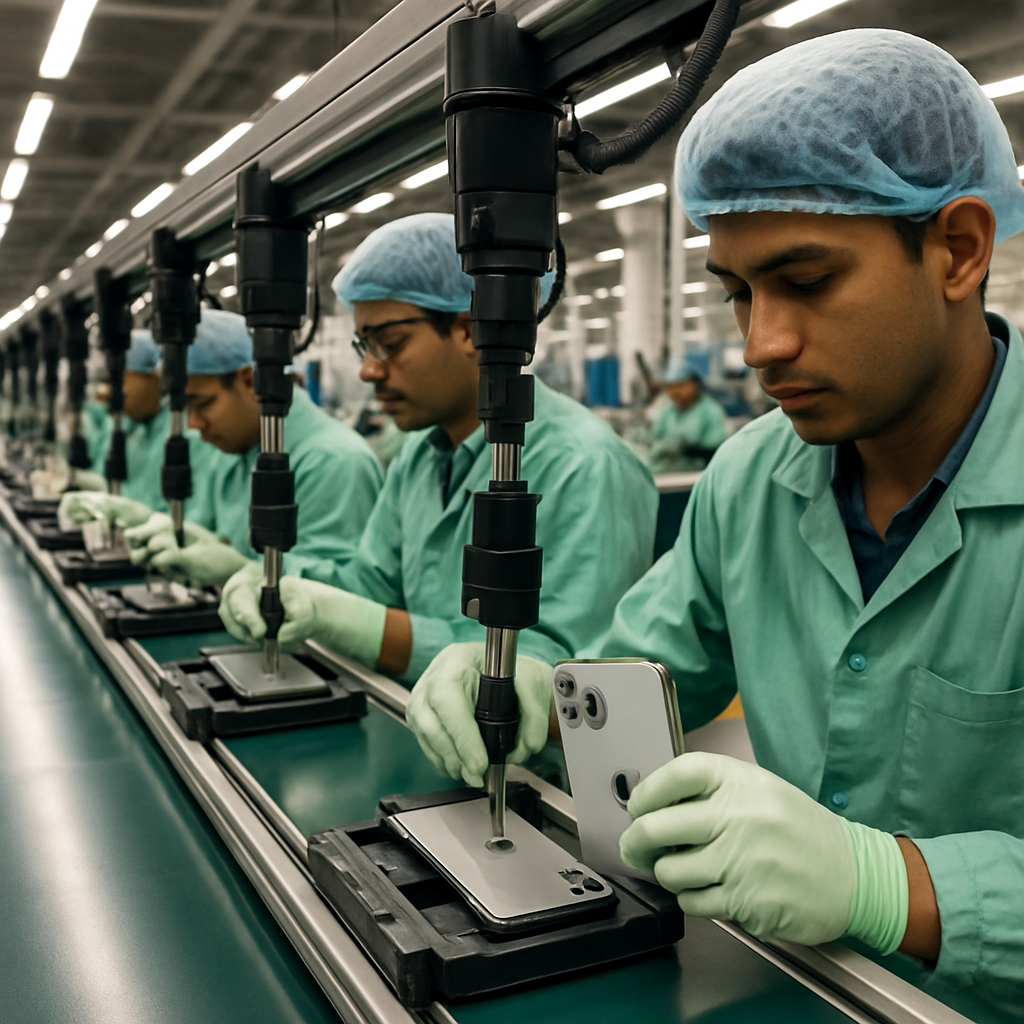
India has recently eliminated import duties ranging from 5% to 7.5% on several key smartphone components, a move that significantly enhances the country’s attractiveness for iPhone manufacturing. This policy change is expected to lower production costs for companies assembling devices within India.
The components now exempt from import duties include batteries, chargers, and various mechanical parts essential for smartphone assembly. By removing these tariffs, the Indian government aims to bolster its domestic manufacturing sector, aligning with its broader ‘Make in India’ initiative designed to transform the nation into a global manufacturing hub.
Apple has been progressively expanding its manufacturing footprint in India over the past few years. The company has partnered with local manufacturers to produce several iPhone models domestically, reducing reliance on imports and mitigating the impact of previous import duties. This strategic shift not only helps Apple navigate India’s complex tax structure but also positions the company to better serve the growing Indian smartphone market.
In 2024, Apple responded to a reduction in import duties by lowering the prices of its iPhone models in India by 3% to 4%. This price adjustment made iPhones more accessible to Indian consumers and demonstrated Apple’s commitment to the market. The recent elimination of import duties on key components is likely to further incentivize Apple to increase local production, potentially leading to more competitive pricing and a stronger market presence.
India’s decision to remove import duties on smartphone components is a strategic move to attract more foreign investment and strengthen its position in the global electronics manufacturing landscape. For Apple, this policy change presents an opportunity to deepen its manufacturing operations in India, reduce production costs, and enhance its competitiveness in one of the world’s fastest-growing smartphone markets.