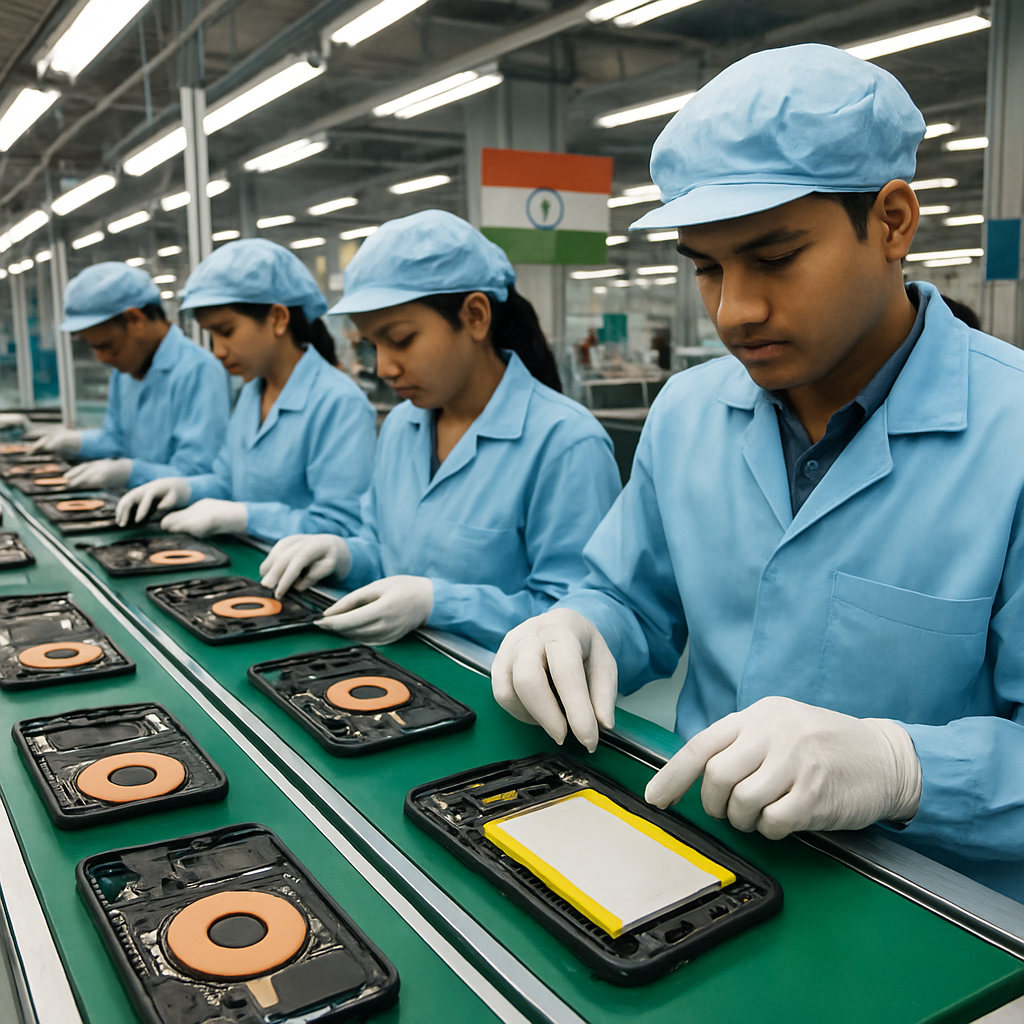
Apple is set to benefit from India’s recent decision to eliminate import duties on various components essential for smartphone manufacturing. This policy change is expected to reduce costs for Apple’s expanding production operations within the country.
The Indian government has removed tariffs of 7.5% and 5% on inputs such as wireless charging hardware, screens for automotive and medical devices, and lithium-ion battery cells. These exemptions are scheduled to remain in effect until March 31, 2029.
Notably, the exemption on wireless charging components directly impacts Apple’s MagSafe ecosystem, integral to the iPhone series. With the removal of import costs on these parts, Apple’s assembly partners in India can now source and manufacture charging components domestically without the added expense of previous tariffs.
Apple has been increasingly shifting its iPhone production from China to India. Assembly partners in India are now responsible for producing approximately 25% of all iPhones, including the entire iPhone 17 lineup, encompassing the Pro and Pro Max models. Earlier this year, Foxconn, a primary assembler for Apple, invested $1.5 billion to expand its operations in India. Additionally, Tata Electronics has emerged as a significant manufacturing partner alongside Foxconn.
These developments underscore India’s growing importance in Apple’s global supply chain strategy. The recent tariff exemptions not only enhance the cost-effectiveness of manufacturing in India but also strengthen the country’s position as a key player in the global electronics manufacturing sector. This move is likely to attract further investments and could encourage other tech giants to consider India as a viable manufacturing hub.