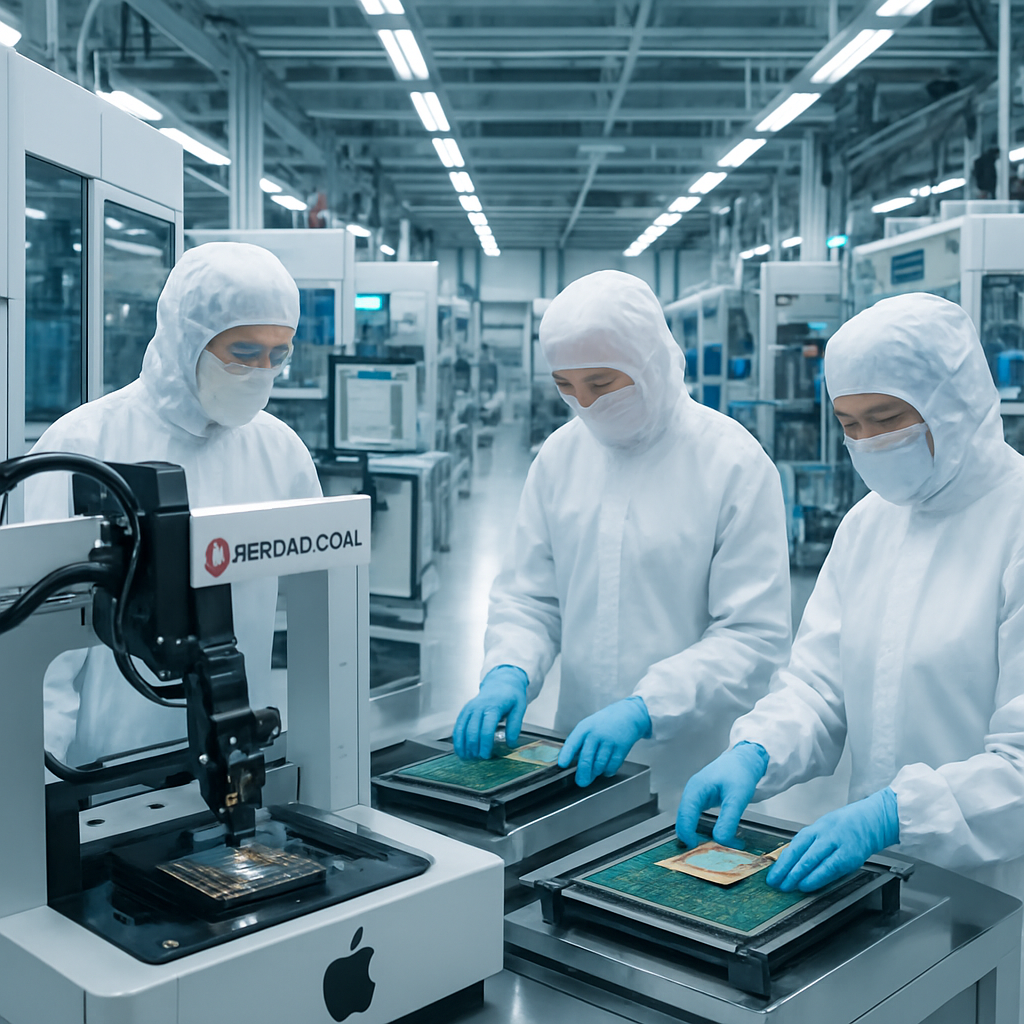
Apple has announced a significant expansion of its partnership with Broadcom, committing over $30 billion to develop and produce custom silicon components and wireless connectivity technologies within the United States. This multiyear agreement is set to result in the production of more than 15 billion U.S.-made chips, underscoring Apple’s dedication to bolstering domestic manufacturing.
As part of this initiative, Broadcom will invest $1.5 billion to enhance its manufacturing facility in Fort Collins, Colorado. This expansion aims to produce advanced radio frequency components, including FBAR filters, which are crucial for wireless communication in Apple’s devices. The investment is expected to support hundreds of American jobs, contributing to the local economy and the broader U.S. manufacturing sector.
This collaboration builds upon a longstanding relationship between Apple and Broadcom. In 2023, the two companies entered into a multibillion-dollar agreement focusing on 5G radio frequency components manufactured in the U.S. The current deal extends their partnership through 2031, ensuring a steady supply of essential components for Apple’s product lineup.
Apple’s commitment to domestic manufacturing aligns with its broader strategy to invest $600 billion in the U.S. economy over four years. This investment encompasses direct spending with American suppliers, data center investments, and capital expenditures within the country. By sourcing key components domestically, Apple aims to enhance supply chain resilience and support American innovation.
For Broadcom, this deal solidifies its position as a critical supplier to Apple, with the tech giant accounting for approximately 20% of Broadcom’s annual revenue. The partnership also reflects the growing demand for advanced wireless technologies and the importance of robust supply chains in the tech industry.
Apple CEO Tim Cook emphasized the significance of this collaboration, stating that the components produced in Fort Collins are essential to delivering the performance and connectivity that customers expect. He also expressed pride in deepening investments in U.S.-based suppliers that share Apple’s commitment to excellence and innovation.
This substantial investment by Apple and Broadcom highlights a strategic shift towards domestic manufacturing in the tech industry. By producing critical components within the U.S., Apple not only strengthens its supply chain but also contributes to the growth of the American manufacturing sector. This move may set a precedent for other tech companies to follow, potentially leading to a resurgence of domestic production in the industry.