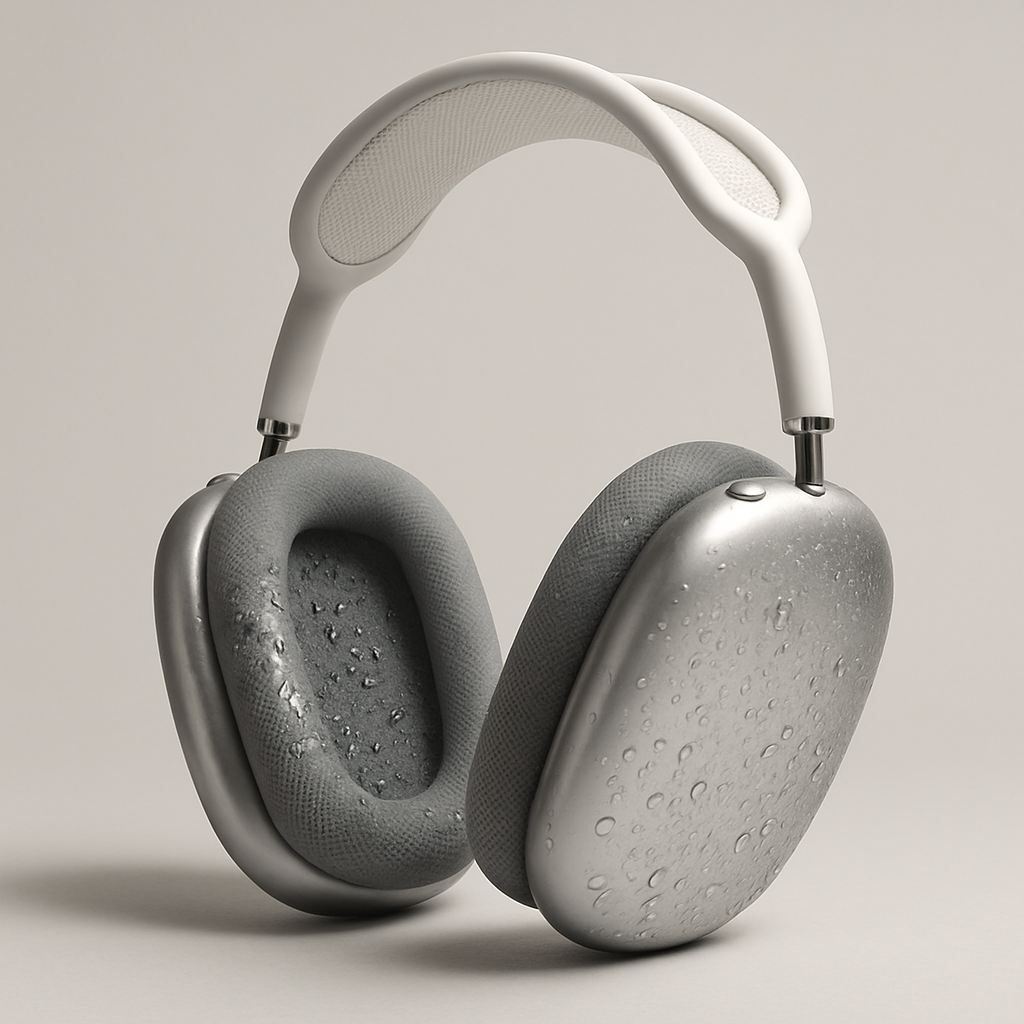
A federal judge has dismissed the majority of claims in a class-action lawsuit alleging that Apple’s AirPods Max headphones suffer from a condensation defect. The lawsuit, filed in April 2025 by two plaintiffs, contended that condensation accumulates inside the ear cups during regular indoor use, leading to degraded sound quality, malfunctioning ear detection and active noise cancellation, and charging issues.
The plaintiffs, one from New York and another from Washington state, claimed that Apple was aware of this issue as early as 2018 but failed to disclose it. They reported experiencing condensation buildup shortly after purchasing the headphones, even during routine activities like watching movies or performing everyday tasks indoors.
In her ruling, Judge Orelia E. Merchant of the Eastern District of New York dismissed all claims brought under New York law with prejudice. She determined that the state’s implied warranty of merchantability requires a product to meet a minimal level of quality, not perfection. The judge also noted that one plaintiff had successfully used his AirPods Max to watch a movie, indicating that the headphones functioned for their intended purpose.
As a result, the New York plaintiff was removed from the case entirely. However, the Washington state plaintiff is permitted to proceed with two claims under Washington law and the federal Magnuson-Moss Warranty Act.
Reports of condensation forming inside the AirPods Max ear cups have circulated since the headphones’ release in December 2020. Users have observed that condensation tends to develop where warm body heat meets the cooler aluminum ear cups. While some owners have reported issues such as connectivity problems and reduced battery life, others have experienced condensation without noticeable adverse effects.
Apple has not officially acknowledged the condensation issue as a defect. In previous legal proceedings, the company argued that moisture accumulation is more apparent in AirPods Max due to their magnetic and removable ear cups. Apple has also emphasized that the headphones are neither waterproof nor water-resistant, advising users to avoid exposing them to moisture.
This case highlights the challenges consumers face when product performance doesn’t align with expectations. While the dismissal of most claims may be seen as a victory for Apple, the ongoing legal proceedings in Washington state suggest that the debate over the AirPods Max condensation issue is far from over. Consumers should remain informed and consider potential risks when investing in high-end audio equipment.