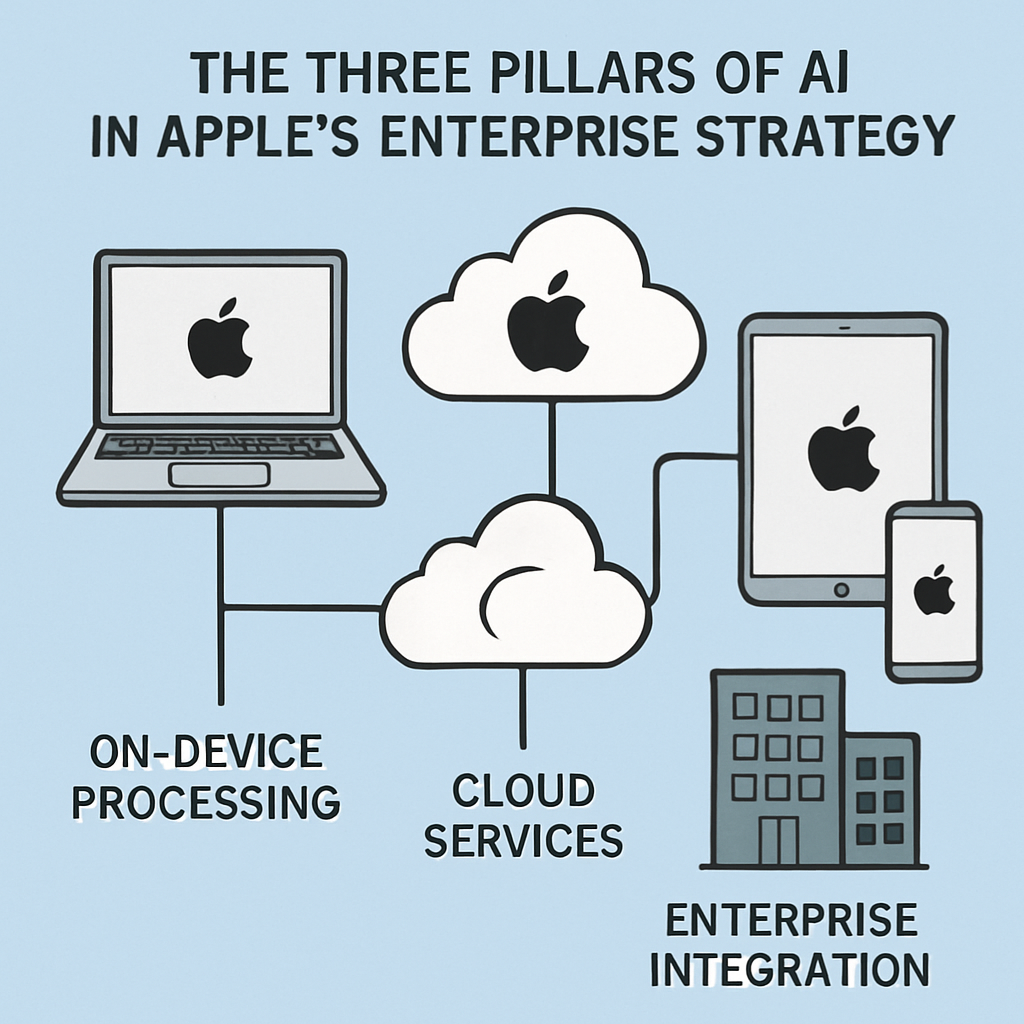
In a recent episode of the Apple @ Work podcast, Matt Vlasach, Senior Vice President of Enterprise Product and Solutions Engineering at Jamf, discussed the findings of a survey focusing on AI usage within Apple-centric enterprises. The conversation highlighted three fundamental aspects that are shaping the integration of artificial intelligence in the Apple enterprise ecosystem.
On-Device AI Processing
One of the primary pillars is on-device AI processing. Apple has been at the forefront of developing AI models that operate directly on devices such as iPhones, iPads, and Macs. This approach ensures that AI functionalities are accessible without relying heavily on cloud services, thereby enhancing performance and maintaining user privacy. For instance, Apple’s third-generation Foundation Models include AFM 3 Core and AFM 3 Core Advanced, both designed to run efficiently on Apple silicon devices, providing users with powerful AI capabilities without compromising data security.
Cloud-Based AI Services
The second pillar involves cloud-based AI services. While on-device processing offers speed and privacy, certain complex AI tasks require more computational power than a single device can provide. To address this, Apple has developed server-based models like AFM 3 Cloud and AFM 3 Cloud Pro. These models handle more demanding AI applications by leveraging Apple’s Private Cloud Compute infrastructure, which extends to third-party platforms while maintaining stringent security and privacy standards. This hybrid approach allows enterprises to utilize advanced AI features without sacrificing data protection.
Enterprise AI Integration
The third pillar focuses on the seamless integration of AI within enterprise environments. Apple recognizes the importance of providing businesses with the tools to incorporate AI into their workflows effectively. This includes support for enterprise versions of AI services, such as OpenAI’s ChatGPT, which offer enhanced privacy settings and the ability to integrate company-specific data. Additionally, Apple’s commitment to modularity ensures that IT administrators can configure and manage AI tools to align with organizational policies and requirements.
These three pillars—on-device processing, cloud-based services, and enterprise integration—form the foundation of Apple’s AI strategy in the enterprise sector. By balancing performance, privacy, and flexibility, Apple aims to empower businesses to harness the full potential of artificial intelligence within their operations.
As AI continues to evolve, Apple’s multifaceted approach positions it as a leader in providing comprehensive AI solutions tailored to enterprise needs. Organizations leveraging Apple’s ecosystem can expect ongoing advancements that prioritize security, efficiency, and seamless integration, ensuring they remain competitive in an increasingly AI-driven landscape.