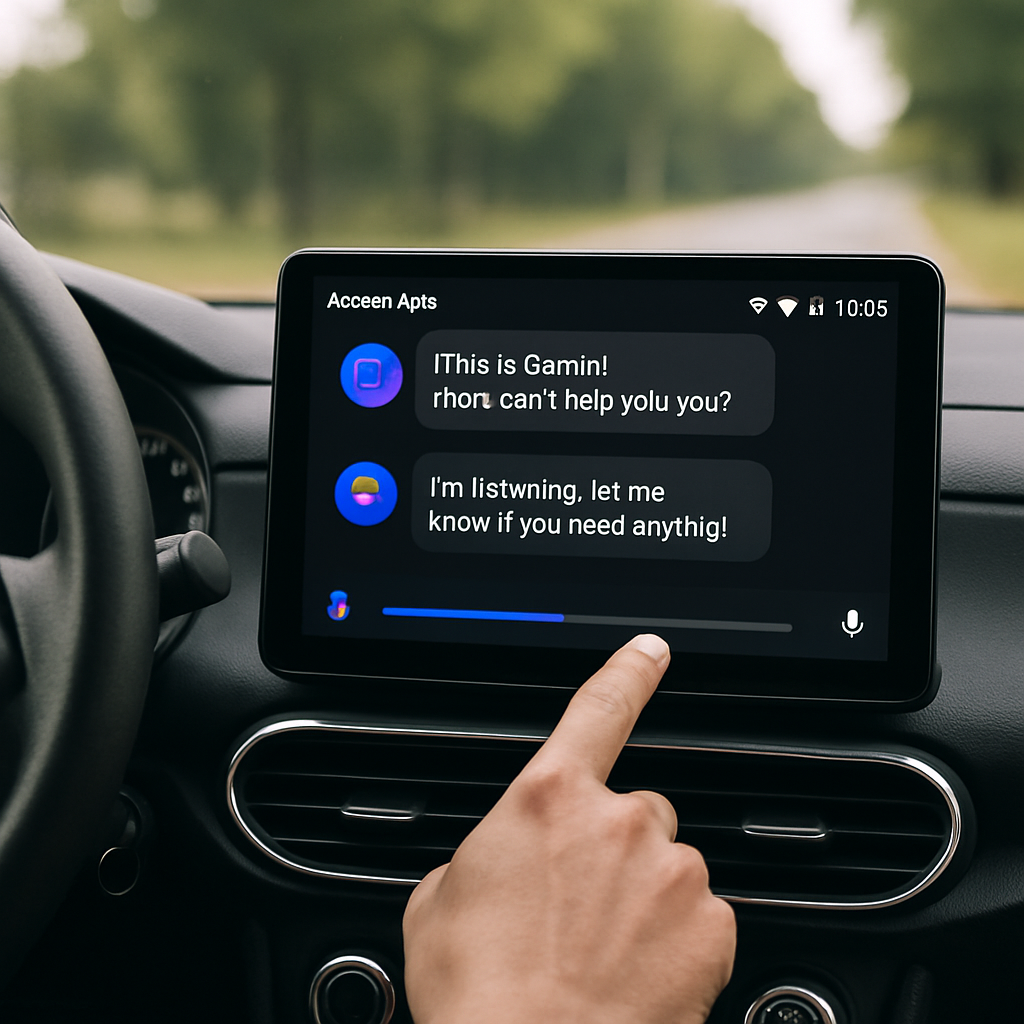
Google’s Gemini integration with Android Auto has introduced several enhancements over its predecessor, Google Assistant. Notably, Gemini Live allows drivers to engage in conversational interactions, facilitating tasks like brainstorming during commutes. However, a persistent issue has emerged: Gemini continues to speak even after the user has completed an interaction via the touchscreen.
For instance, when a driver issues a command such as “navigate to [location]” or “add a stop at [insert name here],” Gemini presents a list of options on Google Maps and begins reading them aloud. If the driver selects and confirms a destination using the touchscreen, Gemini often continues its verbal prompts, asking, “Which one would you like?” despite the route being set and the options no longer displayed. This behavior contrasts with the previous Google Assistant, which would cease speaking once the user interacted with the touchscreen, recognizing that the task was completed.
This issue has been present since Gemini’s initial rollout in November 2025. While there are instances where Gemini correctly detects touchscreen interactions and halts its speech, this response is inconsistent. The ongoing nature of this problem suggests a need for Google to address the integration between voice commands and manual inputs to enhance user experience and safety.
Addressing this issue is crucial for improving the usability of Gemini on Android Auto. Ensuring that the assistant recognizes and appropriately responds to user interactions, whether via voice or touch, will lead to a more seamless and less distracting driving experience.