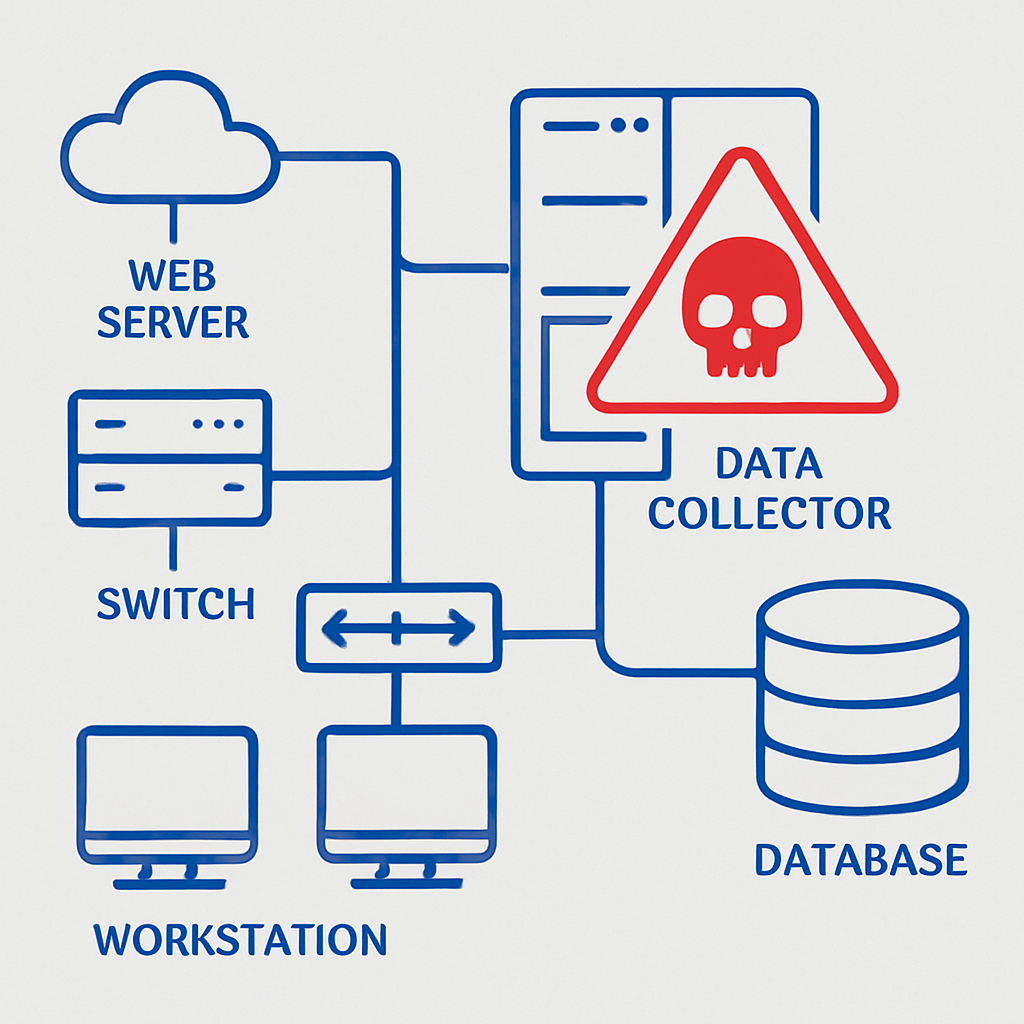
Fluentd, a widely adopted open-source data collector, has been found to contain several high-severity vulnerabilities that could allow attackers to execute arbitrary code remotely, leak sensitive information, and cause denial-of-service (DoS) conditions. These flaws pose significant risks to systems utilizing Fluentd for log management and data aggregation.
Remote Code Execution via Improper Placeholder Handling
The most critical of these vulnerabilities, identified as CVE-2026-44024, arises from improper handling of the ${tag} placeholder within Fluentd. This flaw enables attackers to perform arbitrary file writes on the host system by exploiting the placeholder’s behavior. In environments where Fluentd processes untrusted log data, malicious input can be crafted to trigger this vulnerability remotely, potentially leading to full system compromise.
Information Disclosure and Denial-of-Service Risks
Another significant issue, CVE-2026-44025, affects Fluentd’s Monitor Agent API. This vulnerability can expose sensitive information, including system metrics and configuration details, which attackers could leverage to gain insights into the target environment and plan further attacks.
Fluentd is also susceptible to a DoS condition, tracked as CVE-2026-44160. This flaw is caused by improper handling of gzip-compressed data in the in_http and in_forward plugins. Attackers can exploit this by sending specially crafted gzip payloads, known as decompression bombs, which consume excessive memory and crash the service.
Server-Side Request Forgery Vulnerability
Additionally, a server-side request forgery (SSRF) vulnerability, identified as CVE-2026-44161, impacts Fluentd’s out_http plugin. This flaw allows attackers to manipulate outgoing HTTP requests through unsafe placeholder expansion, potentially accessing internal services or sensitive cloud metadata endpoints, leading to credential exposure.
These vulnerabilities are particularly concerning given Fluentd’s widespread deployment in centralized logging systems, including cloud and Kubernetes environments. A successful exploit could provide attackers with access to critical infrastructure and enable lateral movement across networks.
Organizations utilizing Fluentd are strongly advised to update to the latest patched versions and review their configurations carefully. Securing APIs, limiting exposure to untrusted inputs, and monitoring for abnormal activity are essential steps to mitigate the risk of exploitation.
These vulnerabilities underscore the importance of rigorous security practices in managing open-source tools within critical infrastructure. As Fluentd is integral to many organizations’ logging and monitoring systems, timely patching and vigilant configuration management are crucial to maintaining system integrity and security.