With the recent releases of Android 17 and iOS 27, both Google and Apple have introduced updates that, while not revolutionary, bring notable enhancements to their respective mobile operating systems. A closer examination reveals how these platforms compare in terms of customization, usability, and the integration of artificial intelligence.
Customization Enhancements
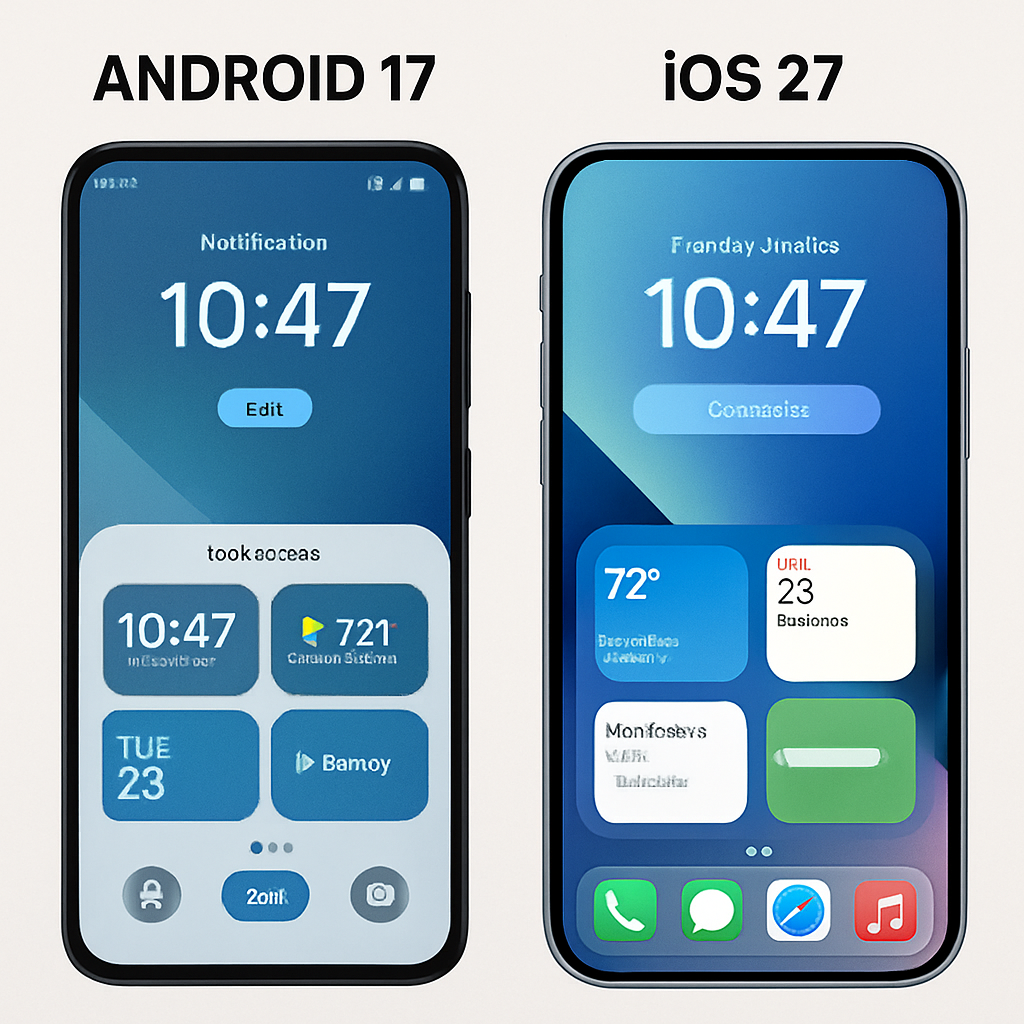
Apple’s iOS 27 has made significant strides in customization, particularly with the lock screen. Users can now minimize the clock display, adjust background colors dynamically, and resize widgets to occupy an entire page. These features offer a level of personalization that was previously limited on iOS devices.
In contrast, Android 17’s customization options have seen less dramatic changes. Pixel devices continue to offer a selection of clock styles with limited font adjustments. The introduction of ‘Hub Mode’ allows users to add widgets to a right-swipe shelf, providing quick access to information. However, this implementation differs from iOS’s approach, as it doesn’t support the smaller, docked widgets that iOS users can place directly on the home screen.
Additionally, iOS 27 introduces adjustable ‘Liquid Glass’ effects, enabling users to modify the transparency and tint of app icons. This feature mirrors Android 17’s use of Gaussian blur in certain UI elements, such as the widget panel and volume controls. Notably, Android’s application of this effect is more selective, avoiding areas like the Quick Settings panel to maintain accessibility.
Usability Improvements
Android 17 introduces ‘App Bubbles,’ a feature reminiscent of the earlier ‘Chat Heads.’ This functionality allows users to minimize apps into floating bubbles, facilitating multitasking without the need for split-screen mode. For instance, users can monitor a group chat or track an ongoing ride while engaging with other applications.
On the other hand, iOS 27 maintains its traditional approach to multitasking, with no significant changes in this area. However, a notable development is the enhanced compatibility between platforms. Google has developed a method to make AirDrop work cross-platform, benefiting iOS users regardless of their software version.
Artificial Intelligence Integration
Both operating systems are placing a strong emphasis on artificial intelligence. Android 17 is set to introduce ‘Gemini Intelligence,’ a feature that will enable users to create custom widgets for the home screen. This development aims to provide personalized and dynamic information at a glance.
Similarly, iOS 27 enhances its ‘Shortcuts’ feature, allowing users to craft custom prompts for various tasks. While these shortcuts are task-based rather than widget-based, they offer a powerful tool for automation and personalization within the iOS ecosystem.
In summary, Android 17 and iOS 27 offer incremental yet meaningful updates that enhance user experience through improved customization, usability, and AI integration. While neither update introduces groundbreaking changes, they reflect a continued commitment to refining and personalizing the mobile operating system experience. As both platforms evolve, the focus on user-centric features and cross-platform compatibility will likely remain central to their development strategies.