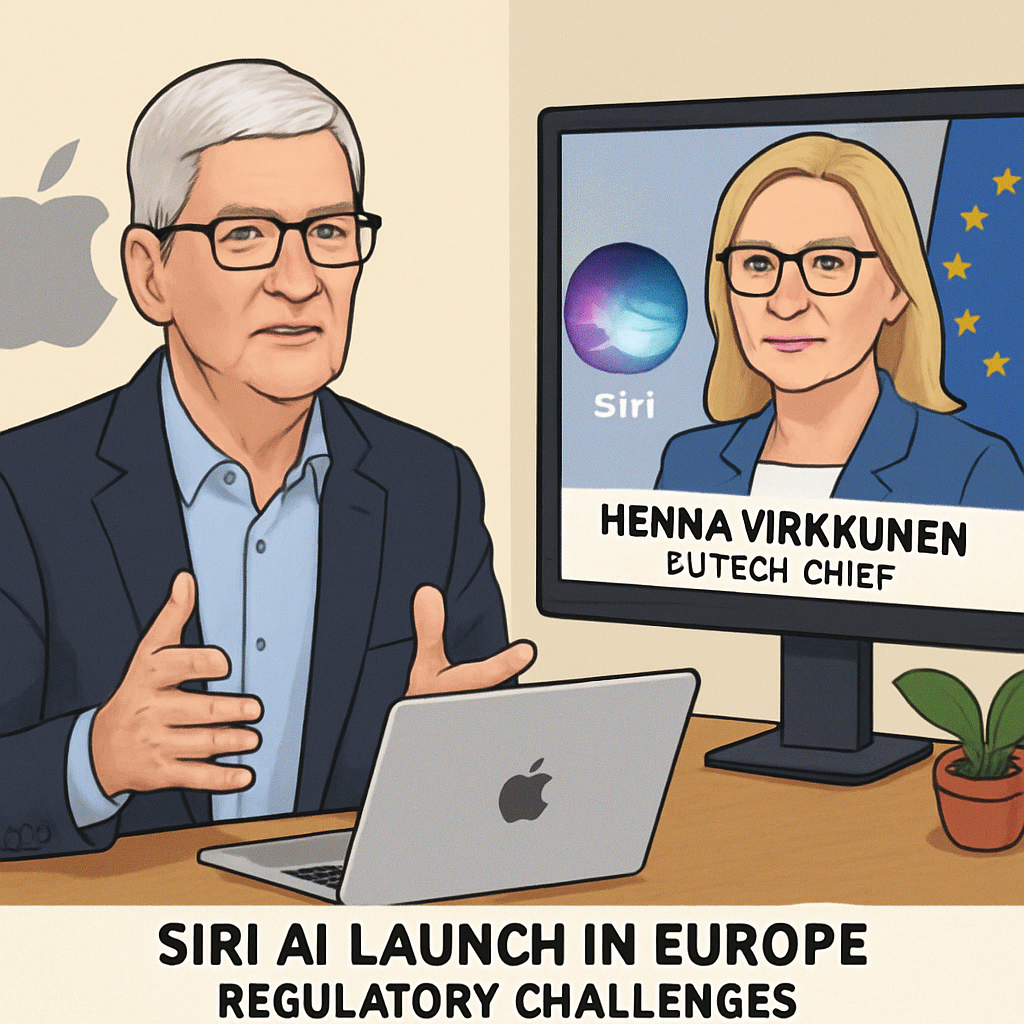
Apple CEO Tim Cook recently engaged in discussions with European Union (EU) technology chief Henna Virkkunen to address the launch of Siri AI within the EU, aiming to align with the region’s digital regulations. An EU spokesperson described the virtual meeting as a “constructive exchange on topics of common interest,” indicating ongoing efforts to find a resolution.
Siri AI, Apple’s enhanced virtual assistant, is set to debut with iOS 27 and iPadOS 27 in September. This upgrade introduces features such as a dedicated Siri app for revisiting conversations, expanded Visual Intelligence capabilities, integrated writing tools, and a Siri mode within the Camera app. However, these advancements will not be immediately available to EU users due to regulatory challenges.
The core issue stems from the EU’s Digital Markets Act (DMA), which mandates that Apple provide third-party AI assistants with the same access to iPhone functionalities as Siri, ensuring equal performance capabilities with user consent. In response, Apple proposed the creation of a Trusted System Agent—a software intermediary designed to grant secure access to system features for third-party virtual assistants on EU devices. Despite this initiative, the EU rejected the proposal, leading to a stalemate.
EU officials have emphasized that the decision to withhold Siri AI’s launch in the region rests solely with Apple. They assert that Apple sought an exemption from its interoperability obligations under the DMA, a request the Commission deemed unacceptable. This impasse has sparked criticism from consumers, with EU officials reportedly receiving numerous emails accusing the Commission of depriving Europeans of new technological advancements.
As discussions continue, the outcome of these negotiations will significantly impact the availability of Siri AI in the EU. The situation underscores the complex interplay between technological innovation and regulatory compliance, highlighting the challenges tech companies face when introducing new products in diverse regulatory environments.