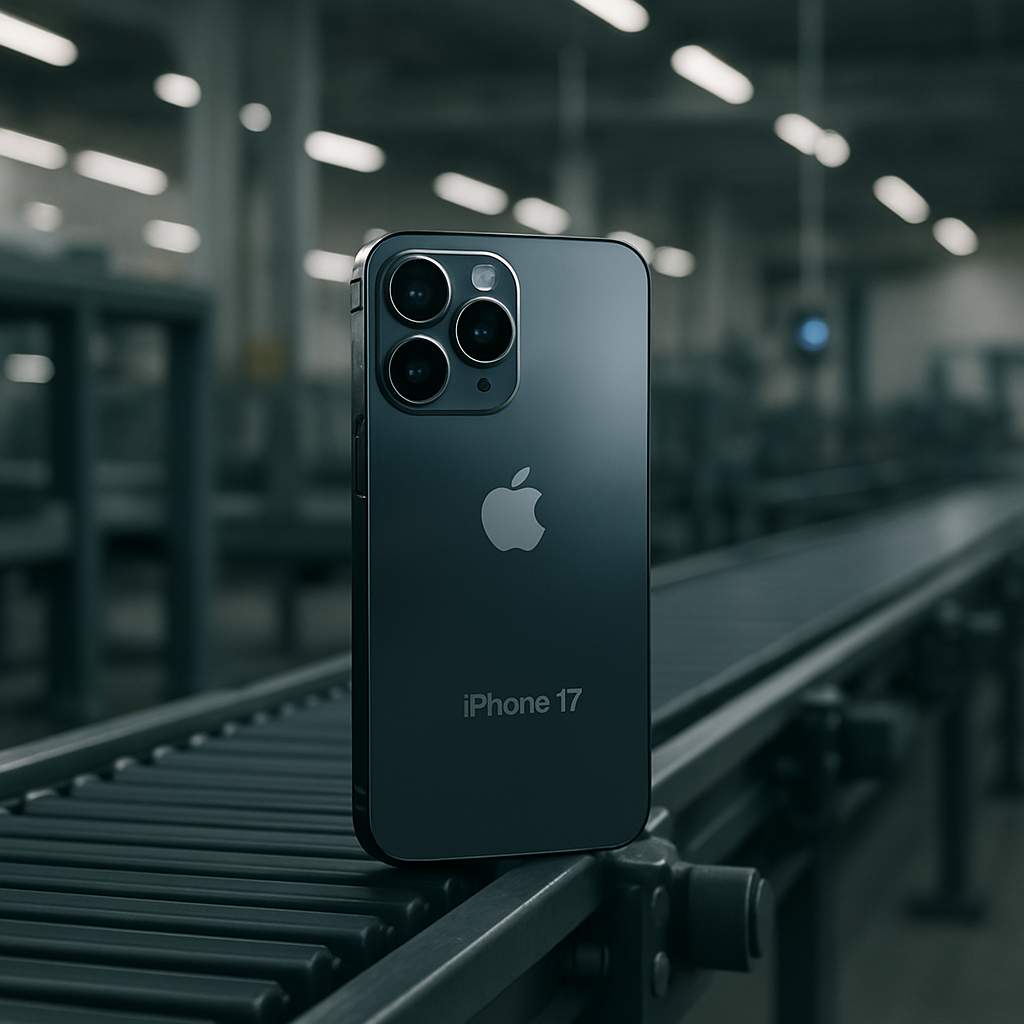
Apple has reportedly reduced production of its iPhone 17 lineup by approximately 15%, signaling a shift in the device’s demand trajectory. This information comes from supply chain sources, indicating that major smartphone manufacturers, including Apple, are adjusting their shipment forecasts downward.
Industry-wide, companies like Xiaomi, OPPO, vivo, and Honor are also scaling back their shipment targets by 15% to 30%. This trend suggests a broader market adjustment as manufacturers respond to changing consumer demand and market saturation.
The iPhone 17 series, launched in September 2025, experienced robust sales, with the standard iPhone 17 model outperforming expectations. Shortly after its release, Apple increased daily production by at least 30% to meet the strong pre-order demand. The device’s popularity contributed to Apple achieving a 19.7% year-over-year increase in iPhone production during the first quarter of 2026, even as the global smartphone market contracted by 1.7% during the same period.
In May 2026, the iPhone 17 was recognized as the best-selling smartphone globally, capturing 6% of worldwide unit sales. The iPhone 17 Pro Max and iPhone 17 Pro secured the second and third positions, respectively. This success led Apple to top the global smartphone market in the first quarter of 2026, capturing 21% of global shipments and growing 9% year-over-year, despite an overall market contraction of 3%.
However, as the iPhone 17 approaches the end of its product cycle, a natural decline in demand is expected. Consumers are likely anticipating the upcoming iPhone 18 Pro and iPhone 18 Pro Max, slated for release in September, alongside Apple’s first foldable iPhone. This anticipation may be contributing to the current reduction in iPhone 17 production.
Apple’s decision to adjust production aligns with broader industry trends, as other major smartphone manufacturers are also revising their shipment forecasts. This collective shift underscores the dynamic nature of the smartphone market, where companies must continually adapt to evolving consumer preferences and market conditions.
Looking ahead, Apple’s strategic focus on innovation, including the introduction of foldable technology, will be crucial in maintaining its competitive edge. The upcoming iPhone 18 series and the company’s first foldable iPhone are poised to set new benchmarks in the industry, potentially revitalizing consumer interest and driving future growth.