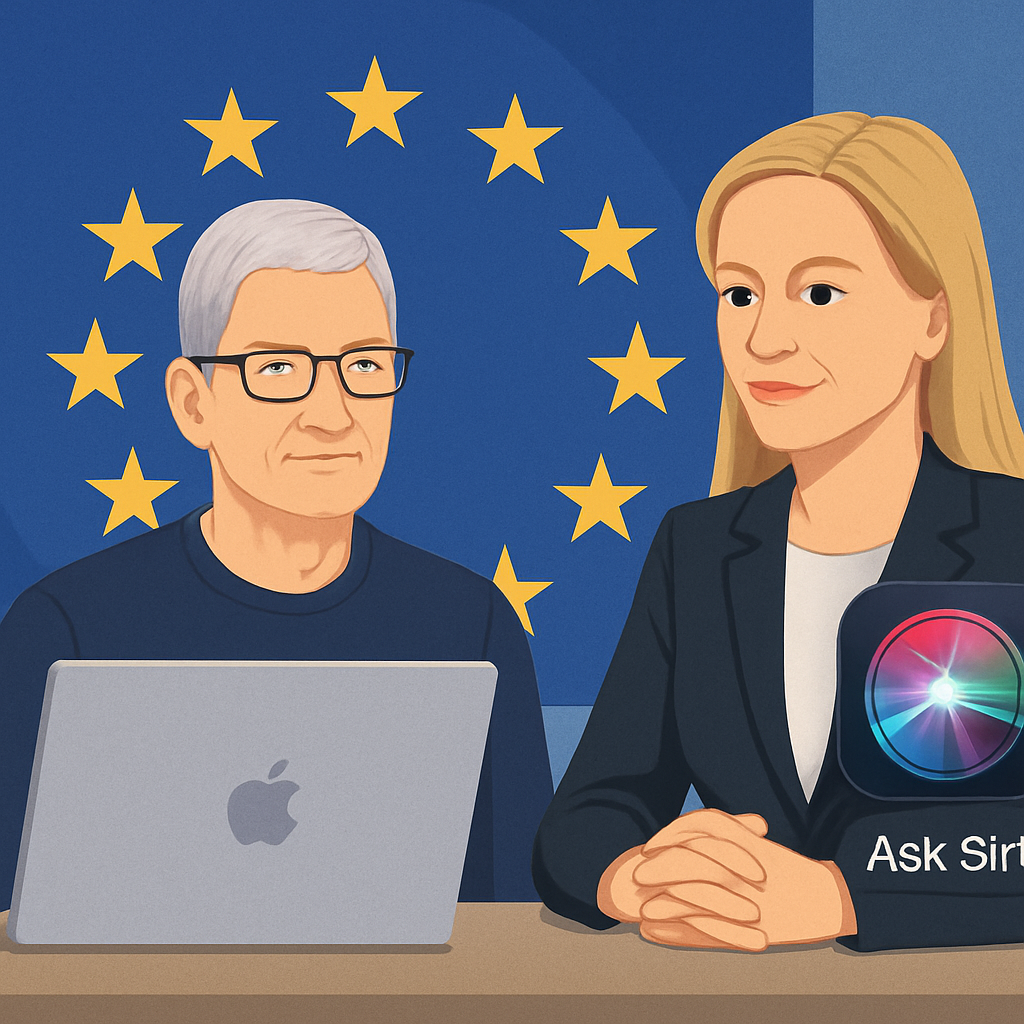
Apple CEO Tim Cook recently engaged in a virtual meeting with Henna Virkkunen, the European Commission’s Executive Vice-President for Technological Sovereignty, Security, and Democracy, to address the ongoing dispute over the delayed launch of Siri AI in the European Union. This discussion marks a significant step in resolving the standoff that has prevented the introduction of Apple’s enhanced virtual assistant to European users.
At the Worldwide Developers Conference 2026 (WWDC26), Apple unveiled Siri AI, a reimagined version of its virtual assistant powered by advanced artificial intelligence. However, the company announced that Siri AI would not be available in the EU alongside the release of iOS 27 and iPadOS 27, attributing the delay to the Digital Markets Act (DMA). Apple expressed concerns that the DMA’s requirements could compromise user privacy and security, leading to the decision to postpone the launch in the European market.
In response to the DMA, Apple proposed the implementation of a Trusted System Agent, designed to serve as an intermediary allowing third-party virtual assistants to access the same features and capabilities as Siri AI on devices within the EU. The company suggested an 18-month transition period to deploy this solution, aiming to ensure compliance with the DMA while maintaining user safety. However, the European Commission rejected this proposal, leading to a public exchange between Apple and EU officials.
European Commission spokesperson Thomas Regnier countered Apple’s claims, stating that the decision to delay Siri AI’s rollout in the EU was solely Apple’s and that the DMA does not prohibit the introduction of new products in the region. He further asserted that Apple had failed to develop interoperability solutions that meet essential EU privacy and security standards.
In an effort to find a resolution, Tim Cook’s meeting with Henna Virkkunen was described as a “constructive exchange on topics of common interest,” with ongoing work to address the issues at hand. The discussions focused on how Apple can launch Siri AI in Europe without violating the EU’s competition rules, which could result in substantial fines if breached.
This direct involvement by Apple’s CEO underscores the company’s commitment to navigating regulatory challenges and bringing its latest innovations to the European market. The outcome of these negotiations will be pivotal in determining how tech companies adapt to evolving regulations while striving to deliver cutting-edge technologies to a global audience.